The quoting problem
A school cleaning contract is not a normal office-cleaning quote
An office quote is often based around a steady weekly pattern. The building opens, the cleaner attends, the same areas are used each week and the pricing model is usually built around a simple 52-week routine.
Schools are different. The building has term dates, pupil numbers, heavy-use toilets, classrooms, halls, kitchens, sports areas, inset days, holiday closures and deep-clean periods. Some work happens every day during term. Other work happens during Christmas, Easter or summer holidays. Some staff may work term-time patterns, while other hours are planned outside the normal teaching weeks.
That is why a school cleaning quote needs more operational thought. A good quote should not only win the work. It should become the foundation for the contract setup, schedule, staff plan and service review once the customer accepts it.
How to prepare a school cleaning quote
A school cleaning quote should turn the specification and site survey into a clear labour, service and price model. Measure the areas, record tasks and frequencies, estimate productive cleaning time, add supervision and absence cover, price holiday deep cleans and periodic work separately, then apply employment costs, materials, equipment, overhead and margin. KleanFlo's cleaning quotation software keeps the survey, costing and quotation connected.
The best school cleaning quotes are built from the way the contract will actually be delivered: areas, tasks, frequency, labour, supervision, periodic work and academic-year planning.
Start with the school cleaning specification
The specification is the starting point. It tells you what the school expects, which areas are included, how often each area should be cleaned and what standard is required.
For a school, the specification usually needs to cover:
- Number of pupils and how that affects usage.
- Floor areas and building layout.
- Classrooms, corridors and circulation areas.
- Toilets, washrooms and changing rooms.
- Halls, dining areas and assembly spaces.
- Kitchens, staff rooms and offices.
- Sports facilities, gyms and specialist rooms.
- Periodic work such as floors, carpets, windows and high-level dusting.
The quote should not treat every room the same. A reception classroom, a science room, a sports changing area and a headteacher's office all have different usage and cleaning needs.
Run a site survey that produces usable timings
A school site survey is not just a walk around with a clipboard. It should create the information the office needs to price the work and, later, set up the contract correctly.
During the survey, look at the areas, existing standards, access arrangements, security requirements, storage, equipment points, water access, waste routes and any site risks. Ask what currently works, what the school is unhappy with and where complaints usually arise.
The important output is time. If the survey does not produce a sensible time requirement for each area or designation, the quote will rely on guesswork.
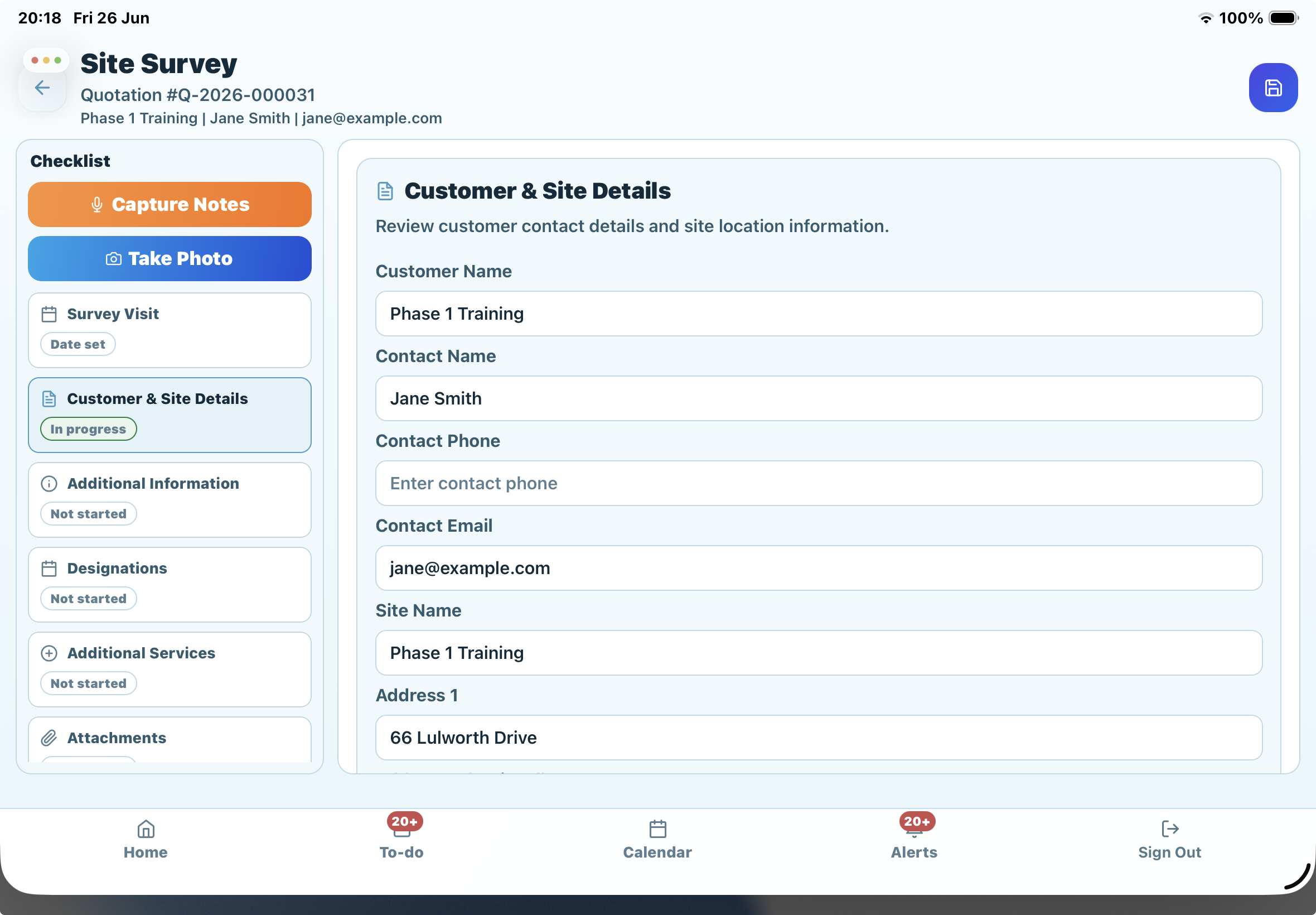 On tablet, the site survey gives supervisors a larger working view for customer details, site information, notes and photos.
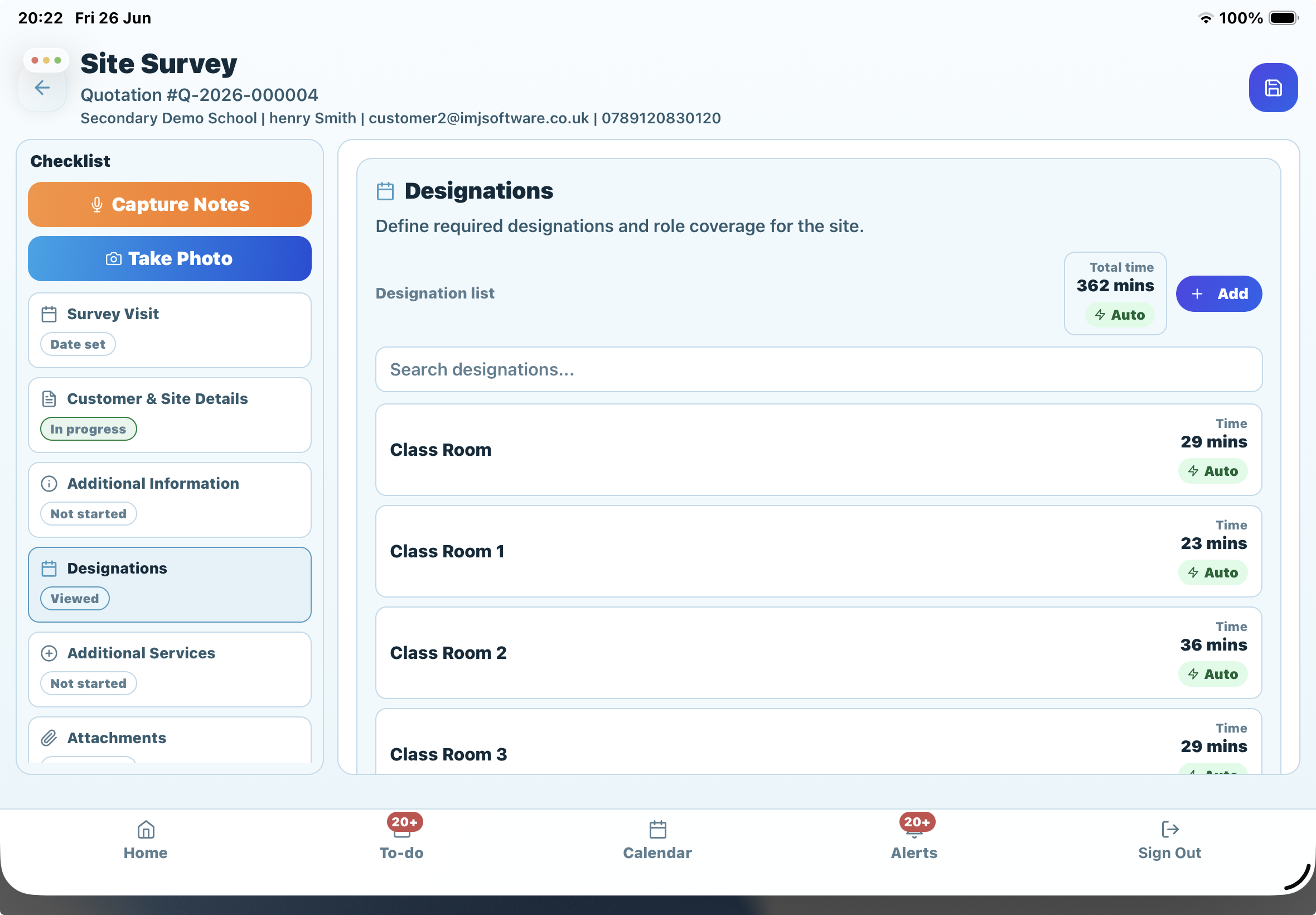 Designations can be reviewed during the survey so area timings are captured before the office prepares the quote.
 On the Move gives the surveyor a structured school site survey, including visit details, customer information, designations, additional services and attachments.
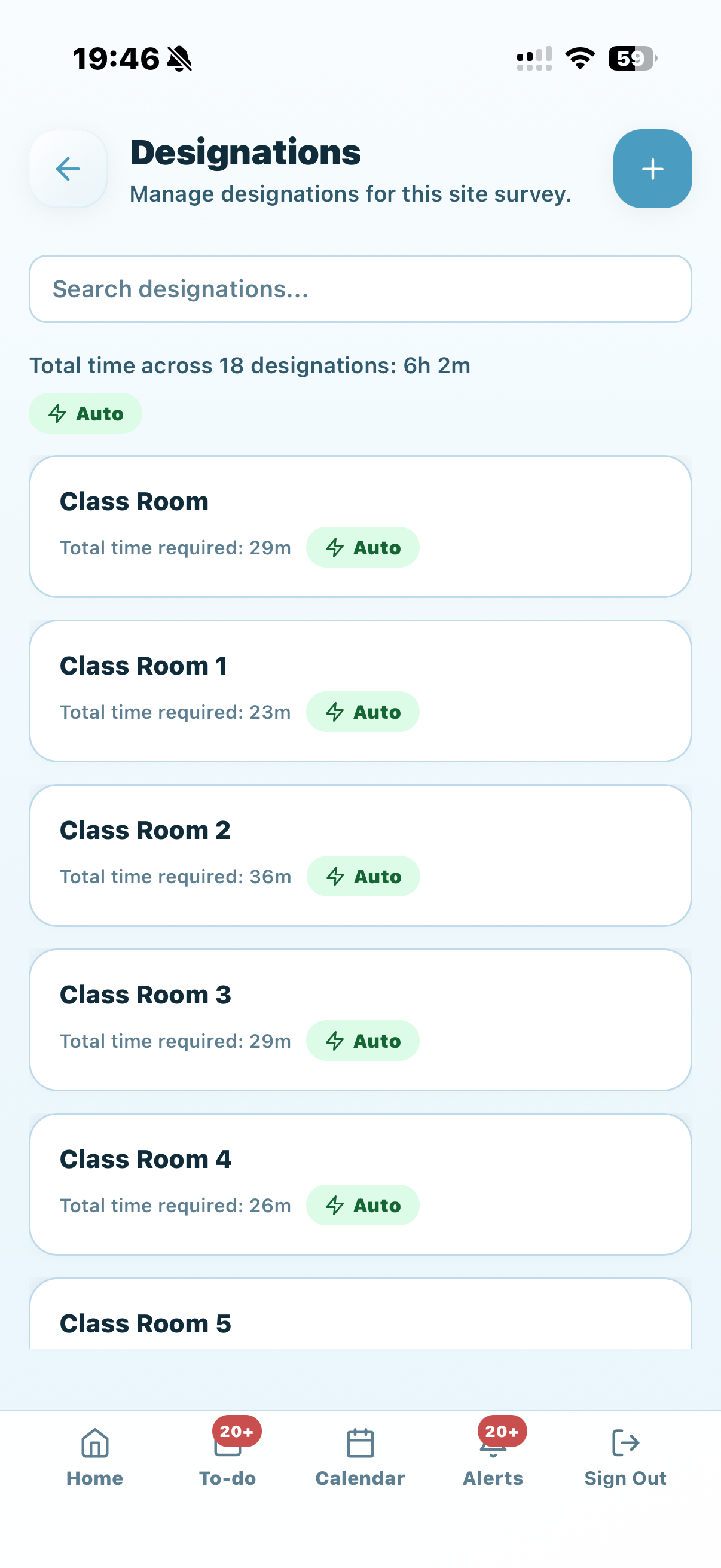 Designations can be reviewed on mobile so the survey produces useful timing information before the quote is costed.
KleanFlo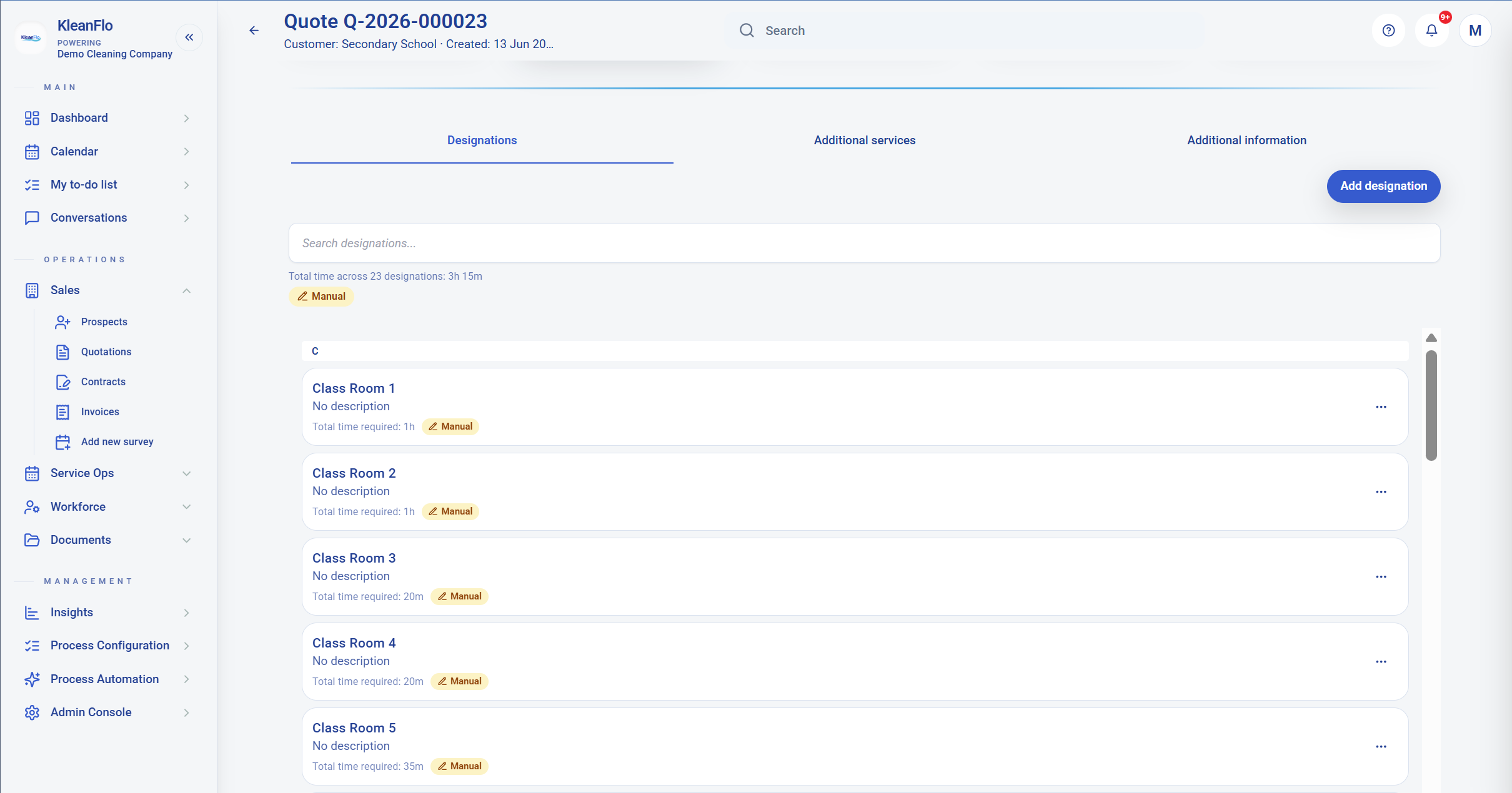 A school quotation can be built from real areas and designations, giving the office a clearer timing base before pricing.
Measure cleaning time by area and task
School cleaning time is usually built from the areas that need cleaning and the tasks required in each area. That might include general cleaning, waste removal, washroom cleaning, floor work, touchpoint cleaning, kitchen cleaning or periodic tasks.
When you estimate the time, avoid relying only on a total building square metre figure. Square metres matter, but they do not tell the whole story. Pupil age, toilet usage, floor type, furniture layout, access, current standard and required finish all affect the time needed.
A quote built area by area is easier to explain and easier to turn into a cleaning specification after the work is won.
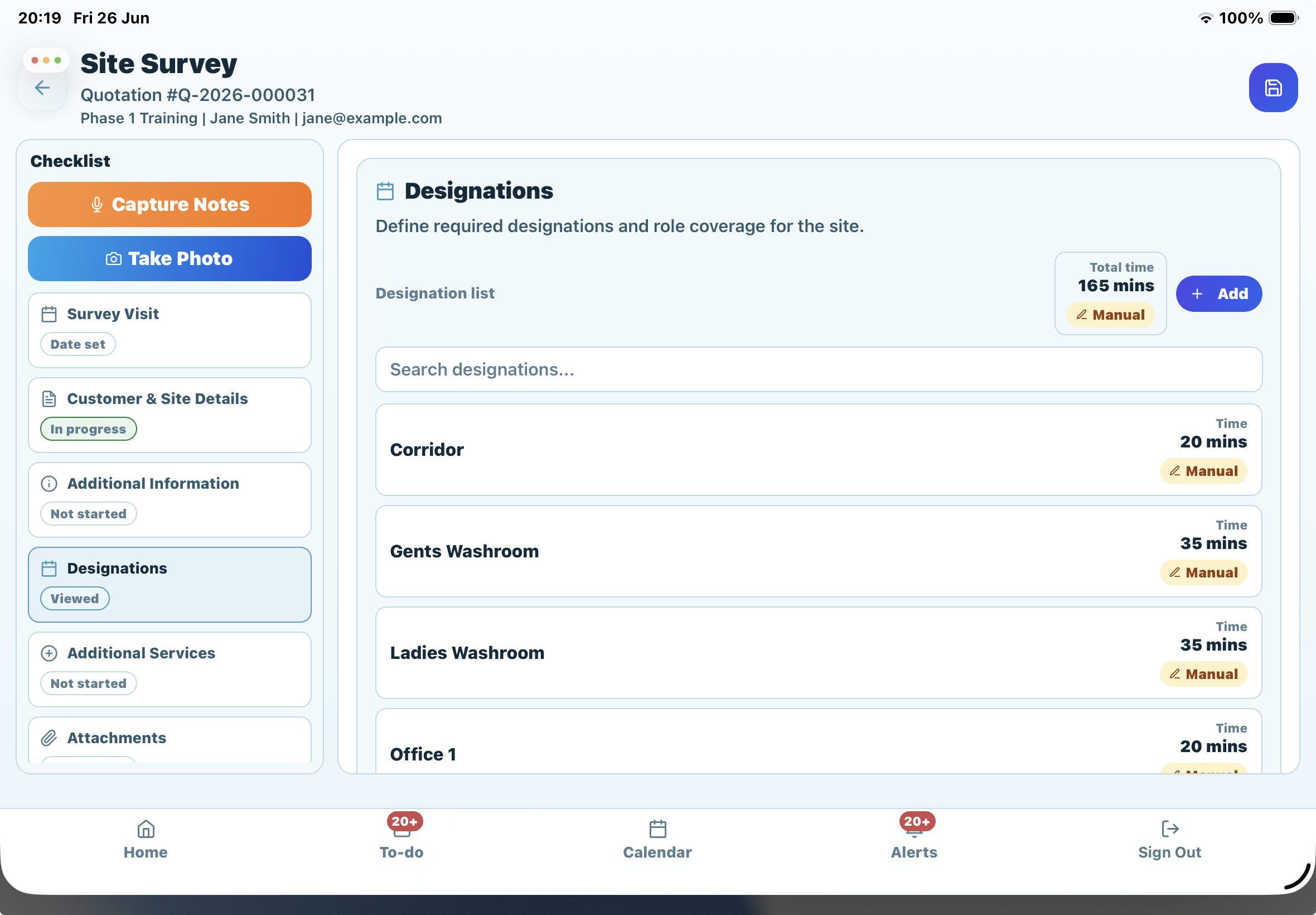 Manual timings can be recorded where the surveyor needs to use judgement for a specific school layout.
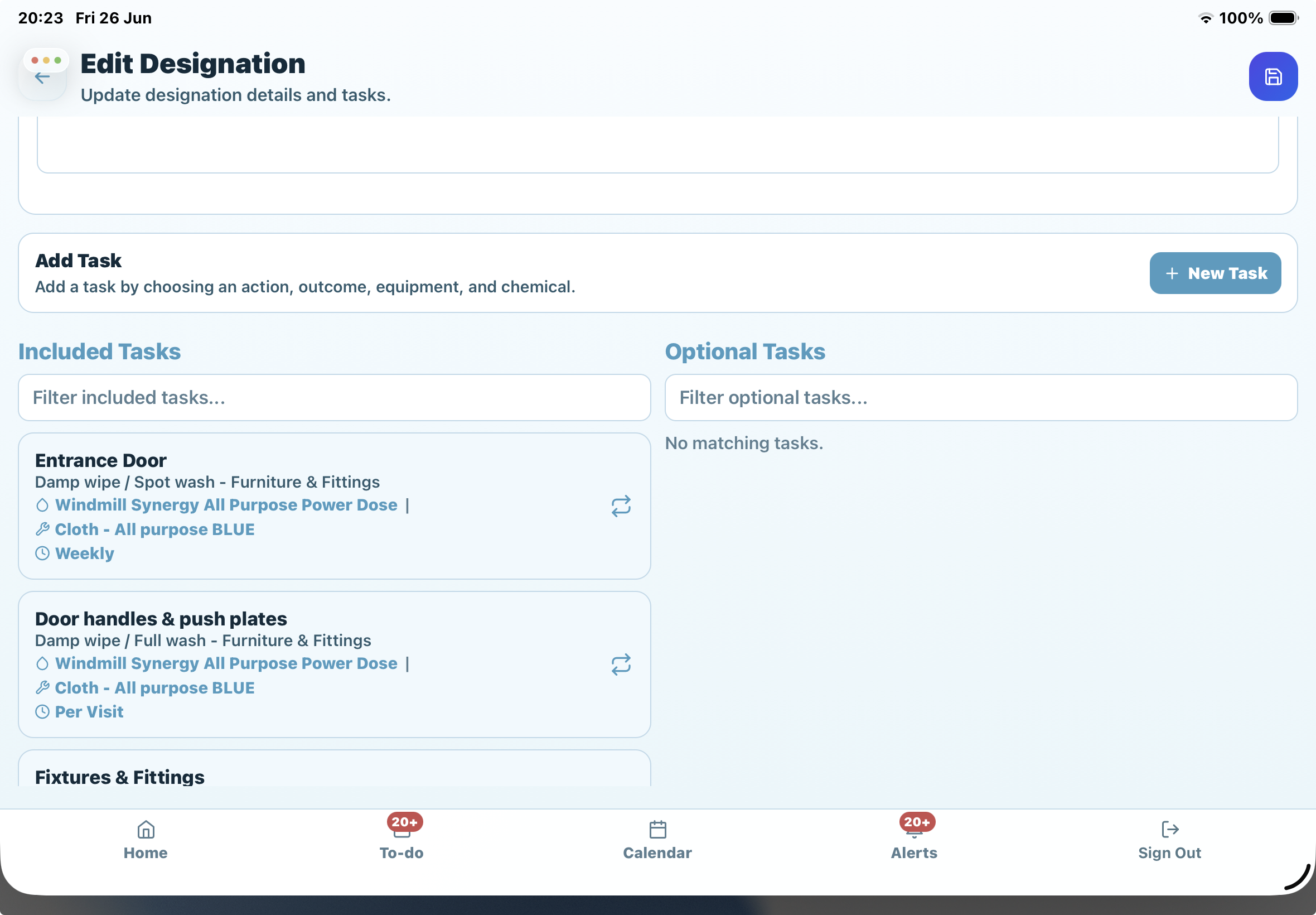 Tasks within a designation help turn the survey into a useful cleaning specification, not just a price estimate.
Calculate labour with the real working pattern in mind
Labour is usually the largest part of the contract price. It is also where many school cleaning quotes go wrong.
When calculating labour, include:
- Cleaning rates for each type of area or task.
- Productive cleaning hours, not just paid hours.
- Supervisor time and management visits.
- Holiday cover and absence allowance.
- Opening, locking, keyholding or access requirements.
- Periodic work and school holiday deep cleans.
- Non-term work where it is part of the contract.
If the school operates around term dates, make sure the labour model reflects that. A contract may have standard term-time cleaning plus additional non-term work. For more detail on that pattern, read our guides to scheduling around term dates and planning school holiday deep cleans.
Allow for additional costs
Labour is not the only cost. A school cleaning quote may also need to include materials, equipment, uniforms, training, DBS checks, management time and overhead.
Materials and washroom supplies should only be priced where they are part of the contract. If the school supplies certain items, do not price them as though you are responsible for them. If the cleaning company supplies products or equipment, make sure those costs are visible and realistic.
DBS checks and training are easy to miss because they do not always feel like part of the cleaning task. But if the contract requires staff checks, induction, safeguarding awareness or site-specific training, the cost still belongs somewhere in the commercial model.
Think carefully about periodic work
Periodic work is often where school contracts become unprofitable. The daily clean may be priced correctly, but the quote may forget summer floor work, carpet cleaning, high-level dusting, kitchen deep cleans, washroom deep cleans or return-to-school preparation.
Do not hide periodic work in vague wording. Decide whether it is included, excluded, separately quoted or scheduled as agreed non-term work. If it is included, price it. If it is excluded, make that clear.
Choose the right pricing model
Once the labour and costs are understood, the contract needs a pricing model. Common approaches include:
- Cost-plus pricing: labour and known costs are calculated, then a margin is added.
- Fixed-price contracts: the customer pays an agreed amount for the defined service.
- Annualised contracts: the price reflects the full academic year, including term-time and agreed non-term work.
- Multi-year agreements: pricing needs to consider wage changes, inflation, contract review points and service changes.
For school contracts, the number of weeks matters. Some schools may not need a simple 52-week service. Others need term-time cleaning plus specific holiday work. If staff are paid on an annualised or salary basis, the commercial model should be reviewed alongside the payroll position. See our guide to annualised hours for school cleaning companies for more context.
KleanFlo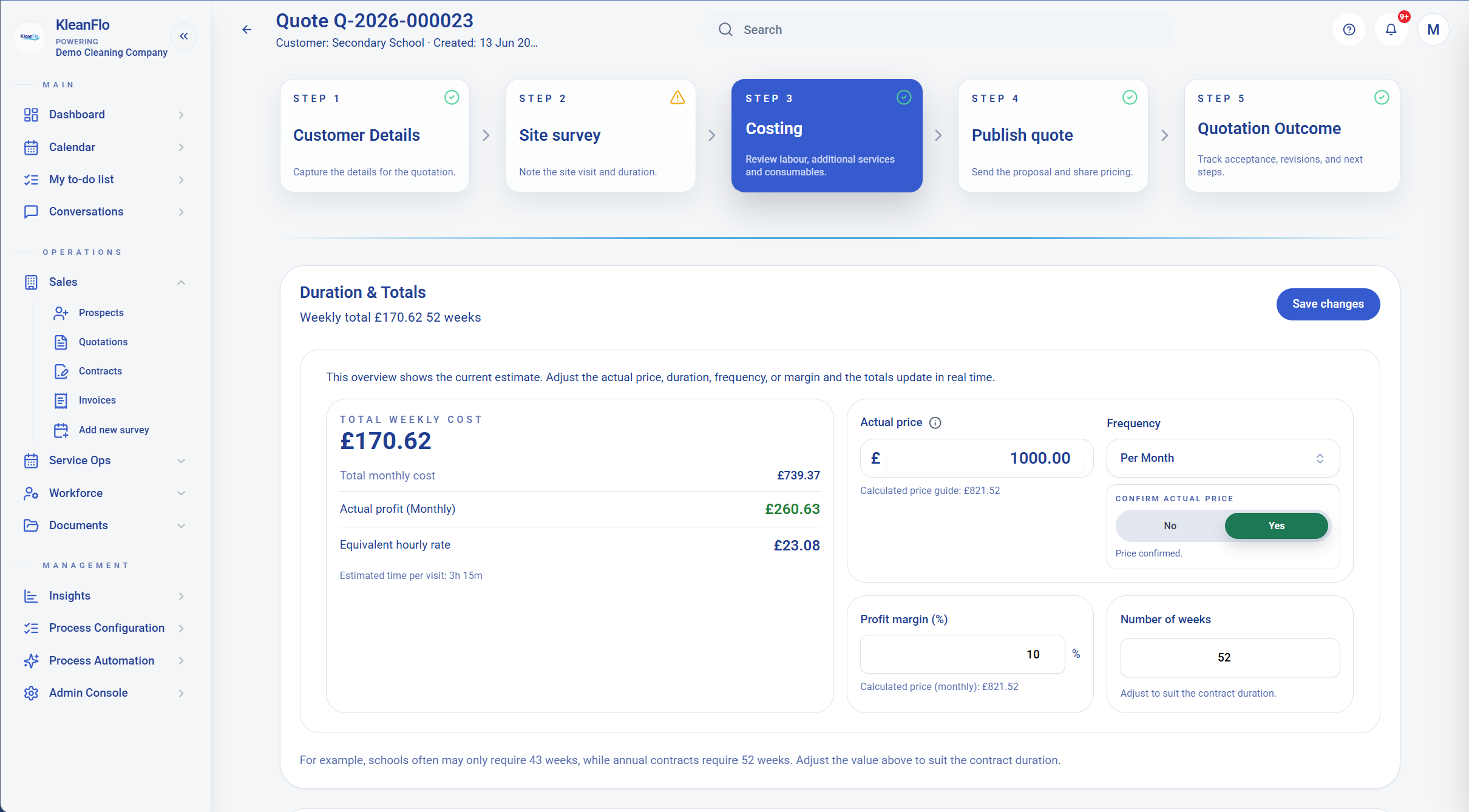 Costing should make the weekly cost, actual price, margin and contract duration visible before the quote is published.
Common mistakes when quoting school cleaning
The mistakes that hurt school contracts are usually not dramatic. They are small omissions that compound over the year.
- Using a standard office-cleaning template without school-specific checks.
- Underestimating school holiday deep-clean labour.
- Forgetting inset days, bank holidays or known closures.
- Ignoring periodic work or leaving it too vague.
- Missing supervisor time and management visits.
- Not pricing absence cover or holiday cover.
- Forgetting DBS checks, uniforms, training or mobilisation time.
- Building the quote in one system, then retyping everything into schedules later.
The last point matters more than many businesses realise. If the quote is disconnected from the contract setup, the office team has to recreate the customer, site, areas, hours and schedules manually. That creates extra admin and increases the chance of mistakes during mobilisation.
Example: why the same school can price two different ways
Imagine a secondary school that needs 23 areas cleaned during term time. The classrooms, toilets, offices and halls create a weekly cleaning requirement. The school also wants floor work and deep cleaning during the summer holiday.
If you price only the weekly term-time clean, the monthly number may look attractive but the contract will be exposed when holiday work arrives. If you price the weekly clean, supervisor time, absence allowance, periodic work and agreed non-term hours together, the proposal is more realistic and the customer can see what is included.
That does not always mean the quote is more expensive. It means it is clearer. The customer knows what they are buying, and the cleaning company knows what it has committed to deliver.
A practical quoting checklist
Before sending a school cleaning quote, check the following:
- The specification lists the areas, tasks and frequency clearly.
- The site survey has produced realistic time estimates.
- Term dates, inset days and likely closure patterns have been considered.
- Holiday deep cleans and periodic work are included or clearly excluded.
- Supervisor time, absence cover and holiday cover have been allowed for.
- DBS, training, uniforms and mobilisation costs have been considered.
- The contract duration and number of weeks match the school requirement.
- The accepted quote can be turned into the customer, site, schedule and contract setup without duplicate entry.
How KleanFlo helps
KleanFlo helps cleaning companies connect the quotation process to the operational work that follows. A school quote can capture customer details, site survey information, designations, timings, additional services and costing information in one place.
Supervisors can capture survey detail using KleanFlo On the Move, then the office can use that information when reviewing timings, costing the quote and preparing the proposal.
Once the quote is accepted, the information can support customer and site setup, contract mobilisation, school term setup, schedules and ongoing contract management. That avoids the common problem of winning a quote and then manually rebuilding the same information elsewhere.
For school cleaning companies, that connection matters because the quote is not just a price. It is the first version of the contract plan.
You can also explore the wider cleaning quotation software page to see how KleanFlo supports surveys, costing and quote outcomes.
