The absence problem
School cleaning schedules have very little room for drift
In a standard commercial office, a missed or delayed task may be noticeable, but the building can often absorb a small change. Schools are less forgiving. Toilets, classrooms, corridors, halls and dining areas are used heavily and the cleaning window is often short.
If an evening cleaner is absent, the work still needs to be completed before the next school day. If a morning cleaner is late, the site may already be filling with pupils and staff. If a keyholder is unavailable, the issue may become an access problem as well as a staffing problem.
That is why absence cover is not just an HR task. It is an operational control process. The office needs to know which shifts are affected, who can cover, whether work should be split, whether supervisors need to be told, and how the actual attendance will be recorded afterwards.
A good absence process answers four questions quickly: what work is at risk, who can cover it, who needs to know, and what record will prove what happened.
Step 1: record the absence and identify the affected work
The first job is to separate the absence from the work. The staff member may be sick, but the school still has contracted cleaning hours that need to be protected.
Record the absence, then look at the schedule to see which shifts, sites, zones or areas are affected. For school contracts, the timing matters. A two-hour evening clean may need urgent cover if it is for toilets, dining areas or classrooms that will be used the following morning.
If the absence affects a keyholder, supervisor or specialist cleaner, make that visible early. Those roles can be harder to replace at short notice.
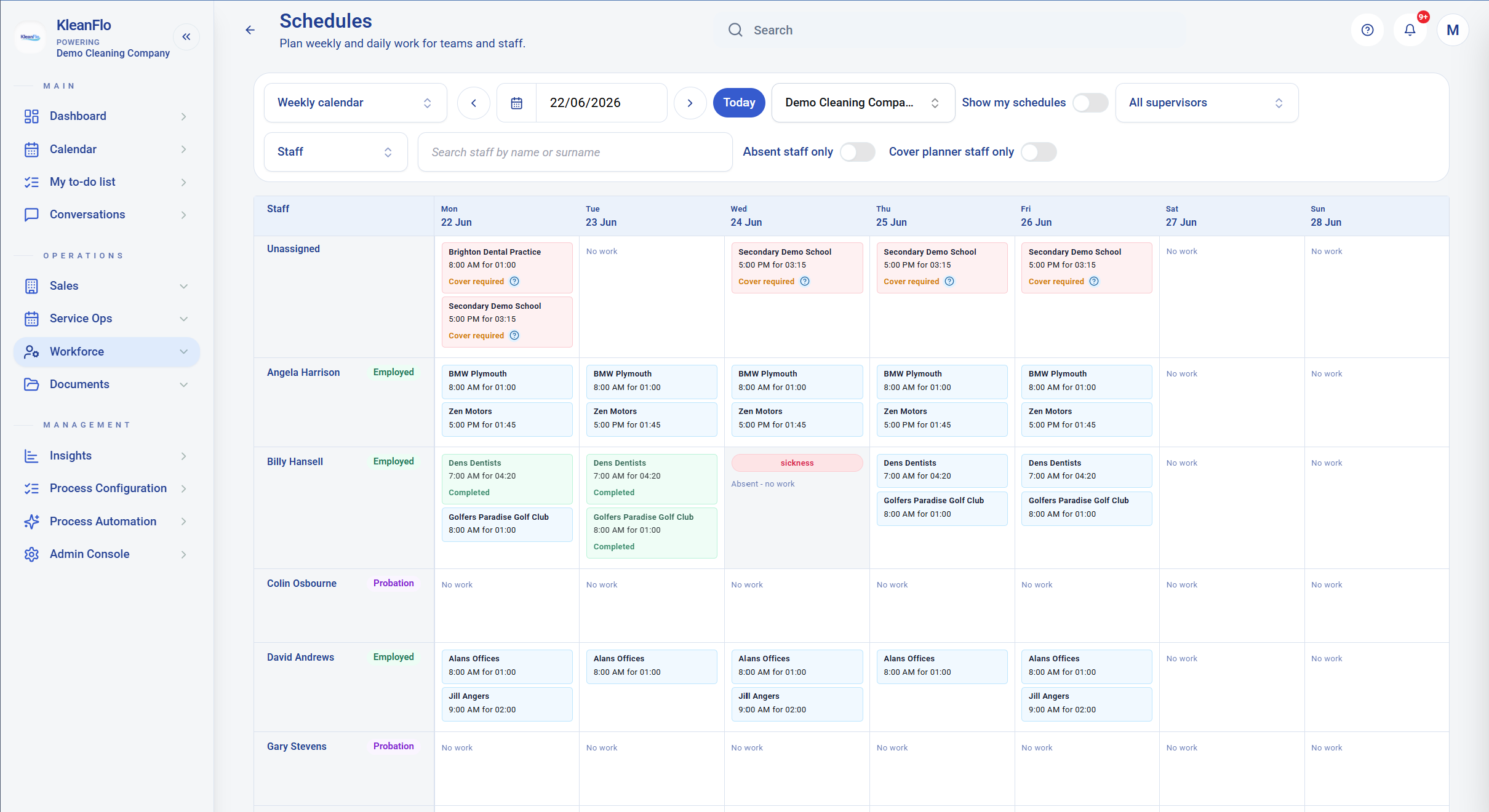 A staff schedule view makes it easier to see which cleaner is absent and which work now needs attention.
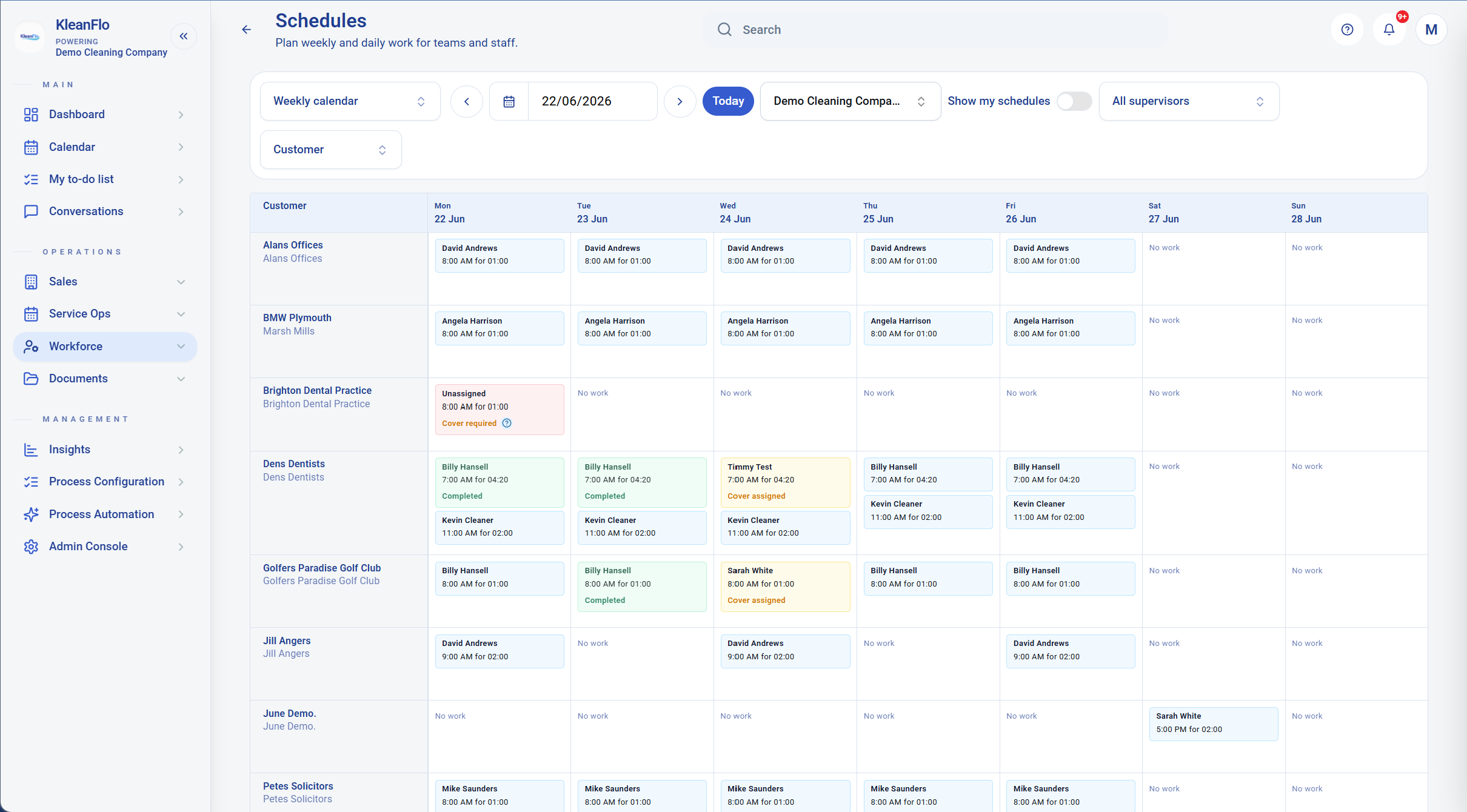 A customer schedule view helps the office understand which sites are affected by absence and where cover is still needed.
Step 2: decide whether to use cover staff or split the work
There are usually three options when a school cleaner is absent.
- Assign a cover cleaner to complete the full shift.
- Split the work between existing staff already attending the site.
- Temporarily reduce or prioritise tasks, with the customer informed if service is affected.
The best option depends on the school, the time of day, the areas affected, staff availability and the contract requirement. A full cover cleaner is often the cleanest solution, but it is not always available. Splitting work can work well where existing staff have capacity, but it should not be done casually. If the same team absorbs extra work too often, standards and morale will suffer.
For school cleaning, it is useful to know who is already trained on the site, who understands the access arrangements, who can work at short notice and who is close enough to attend without creating unnecessary travel time.
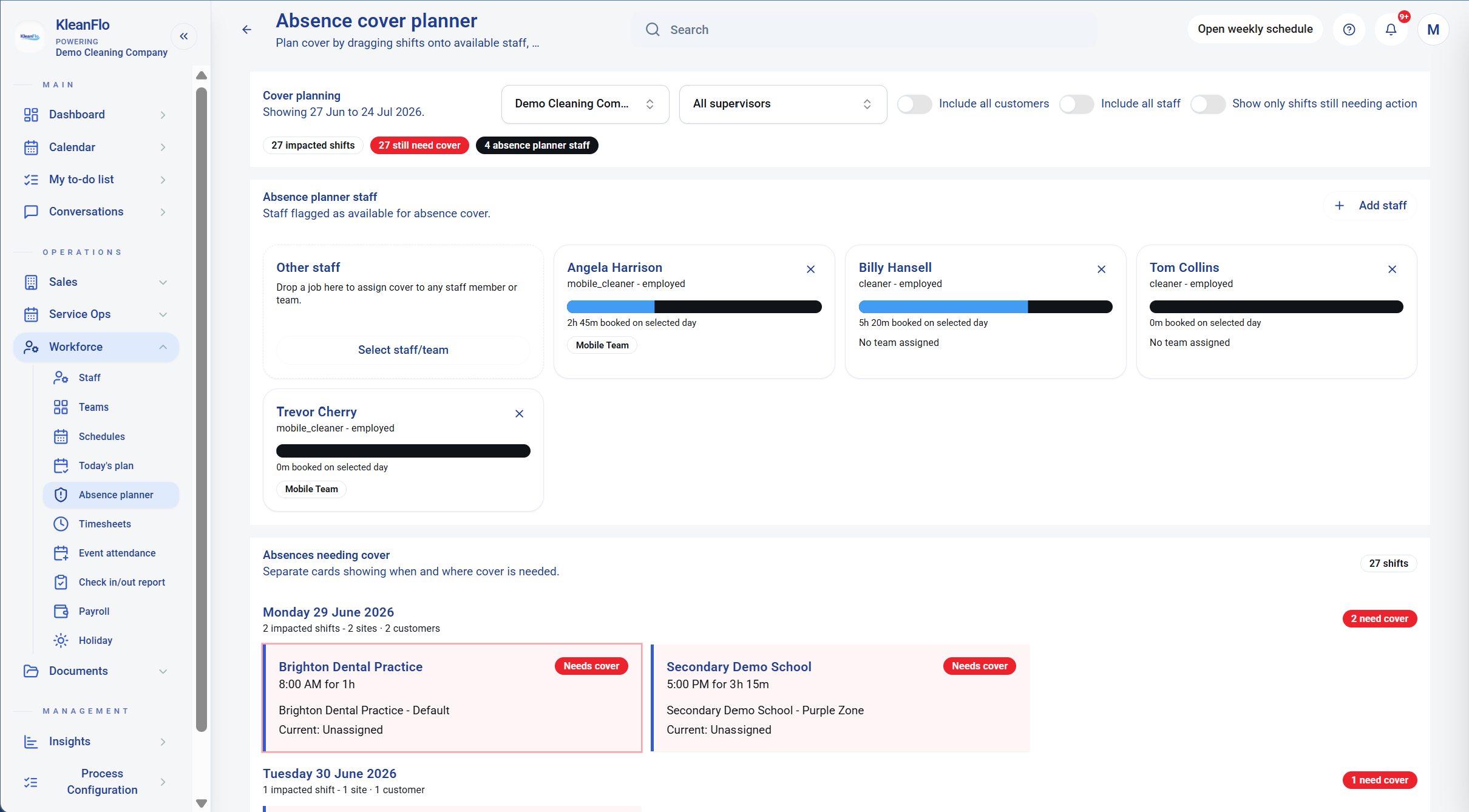 Cover planning should show both sides of the problem: available staff and the shifts that still need cover.
Step 3: make temporary schedule changes clearly
Once cover has been agreed, the schedule needs to change. This is where many businesses lose control if they rely on calls, texts or spreadsheet notes.
A temporary change should show who is doing the work, when they are doing it, which site or zone is covered and whether the change affects payroll. If the work is split, each part should be visible. If a cleaner is moved from one area to another, the supervisor should not have to guess why the normal plan looks different.
Temporary changes are especially important for schools because the cleaning window is fixed. A shift cannot simply slide into the next morning if the areas need to be ready for pupils.
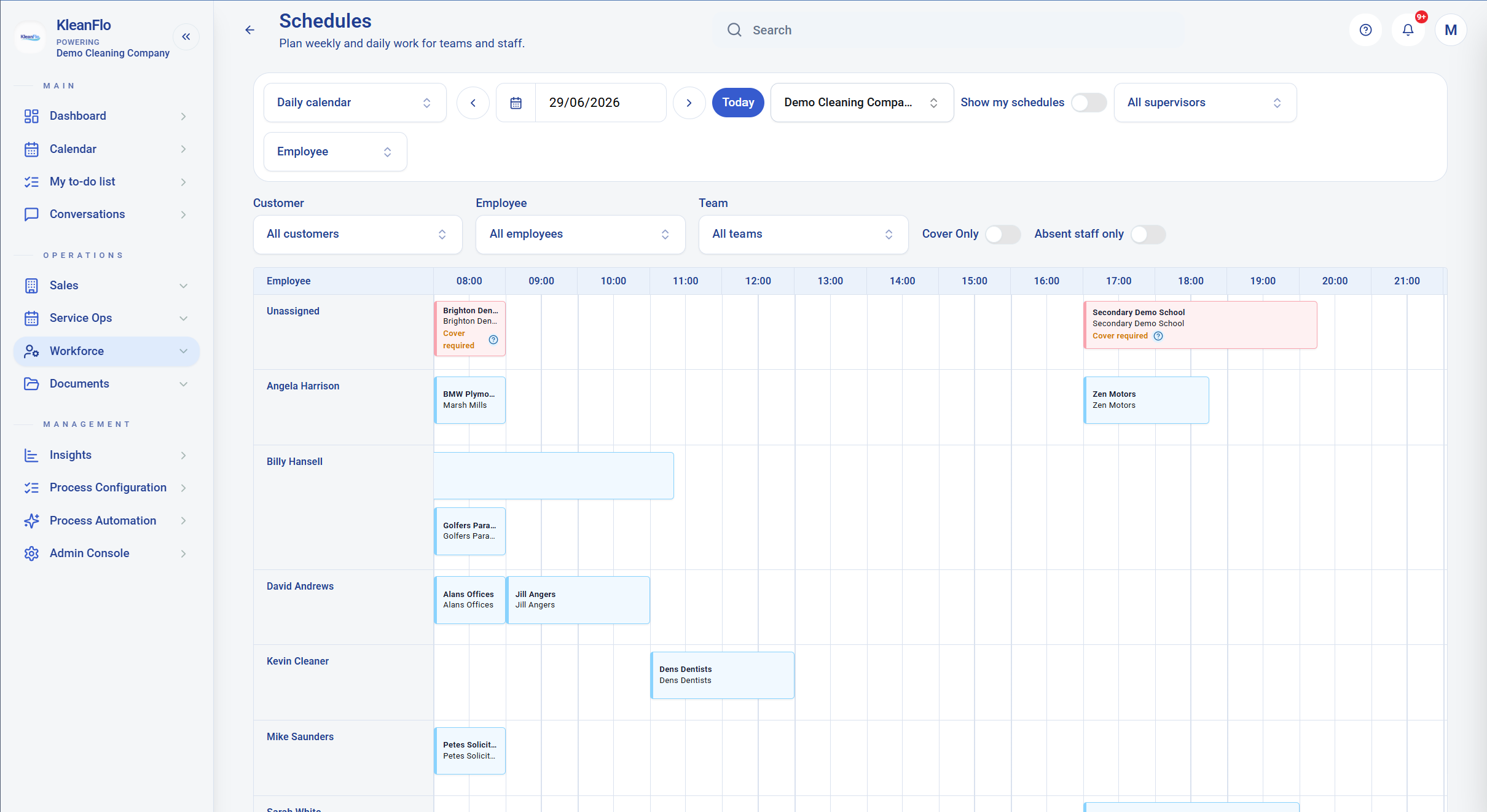 A daily schedule view helps managers see cover work, gaps and staff allocation across the working day.
Step 4: keep supervisors and staff informed
Once the office changes the plan, the people on site need to know. The cleaner covering the shift needs the updated schedule. The supervisor needs to know who is expected and where the risk is. If a customer contact is likely to notice a change, the account manager may need to send a quick update.
This is where WhatsApp and text messages can become messy. A message might get the job covered, but it does not always update the schedule, the supervisor, the attendance record or the payroll position.
Good absence cover keeps communication attached to the operational record. The schedule should show the change, mobile users should see the right job, and managers should be able to review the day without piecing together several conversations.
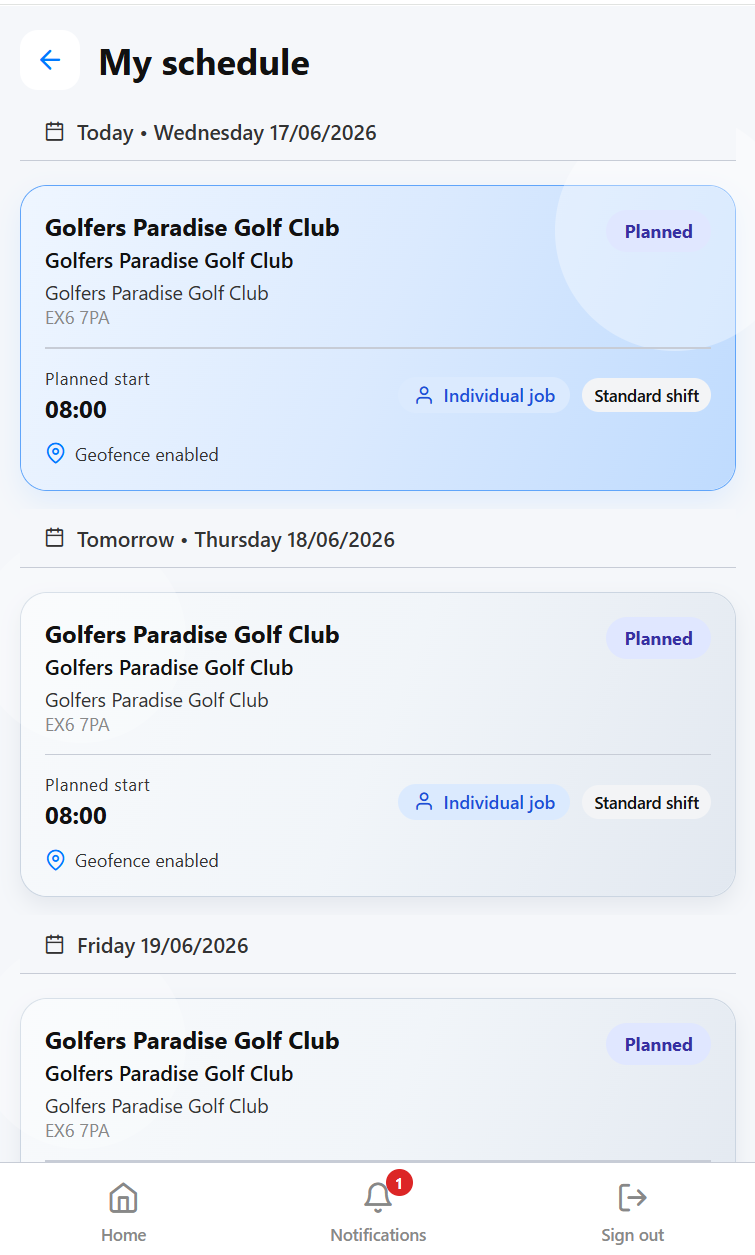 Staff need the current schedule on mobile, especially when cover work changes during the day.
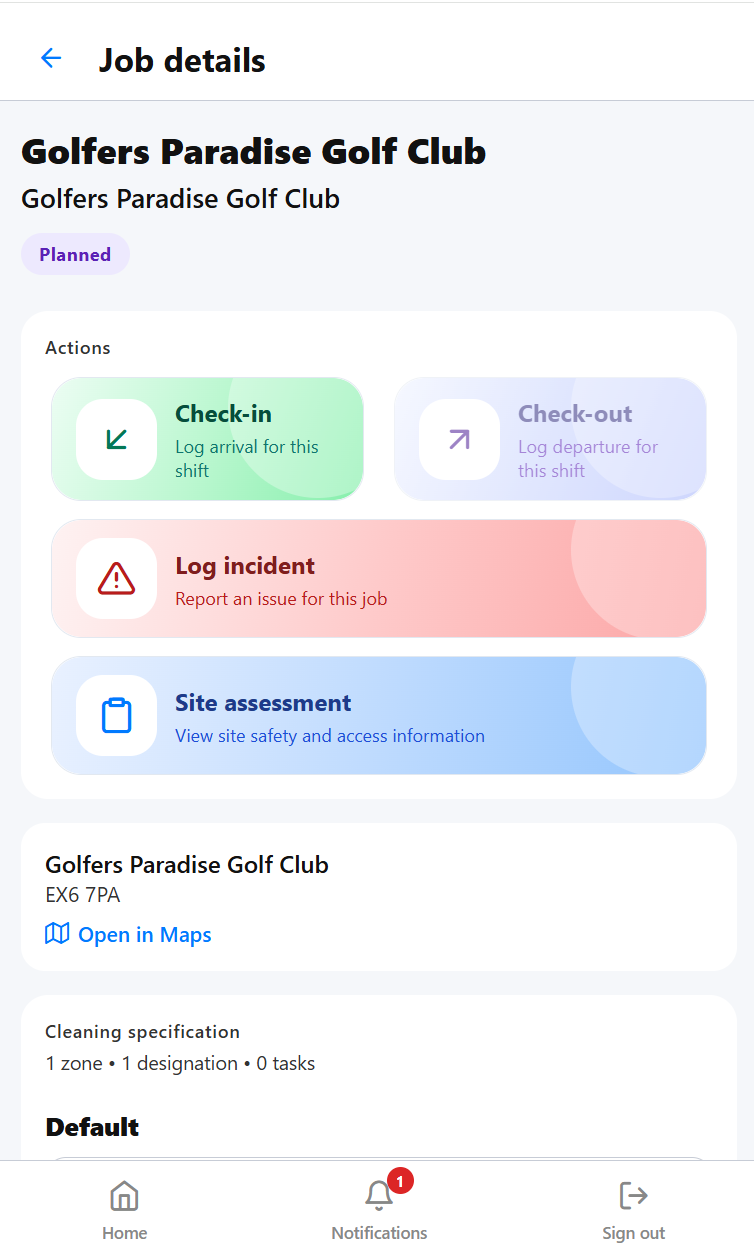 Job details help cover cleaners understand where they are going and what they are expected to complete.
Step 5: record who actually completed the work
Cover planning is only half the job. The business also needs to know what happened afterwards.
Did the cover cleaner attend? Did they arrive on time? Was the shift completed? Did the work move to another staff member? Was the original cleaner absent for the whole shift or only part of it?
Without a clear attendance record, absence cover creates payroll questions later. The absent staff member may need sickness recorded. The cover cleaner may need extra hours paid. If work was split, more than one staff member may have worked additional time. If nobody attended, the customer conversation is very different.
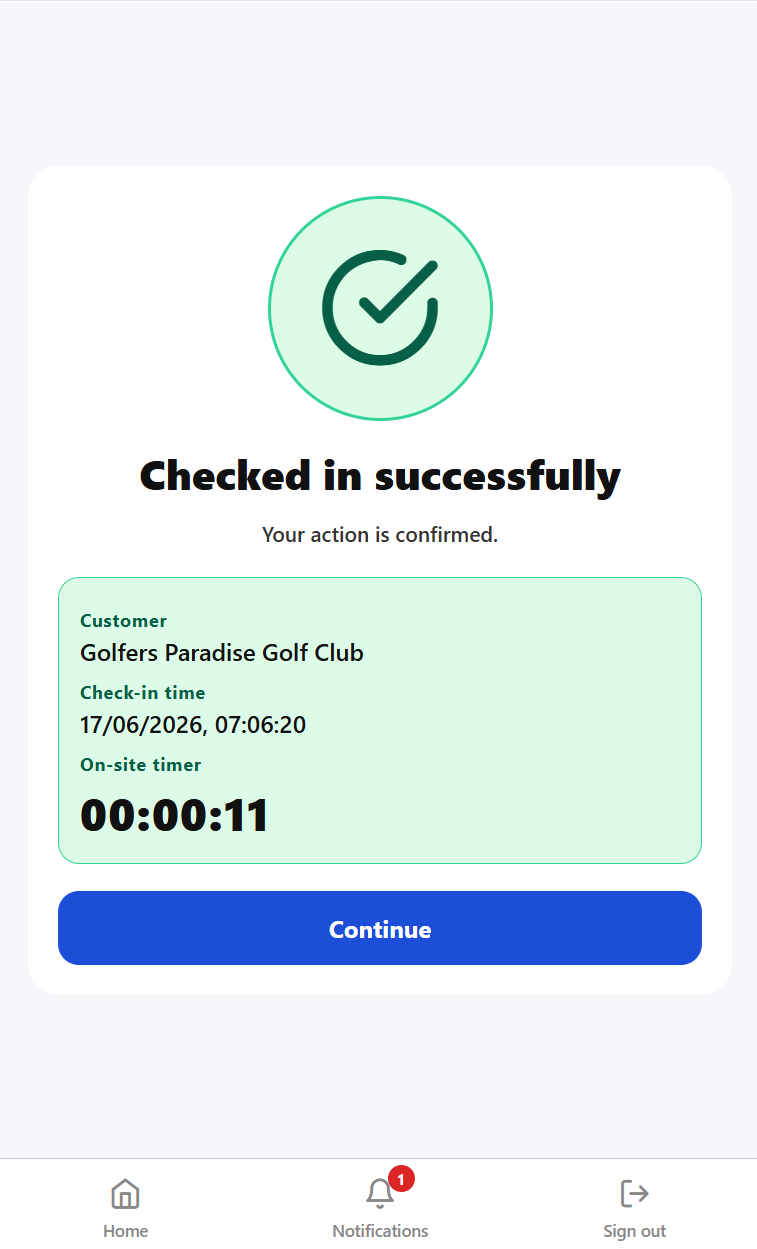 Mobile check-in gives the business a record that the cover cleaner attended the site.
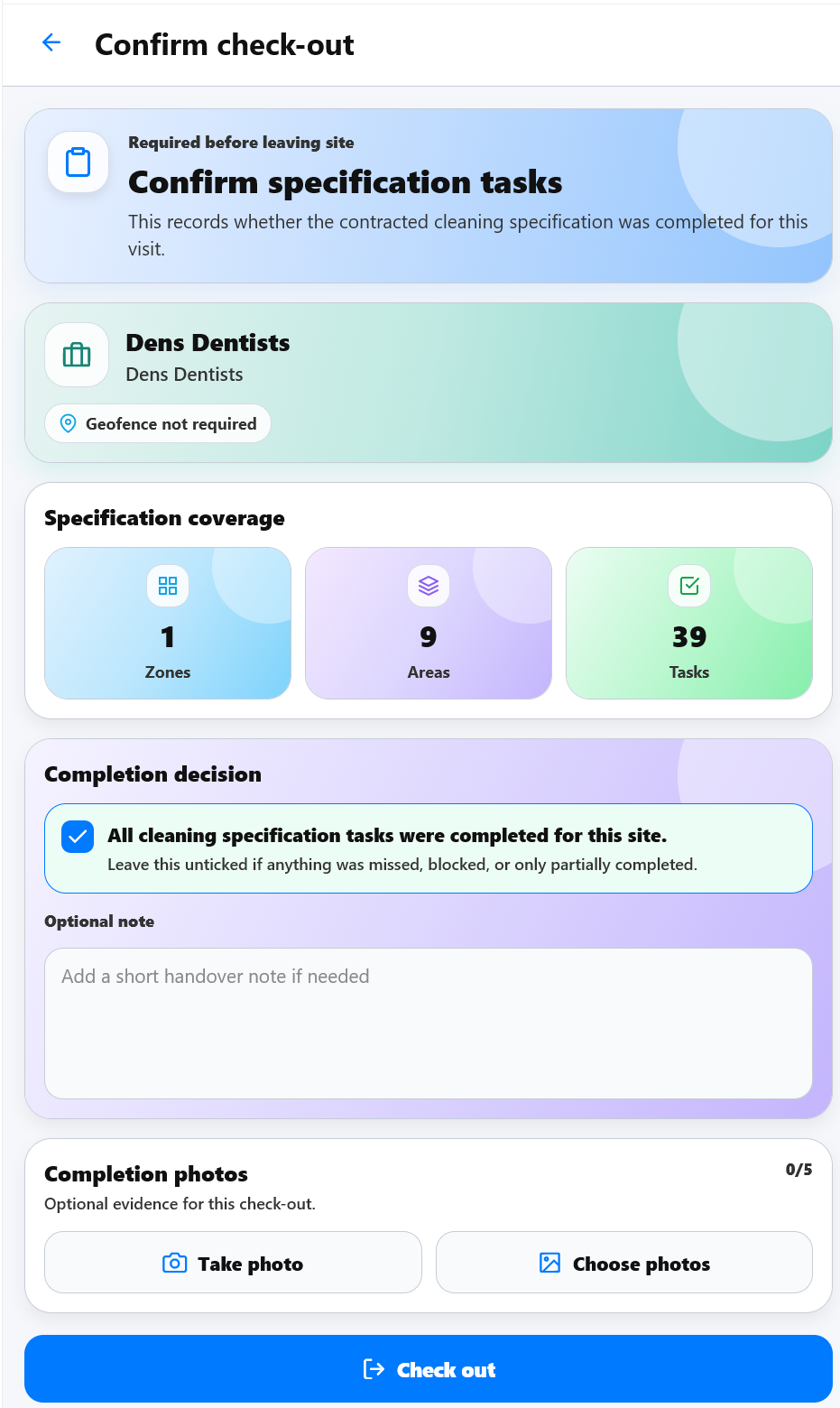 Check-out helps confirm when the work finished and supports cleaner timesheet records.
Step 6: review the payroll impact
Absence cover affects payroll in several ways. The absent cleaner may have sickness, unpaid absence or another absence type recorded. The cover cleaner may have additional paid hours. A supervisor may have extra travel or management time. Existing staff may have worked longer than usual to protect the site.
For school contracts, this can also affect annualised hours and non-term planning. If a cleaner regularly covers extra school work, those hours need to be visible. If an absence changes contracted delivery, the business needs a record of the actual position rather than a rota that still shows the original plan.
Payroll should be based on what happened, not what the office hoped would happen when the rota was first built.
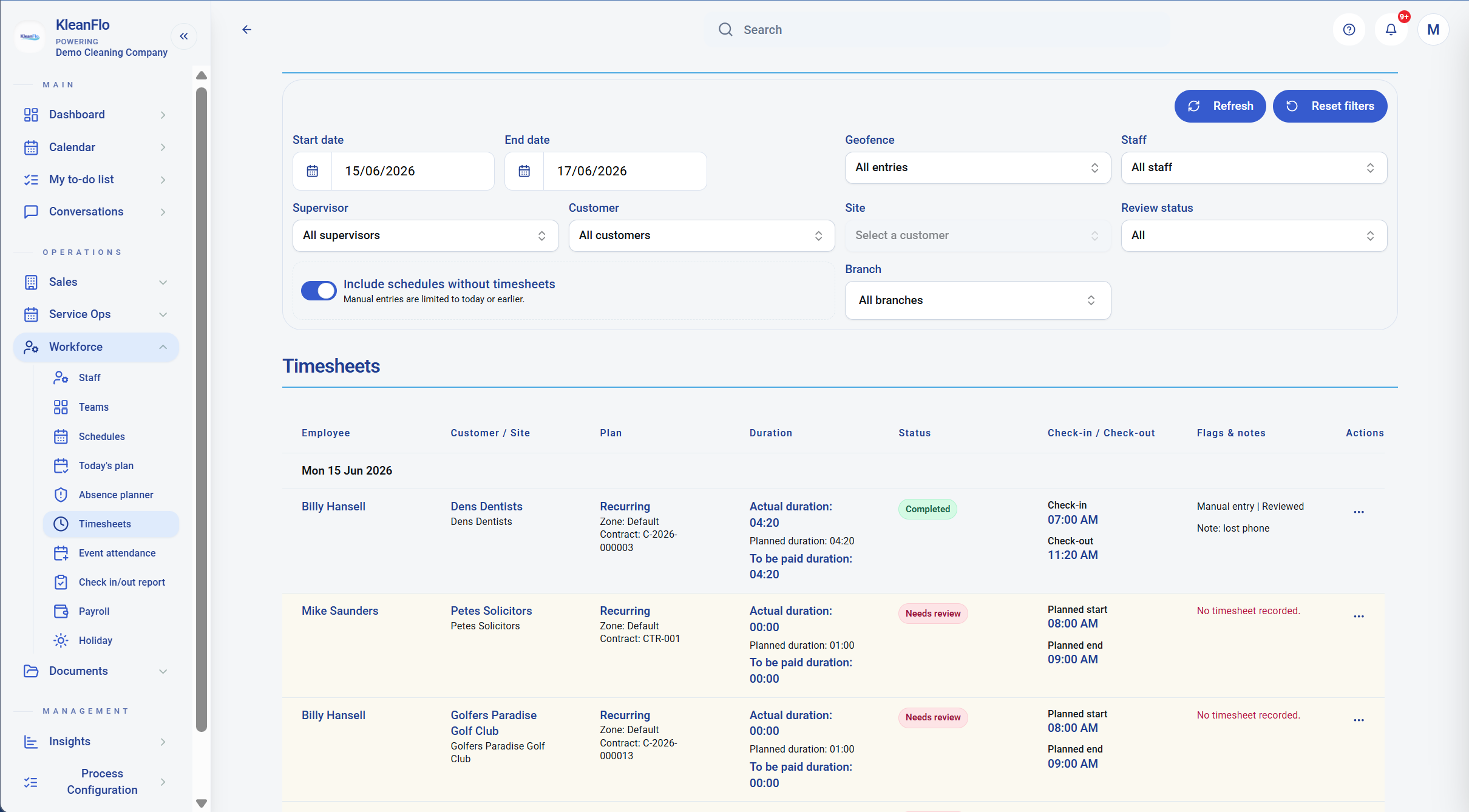 Timesheet review helps the office compare planned work with actual attendance before payroll is processed.
When should the customer be notified?
Customers do not need to be told every time a cleaner is absent. They care about service delivery. If the work is covered and standards are protected, there may be no need for a formal customer update.
However, customer communication becomes important when:
- Important areas may not be cleaned to the normal standard.
- Access arrangements or keyholding responsibilities change.
- A supervisor visit is needed to check the site.
- The school has requested a priority area to be protected.
- The issue may continue for more than one shift.
If the customer is told, keep the message practical. Explain what has changed, what is being done and whether any areas are affected. Avoid turning every absence into a drama, but do not hide service risks when they matter.
Common mistakes when managing school cleaning absence
Most absence problems are caused by weak process rather than a lack of effort. Common mistakes include:
- Recording the sickness but not reviewing the affected shifts.
- Relying on WhatsApp messages without updating the schedule.
- Asking existing staff to absorb work without recording extra time.
- Sending a cover cleaner who does not know the site or access rules.
- Forgetting to tell the supervisor who is actually attending.
- Leaving payroll to work out cover hours days later.
- Not reviewing repeated absence patterns on the same contract.
Example: one cleaner is absent on a secondary school evening shift
A cleaner phones in sick at 2pm. They normally work a two-hour evening shift at a secondary school, covering washrooms and classrooms. The school opens again the next morning, so the work cannot be ignored.
The office records the absence, checks the affected shift, identifies a trained cover cleaner, moves the shift, and the updated job appears on the cover cleaner's mobile app. The supervisor can see who is attending. The cover cleaner checks in, completes the shift and checks out. The office reviews the timesheet the next morning and payroll has a clean record of the extra hours.
No spreadsheet note is needed, and nobody has to search through messages to work out what happened.
A practical absence-cover checklist
When a school cleaner is absent, work through this checklist:
- Record the absence against the staff member.
- Identify the affected school, site, zone, shift and task priority.
- Check available cover cleaners and existing staff capacity.
- Decide whether to cover, split or reprioritise the work.
- Update the schedule so the operational plan is clear.
- Notify the cleaner, supervisor and office team as required.
- Notify the customer if service delivery may be affected.
- Review check-in, check-out and timesheet records.
- Confirm the payroll impact before hours are approved.
How KleanFlo helps
KleanFlo helps cleaning companies manage absence cover as part of the live cleaning operation, not as a separate admin task.
Managers can see scheduled work, identify shifts that need cover, use cover planning to allocate available staff, update schedules, and give staff the latest job details through the mobile app.
Check-in and check-out records help confirm who actually attended. Timesheet review helps the office compare the planned shift with the actual duration before payroll is processed. Supervisors can stay informed without relying on scattered messages, and customer communication can be handled where it is needed.
For school cleaning companies, the benefit is control. Absence will still happen, but it does not have to turn into missed work, unclear payroll or a morning complaint from the school.
You can also explore the wider commercial cleaning scheduling software page to see how KleanFlo supports cover planning, staff schedules and attendance records.
