Published: 16 July 2026Last updated: 16 July 2026Reading time: 13 minutes
Last-minute cover is one of the hardest parts of school cleaning. A cleaner calls in
sick, the building still needs to open clean, and the office has a small window to
protect washrooms, classrooms, entrances and customer confidence. The best contractors
treat cover as a controlled response process, not a scramble through messages.
Sickness callsCover staffPriority areasPayroll records
In this guide
Why last-minute cover is different
How to triage the affected work
Cover staff, split work and priorities
Mobile updates and supervisor visibility
Attendance and payroll records
How to reduce repeated cover problems
Related absence process
This page focuses on urgent cover. For the wider absence process, read the school
cleaning staff absence guide.
Last-minute cover is a time-critical operations problem
Planned absence can usually be handled calmly. Last-minute cover is different. The
work is already due, the school day is approaching, and the office may only have a few
hours, or sometimes minutes, to decide what happens next.
For school cleaning contractors, the pressure is higher because the site is judged
quickly. If toilets are not ready, entrances are dirty, classrooms are missed or bins
are left from the previous day, the school will notice before the contractor has time
to explain the staffing issue.
The goal is not simply to find another person. The goal is to protect the highest
priority work, update the schedule, tell the right people and create a reliable
record of what actually happened.
The first 10 minutes: triage the risk
When the absence is reported, the first step is not to message every cleaner. It is to
understand the risk. Which school is affected? What time is the shift? What areas are
at risk? Is the absent person a keyholder, supervisor, specialist cleaner or regular
cleaner with site knowledge?
Record the absence and time reported.
Identify the affected school, shift and cleaner role.
Check whether the shift is before school, after school, during holidays or for a special event.
Check whether keyholding, alarm access or opening/closing duties are affected.
Identify high-risk areas such as pupil toilets, entrances, classrooms, dining areas and high-touch points.
Check whether other staff are already scheduled at the same school.
The cover decision tree
Once the risk is understood, the office can choose the right response. Not every
absence requires the same answer.
SituationBest response
Critical area at riskAssign cover or supervisor support first. Protect washrooms, entrances, classrooms needed first and customer-critical areas.
Cleaner was keyholderResolve access before assigning work. A willing cover cleaner is not useful if they cannot enter the building.
Other staff already on siteCheck whether work can be split without overloading the team or damaging standards.
Cover cleaner available but unfamiliarSend clear site details, access notes, priority tasks and supervisor contact information.
No full cover availablePrioritise essential areas, record reduced scope and inform the customer if the agreed service may be affected.
Priority areas when cover is short
If the full shift cannot be covered, the contractor needs a practical priority order.
This should be agreed internally and, where relevant, with the school. A cover cleaner
should not be left to guess what matters most.
Washrooms: usually the highest complaint and hygiene risk.
Entrances and reception: first impression for pupils, staff, parents and visitors.
Classrooms needed first: especially rooms in use at the start of the school day.
Dining areas: important where food service or breakfast clubs are affected.
High-touch points: handles, rails, switches, dispensers and shared surfaces where included.
Bins and visible waste: quick wins that prevent obvious service failure.
Known sensitive areas: areas the school has previously complained about or highlighted.
Build a cover pool before you need it
Last-minute cover works better when the business already knows who can cover which
school. Trying to build a cover list during an absence call wastes time.
Keep a list of cleaners who are trained for each school site.
Record who can open, lock, alarm or access restricted areas.
Know who is available for early mornings, evenings and school holidays.
Record travel distance or practical availability for short-notice cover.
Know which supervisors can attend to support a cover cleaner.
Keep mobile numbers, app access and emergency contact information current.
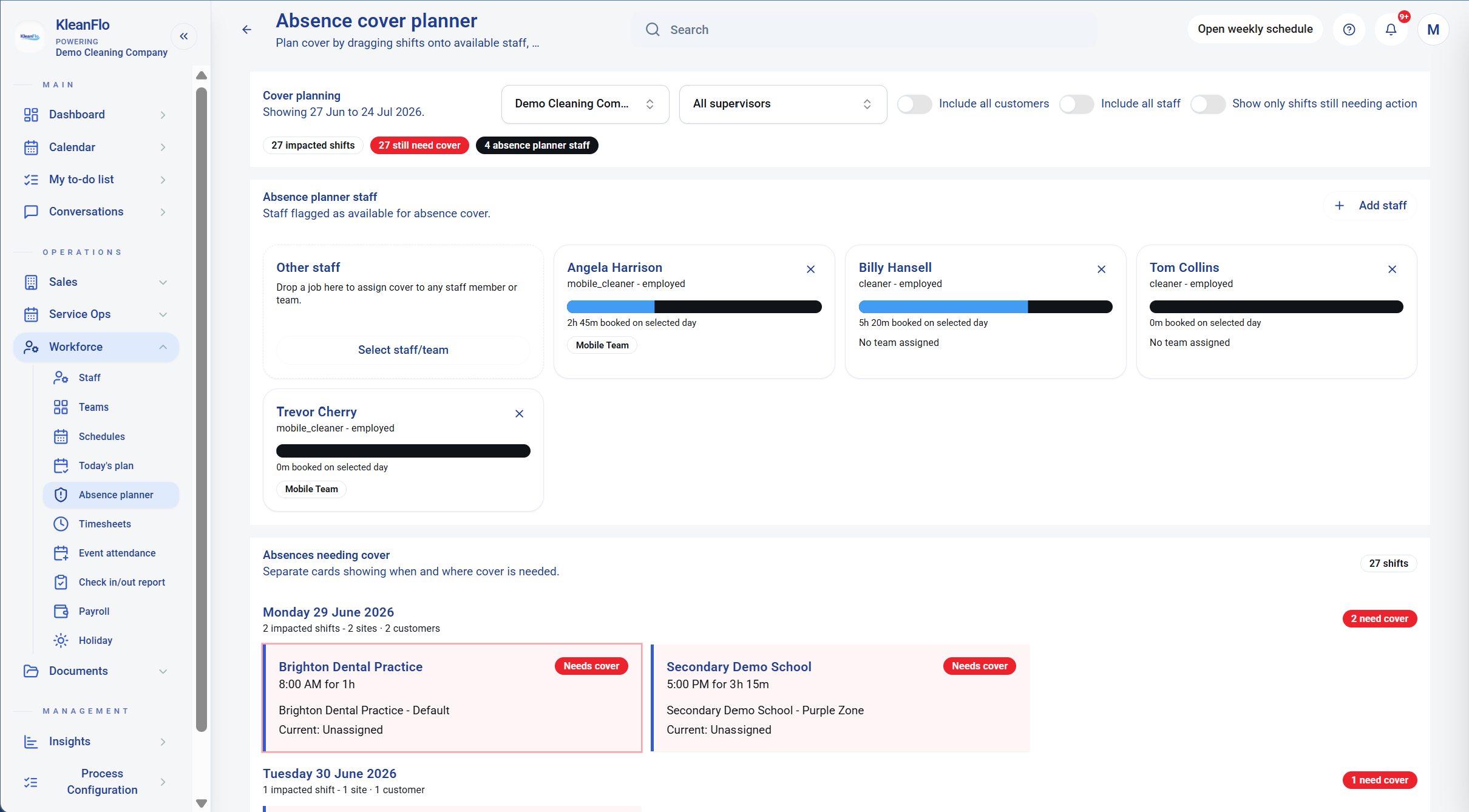
Cover planning should show the affected shift and the available people who can realistically cover it.
Update the schedule, not just the conversation
A common mistake is to solve the problem in a message thread but leave the schedule
unchanged. That creates confusion later. The cover cleaner may attend, but the rota
still shows the absent cleaner. The supervisor may not know who is expected. Payroll
may not know who should be paid.
The schedule should show the temporary change clearly. If work is split, each part
should be visible. If the supervisor is attending to complete priority areas, that
should also be recorded.
A daily view helps managers see the immediate cover position and remaining gaps.A customer view helps identify which school sites are exposed by last-minute absence.
Give the cover cleaner enough context
Last-minute cover often fails because the replacement cleaner is willing but underbriefed.
They do not know where to park, how to enter, which cupboard to use, where the priority
areas are, or who to contact if something is locked.
Site address, access point and parking notes.
Keyholder, alarm and sign-in instructions where relevant.
Cleaning cupboard or equipment location.
Priority areas and any tasks that must be completed first.
Any areas not to enter or not to clean without permission.
Supervisor or office contact if the cleaner cannot access the site.
Check-in and check-out expectations.
The cover cleaner should see the changed work on mobile, not rely only on a text message.
Job details reduce avoidable calls when the cleaner is unfamiliar with the school.
When to tell the school
A school does not need a message every time a cleaner is absent. They need confidence
that the service is controlled. If the cover is complete and standards are protected,
internal action may be enough.
Tell the school when:
The full service may not be delivered.
Priority areas need to be agreed.
Access or keyholding arrangements need to change.
The same issue is likely to continue beyond one shift.
The school has already raised concerns about the affected area.
The message should be short and operational: what happened, what is being done, what
areas are protected, and when the contractor will update them again if needed.
Record attendance evidence for the cover shift
Cover is not complete until the business knows who attended. The office needs a record
that supports payroll, customer queries and future absence review.
Who accepted the cover shift.
Whether they checked in and out.
Which method was used: GPS, NFC, known landline or manual review.
Actual start and finish times.
Any missing record or exception that needs manager review.
Whether the original cleaner's absence type was recorded correctly.
Check-in confirms the cover cleaner attended the planned work.Timesheet review brings cover attendance back into the payroll process.
Review repeated cover problems
One absence is normal. A pattern is a management signal. If the same site repeatedly
needs last-minute cover, the contractor should review the underlying cause.
Is one cleaner repeatedly absent?
Is the shift time unrealistic or hard to staff?
Is travel distance making cover difficult?
Is the site unpleasant, under-timed or poorly equipped?
Are supervisors spending too much time rescuing the contract?
Is the contract losing margin because cover is always reactive?
Last-minute cover checklist
StepAction
1. Record absenceCapture who is absent, when it was reported, absence type and affected shifts.
2. Assess riskCheck school, shift time, keyholding, priority areas and customer sensitivity.
3. Find coverUse trained staff, available cleaners, nearby teams or supervisor support.
4. Update scheduleAssign the cover cleaner or split work clearly so the rota reflects the real plan.
5. Notify peopleUpdate cleaner, supervisor, office and customer contact if service may be affected.
6. Confirm attendanceReview check-in, check-out and any missing or late records.
7. Close payroll impactRecord absence, cover hours, extra time and any manual adjustment before payroll.
How KleanFlo helps manage last-minute school cover
KleanFlo helps cleaning companies handle last-minute cover as a connected workflow
rather than a collection of calls, texts and spreadsheet edits. Schedules, staff
records, mobile updates, attendance evidence and timesheet review all support the same
operational decision.
See affected school shifts quickly.
Use cover planning to match available staff to uncovered work.
Update the schedule so supervisors and staff see the current plan.
Send cover work to the staff mobile app with site details.
Capture check-in and check-out evidence for the cover shift.
Review actual hours before payroll.
Track repeated cover pressure as part of school cleaning KPIs.
FAQs
Last-minute school cleaning cover questions
What is the fastest way to manage school cleaner sickness?
Record the absence, identify the affected work, check trained cover staff, update the schedule, notify the cleaner and supervisor, then review attendance after the shift.
Can existing school cleaners absorb missed work?
Yes, if it is realistic and recorded properly. The extra work should be visible so standards, staff workload and payroll hours are not hidden.
Should cover cleaners receive site notes?
Yes. Cover cleaners need the address, access process, priority areas, cleaning cupboard location, check-in method and supervisor contact.
How does last-minute cover affect payroll?
The absent cleaner's absence needs recording, and the cover cleaner may need extra hours paid. Timesheet review should show what actually happened.
Related resources
Strengthen school cleaning cover and attendance
Use these guides to connect cover planning with absence, schedules, attendance evidence and school cleaning KPIs.

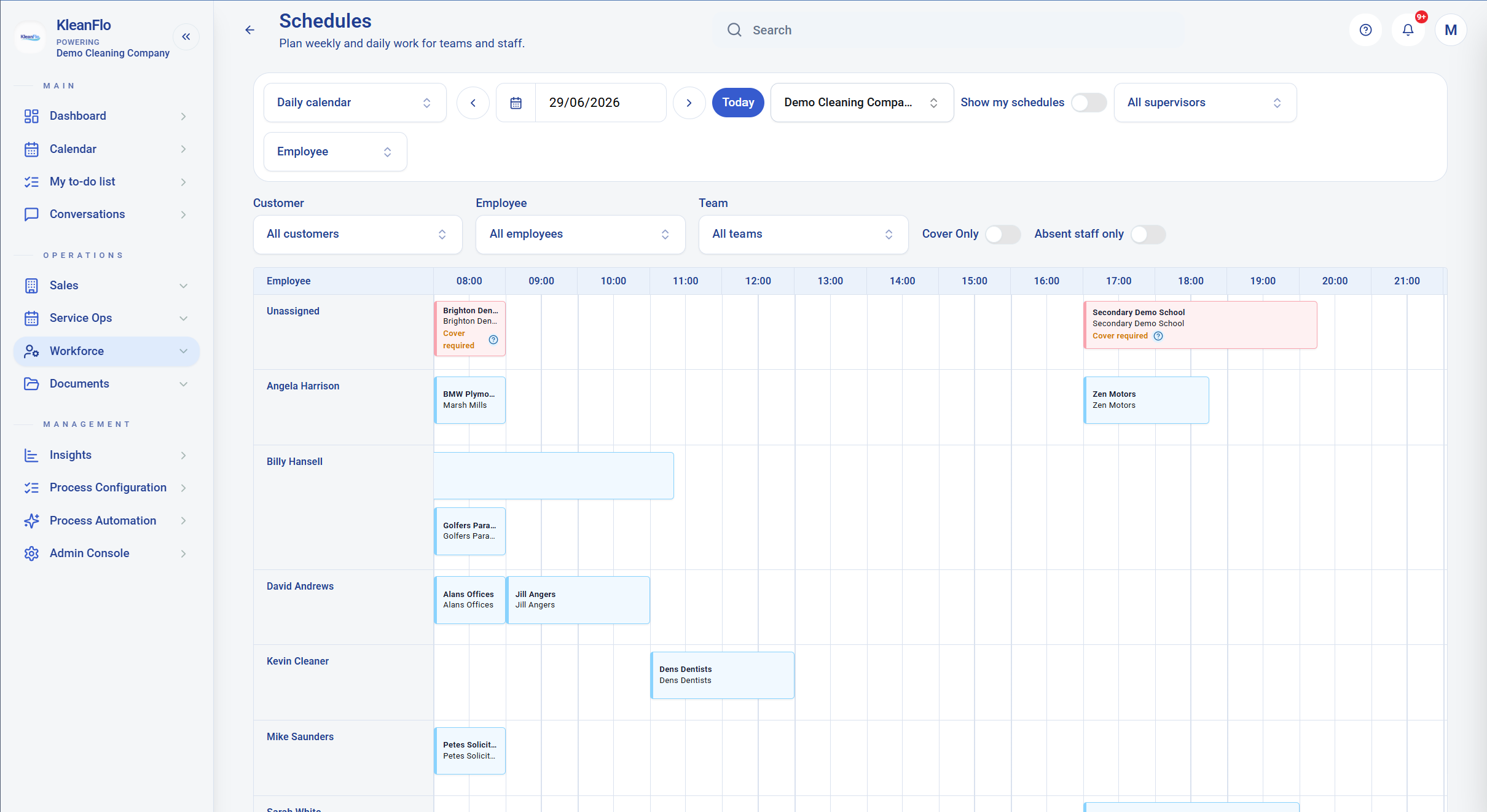 A daily view helps managers see the immediate cover position and remaining gaps.
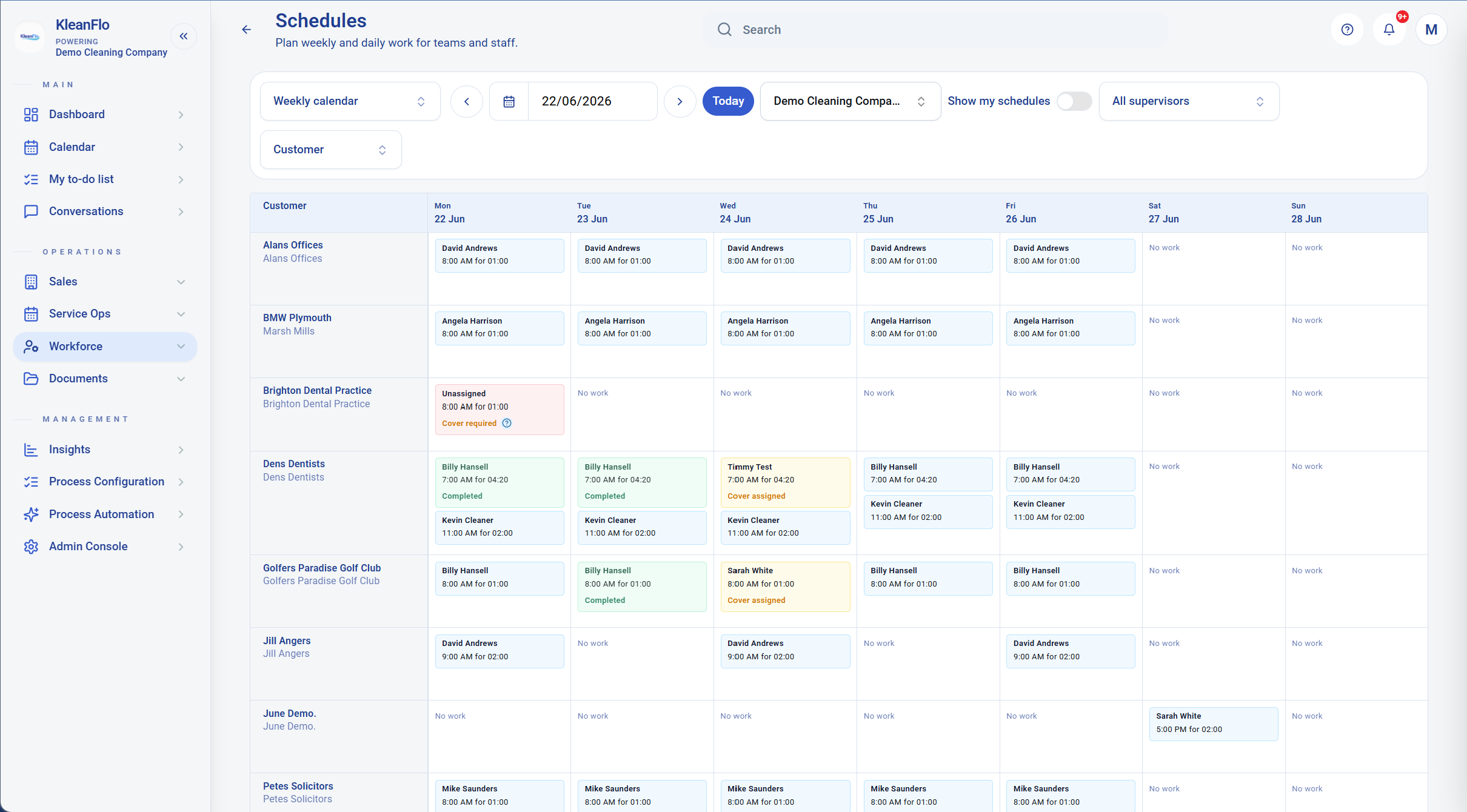 A customer view helps identify which school sites are exposed by last-minute absence.
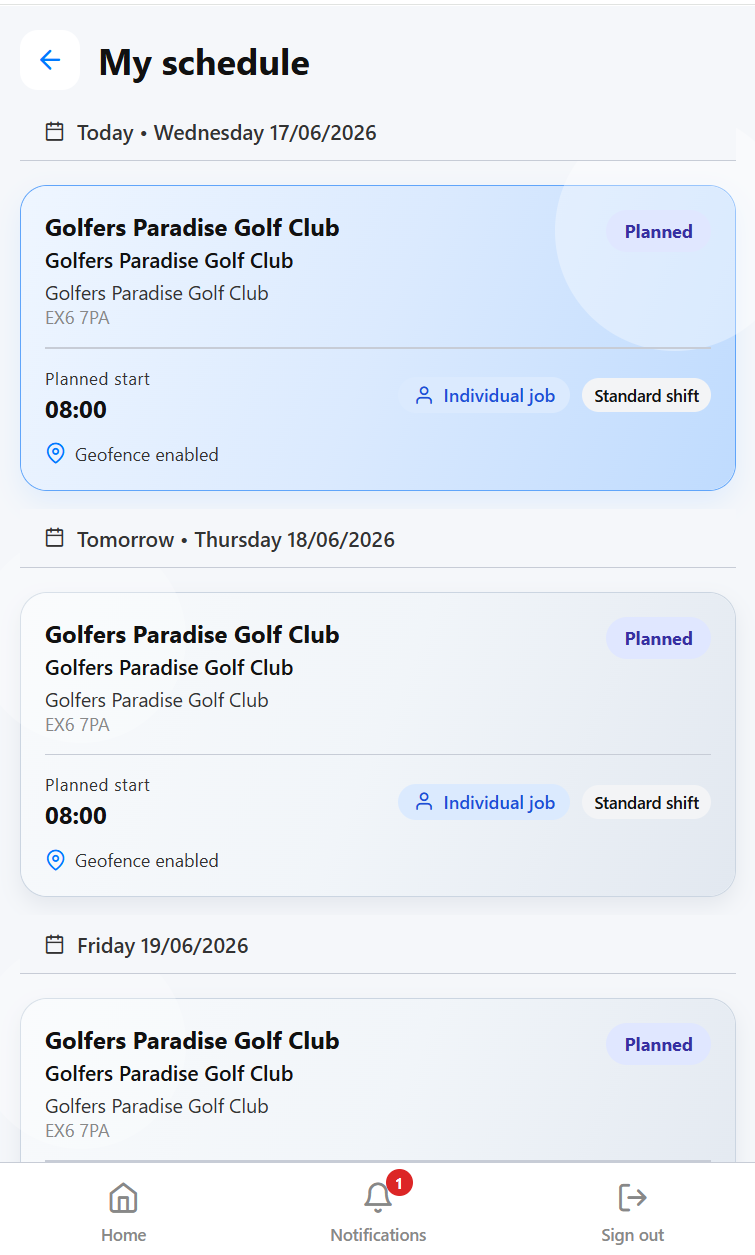 The cover cleaner should see the changed work on mobile, not rely only on a text message.
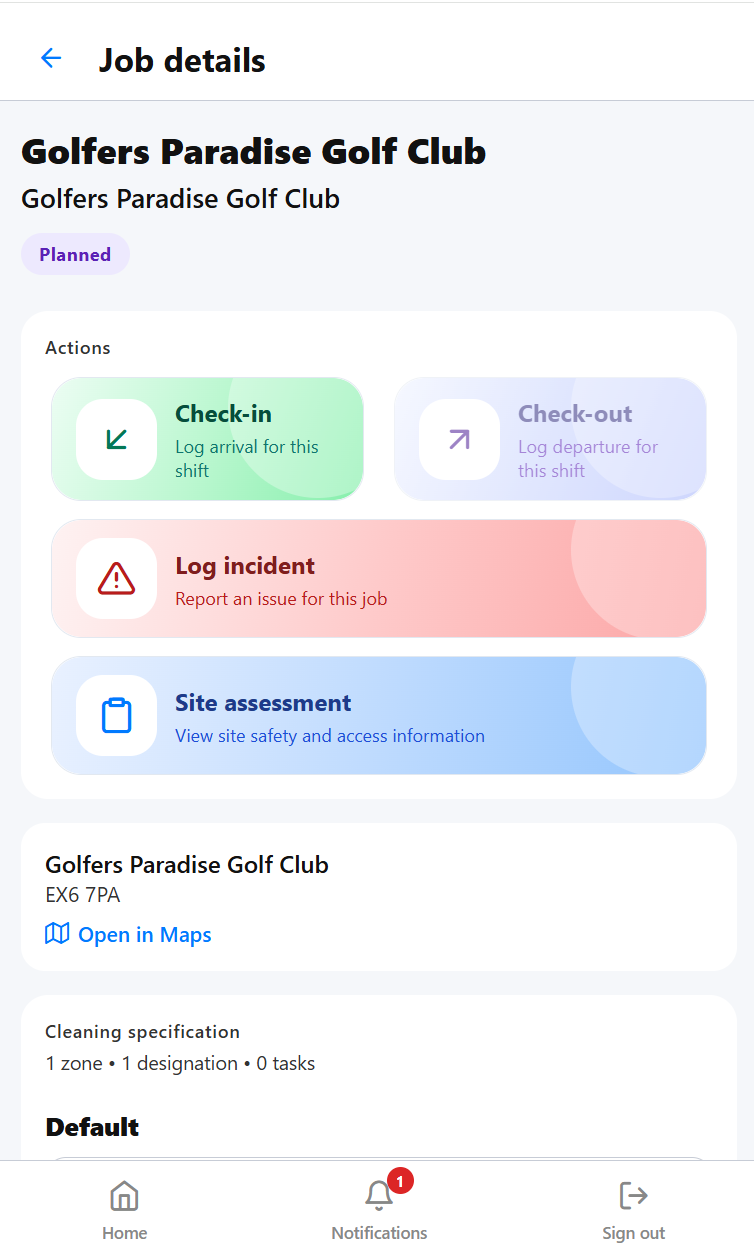 Job details reduce avoidable calls when the cleaner is unfamiliar with the school.
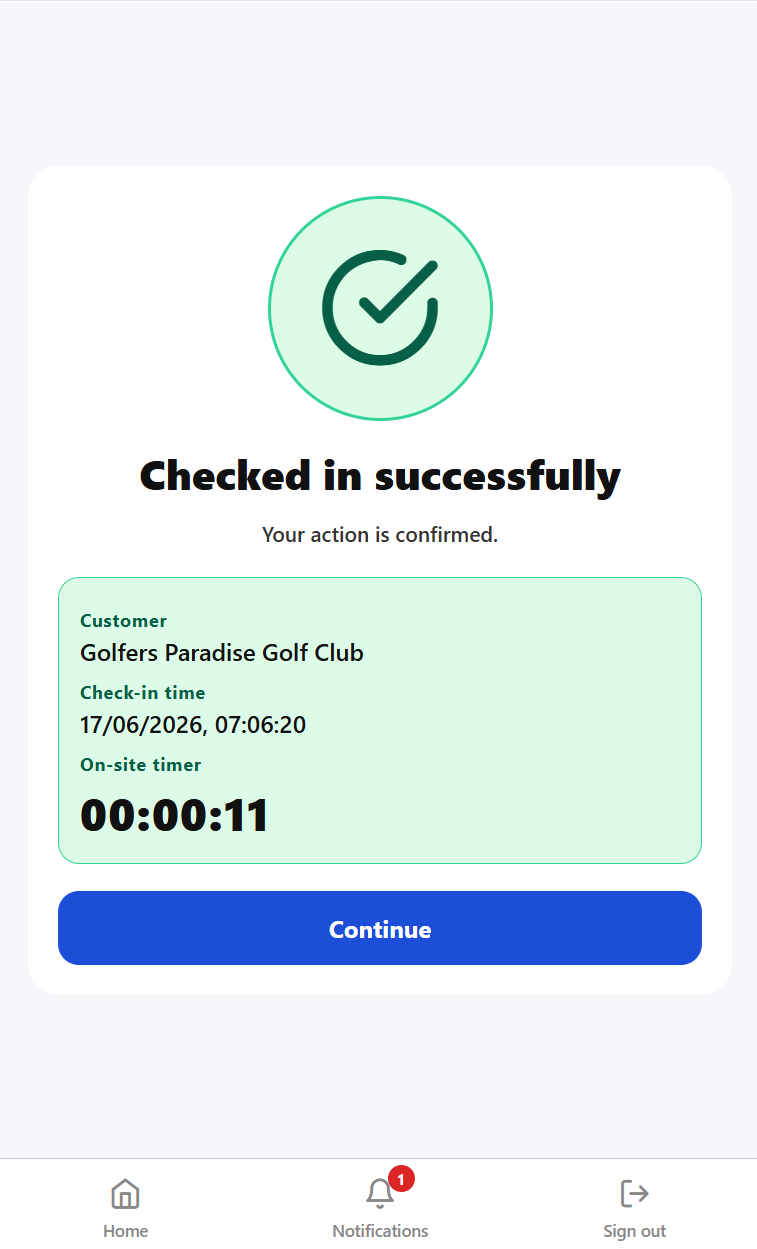 Check-in confirms the cover cleaner attended the planned work.
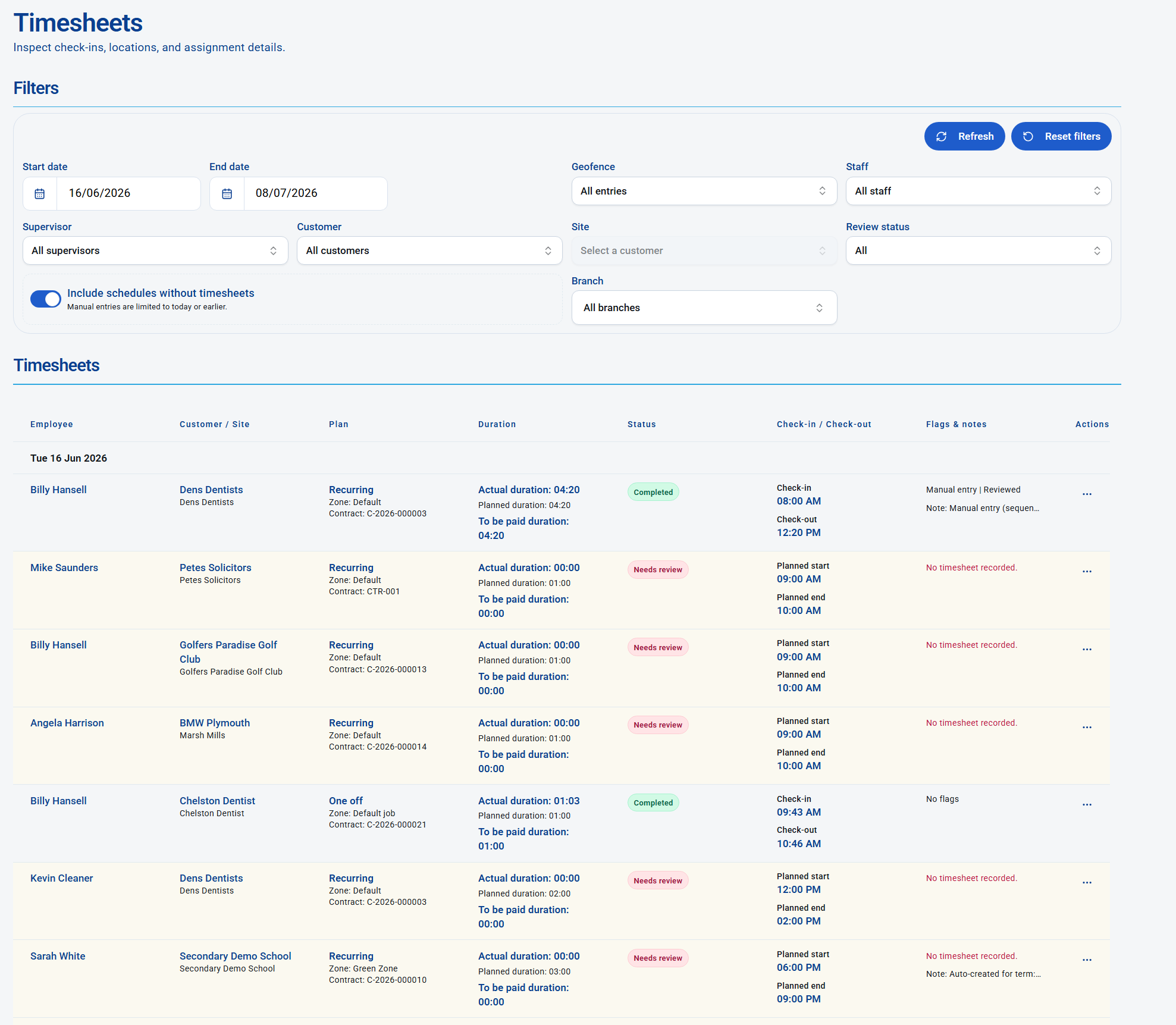 Timesheet review brings cover attendance back into the payroll process.