The calendar problem
A weekly schedule cannot handle every school change on its own
One of the biggest causes of scheduling errors in school cleaning is unexpected or irregular change to the academic calendar. The rota may say the cleaner attends every Monday to Friday, but the school calendar may say something different.
Without a clear process, these changes can lead to missed cleans, unnecessary labour costs, confused staff, unhappy customers or payroll questions later in the year.
The solution is not to rebuild the whole rota every time something changes. The solution is to keep one calendar, link changes to the affected schedules, notify the right people and record why the work changed.
School cleaning schedules need a process for exceptions: planned closures, public holidays, polling station use, emergency closures and short-notice access changes.
What are INSET days?
INSET days are teacher training days. Pupils are usually absent, but teachers and school staff may still be on site. That means the cleaning requirement may not be the same as a normal teaching day.
Some schools still need a standard clean. Others may need reduced cleaning because classrooms have not been used by pupils. Some may ask for extra cleaning in staff areas, halls or meeting rooms. The important point is that an INSET day should not be treated automatically as either a normal day or a closure without checking the contract and customer requirement.
Bank holidays
Bank holidays create their own scheduling questions, especially for Monday contracts. If the school is closed, does the clean move to another day, get cancelled, or stay in the schedule because access is still required?
The answer depends on the contract and the site. What matters operationally is that the decision is recorded. If Monday work is moved to Tuesday, the schedule should show that. If the visit is cancelled, the office should know whether hours, payroll or customer expectations are affected.
Polling stations
Many UK schools are used as polling stations. That can change the cleaning plan in several ways: early access may be needed, security arrangements may differ, classrooms or halls may need returning to normal, and an additional clean may be required after public use.
Polling station work is a good example of why school cleaning cannot rely only on a fixed weekly schedule. The same site may be open for a different purpose, with different access times and different cleaning priorities.
Emergency school closures
Some closures are planned. Others are not. Snow, flooding, heating failures, burst pipes, emergency maintenance and local incidents can all change whether cleaners should attend.
When this happens, the office team needs to answer four questions quickly:
- Is the site accessible?
- Should staff attend, stand down or be reassigned?
- Does the work need to be rescheduled?
- What should be recorded for payroll, customer communication and audit trail?
Where mistakes happen
Most errors happen when calendar changes are handled informally. A supervisor receives a message from the school. A cleaner is told not to attend. Someone updates a spreadsheet. The customer assumes the office knows. Payroll later asks what happened.
Common mistakes include:
- Leaving the original schedule in place after a closure.
- Not telling cleaners that access has changed.
- Missing additional cleans after polling station use.
- Paying or deducting hours without a clear record.
- Not recording why a visit was moved or cancelled.
- Using separate spreadsheets for closures, schedules and customer notes.
Example: a school becomes a polling station
A primary school is used as a polling station on a Thursday. The usual evening cleaner still needs to attend, but the hall has been used by the public and needs extra attention before pupils return. The caretaker also changes the access time because voting continues into the evening.
If that information sits in emails, it is easy for the cleaner to arrive at the wrong time or miss the changed cleaning requirement. If the schedule, staff communication and customer record are updated together, the team has a clearer instruction and a better audit trail.
Best-practice checklist
A practical closure process should help the office team act quickly without losing control of the schedule. Use this checklist:
- Keep one school calendar for term dates, INSET days, bank holidays and known closures.
- Link closures or changed access to the affected schedules.
- Notify cleaners and supervisors as soon as the change is confirmed.
- Record why work changed: INSET, bank holiday, polling station, snow day or emergency closure.
- Reschedule work where required instead of relying on memory.
- Keep customer communication attached to the site or contract record.
- Maintain an audit trail for payroll and service review.
Step 1: Start with the school calendar
The cleaner schedule should follow the school calendar, not fight against it. Term dates, bank holidays, known school closures and training days all need to be visible before the rota is created or amended.
This is why Guide 1 focuses on scheduling school cleaners around term dates. Once the academic year is structured properly, exceptions are easier to manage.
KleanFlo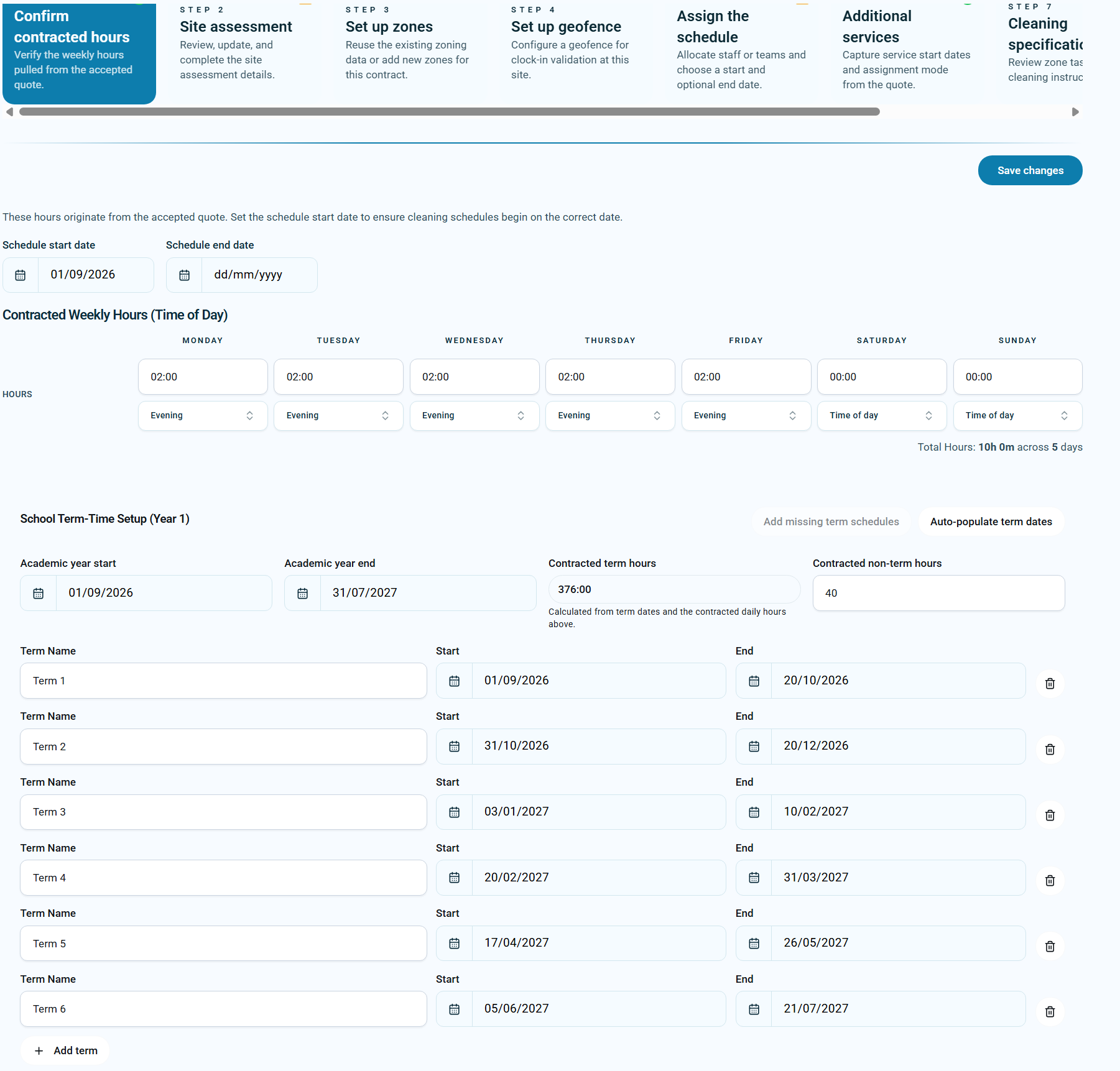 Term records give the office team the academic-year structure needed before exceptions are managed.
Step 2: Amend the affected schedule
When a closure or changed access affects a clean, the office should update the specific affected work instead of rebuilding the whole term schedule. The key is to record what changed and make sure the schedule reflects the decision.
For additional work, such as a post-polling-station clean, a separate one-off job may be appropriate. For normal contract work that is moved or amended, the change should stay connected to the customer schedule.
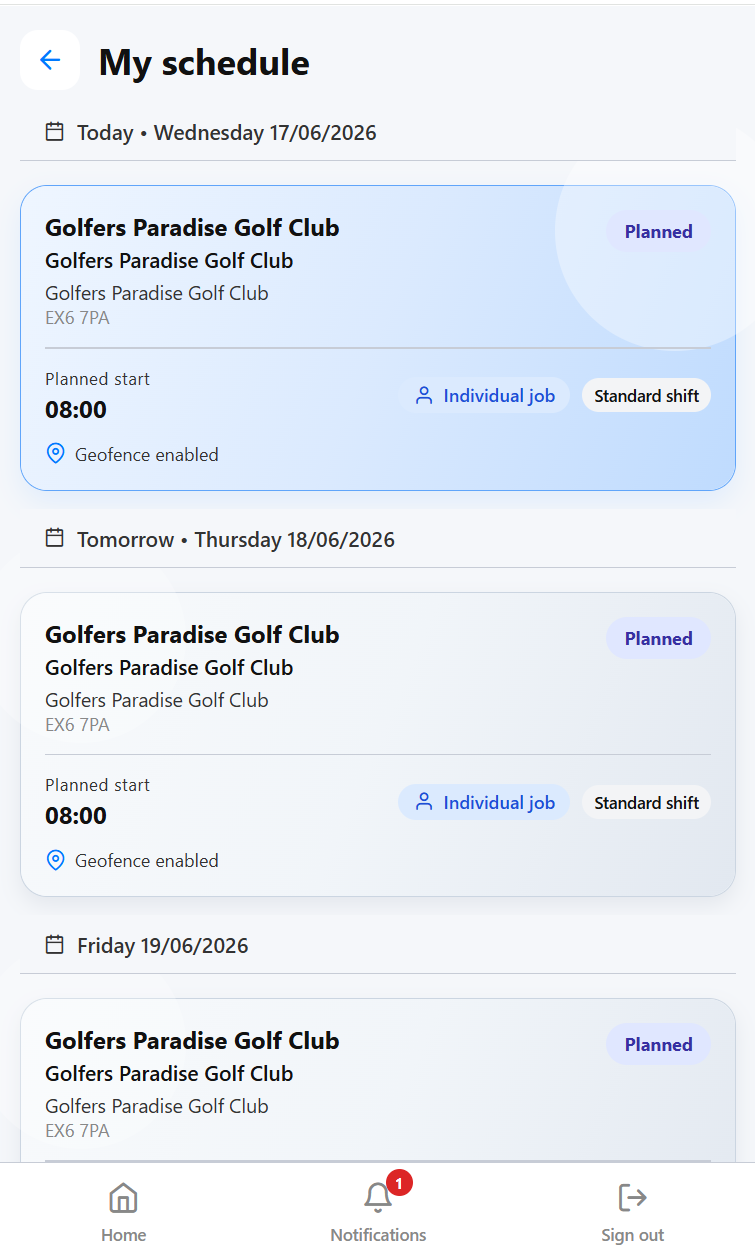 Schedule changes should flow through to the staff view when the relevant work is due.
 Additional work, such as a post-event clean, can be handled separately where the contract requires it.
Step 3: Notify staff and keep the conversation attached
School closures create confusion when instructions are passed through separate calls and messages. The cleaner needs to know whether to attend, when access is available and what has changed. Supervisors need the same information.
When communication is attached to the staff, customer or site record, the business has a clearer trail of what was agreed.
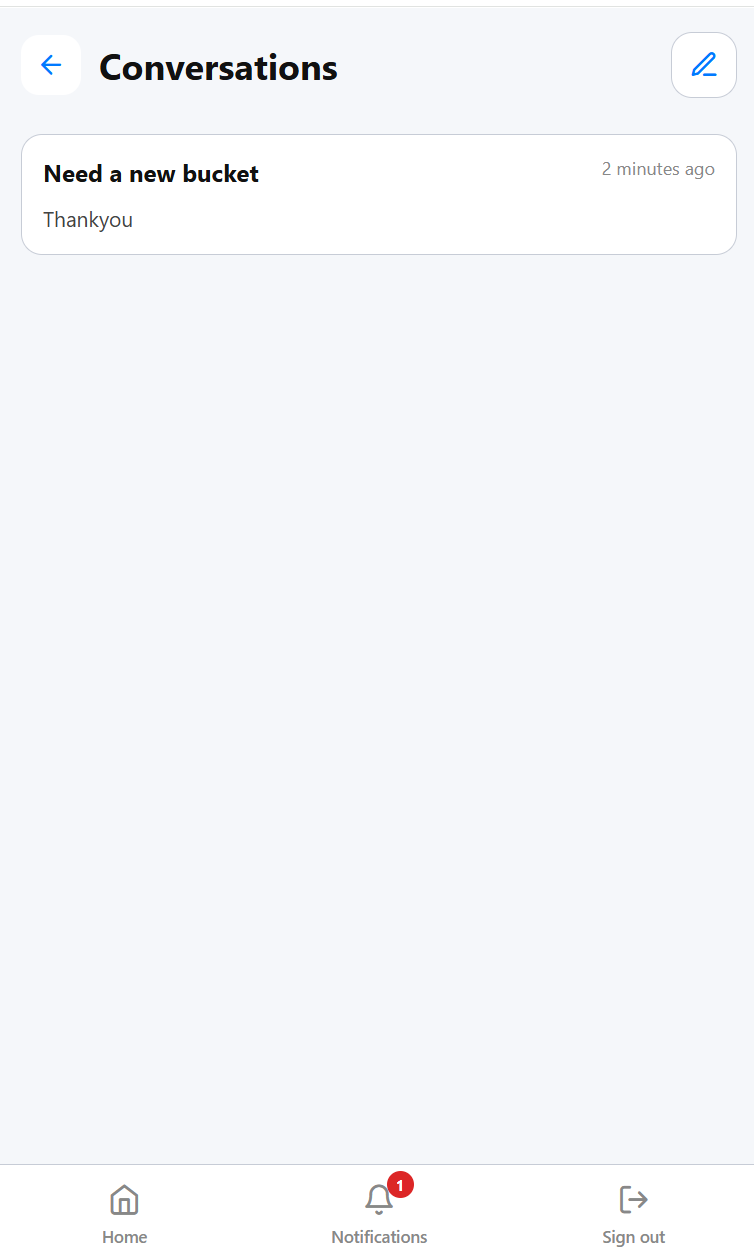 Staff conversations help keep operational instructions away from scattered message threads.
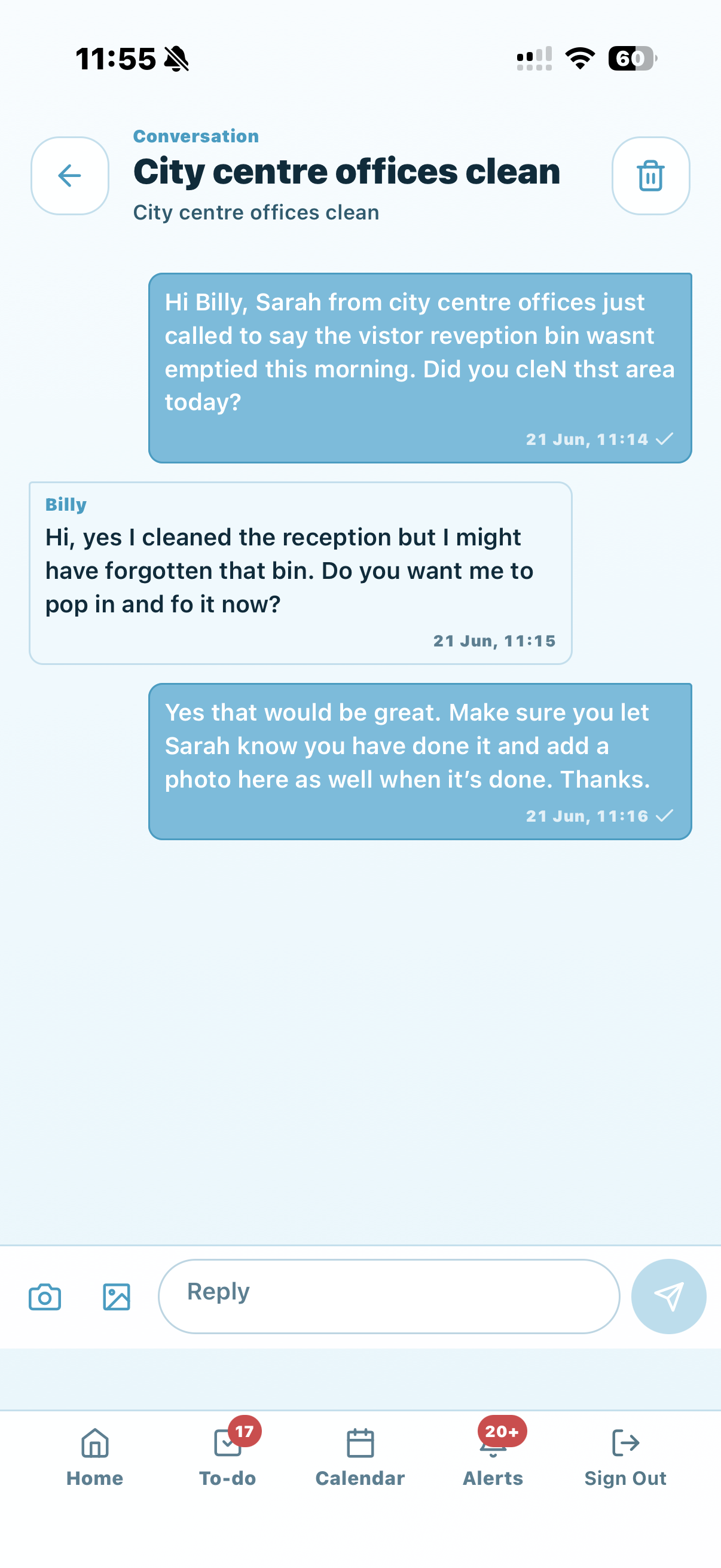 Site-specific conversations help preserve the reason behind a schedule change.
Step 4: Keep a record for payroll and customer review
School closures can affect labour hours, customer expectations and payroll questions. If a cleaner did not attend because the school was closed, the office needs to know why. If work was moved, the new date should be visible. If an additional clean was completed, the customer record should make that clear.
This matters later when the customer asks what happened, when payroll checks hours, or when the operations team reviews the contract.
Where KleanFlo fits
This is where KleanFlo school cleaning software fits naturally. KleanFlo helps cleaning companies plan around term dates, amend schedules, keep staff informed, manage customer communication and preserve a record of operational changes.
For planned exceptions such as polling stations or additional event cleans, one-off jobs can be used where appropriate. For contract schedule changes, the office can keep the work connected to the customer schedule so the annual school cleaning record remains clear.
