Official position
What changed in April 2026?
Business.gov.uk says the Statutory Sick Pay changes were introduced on 6 April 2026. The employer guidance states that SSP is now payable from the first full day of sickness absence, that the Lower Earnings Limit has been removed, and that the rate is calculated at 80% of average weekly earnings or the flat weekly rate, whichever is lower.
GOV.UK's HMRC guidance for sickness absences crossing 6 April 2026 says the same three points: from 6 April 2026 SSP is available to all eligible employees regardless of earnings, payable from the first full day of sickness absence, and paid at 80% of average weekly earnings or the uprated weekly flat rate of £123.25, whichever is lower.
For 6 April 2026 to 5 April 2027, GOV.UK's manual calculation guidance states that the weekly SSP rate is either 80% of the employee's average weekly earnings or £123.25, and employers must pay whichever amount is lower.
The safest practical summary is: eligible employees can now be in scope from the first full working day of sickness, even if their earnings would previously have sat below the old Lower Earnings Limit.
That does not mean every absence automatically creates SSP. GOV.UK still lists eligibility conditions, including that the person must be classed as an employee, must have done some work for the employer, must have been ill for at least one full working day, and must tell the employer within the employer's time limit, or within 7 days if no time limit is set.
Why cleaning companies are particularly affected
Commercial cleaning work is often built from many small blocks of labour. A cleaner may work two hours each evening at one site, an early morning shift at another, or term-time hours at a school. Some staff work predictable patterns. Others work variable shifts, cover shifts, one-off work, school holiday cleans or fluctuating hours across several customers.
That matters because the 2026 SSP rules bring more lower-hours employees into the area that payroll teams must review. Under the old system, some cleaners whose average earnings were below the Lower Earnings Limit may not have qualified for SSP. Since 6 April 2026, earnings alone no longer exclude an otherwise eligible employee.
The removal of waiting days also changes the urgency. A one-day absence is no longer just an operational cover problem. It may also need a payroll decision and a record that explains the dates, qualifying days, average weekly earnings basis and whether SSP was paid.
For office-based businesses, one employee being off sick may mainly affect internal workload. For cleaning contractors, the missed shift is often tied to a contractual specification at a customer site. If the cleaner does not attend, bins may not be emptied, washrooms may not be checked, classrooms may not be ready, or a keyholder may be left waiting.
The real cost is not only sick pay
Cleaning companies should not look at the SSP change only as a payroll-rate change. The larger day-to-day cost can be the disruption around the absence.
When a cleaner reports sick, someone has to identify all affected work. That may mean checking a rota, confirming which customer sites are involved, finding whether the cleaner was due to open or lock up, checking whether a supervisor already planned to visit, and deciding whether the work can be covered, shortened, moved or escalated to the customer.
The hidden costs usually appear in familiar places:
- supervisor time spent calling or messaging potential cover cleaners;
- office time updating spreadsheets, WhatsApp threads and payroll notes;
- overtime, travel time or agency labour used to protect the contract;
- missed cleaning specifications where cover cannot be arranged quickly enough;
- customer complaints when communication is late or unclear;
- payroll corrections where absence, attendance or cover records do not match;
- duplicated records across rota spreadsheets, HR notes, timesheets and payroll exports.
The 2026 SSP rules make those records more important because more short absences may now need to flow cleanly from operations into payroll review.
KleanFlo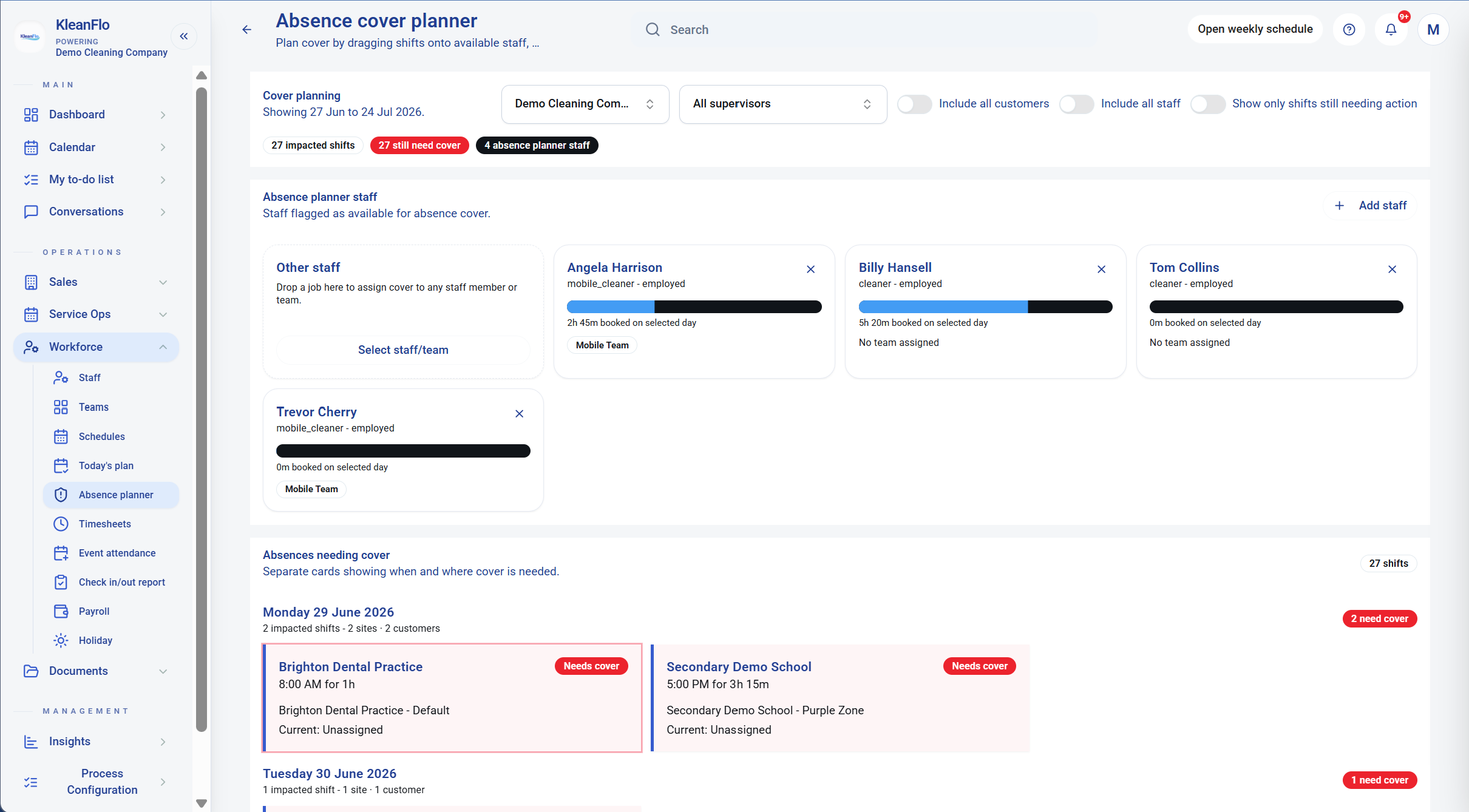 Connect absence to affected shifts
When absence is linked to the schedule, supervisors can see which customer sites and visits need a cover decision.
KleanFlo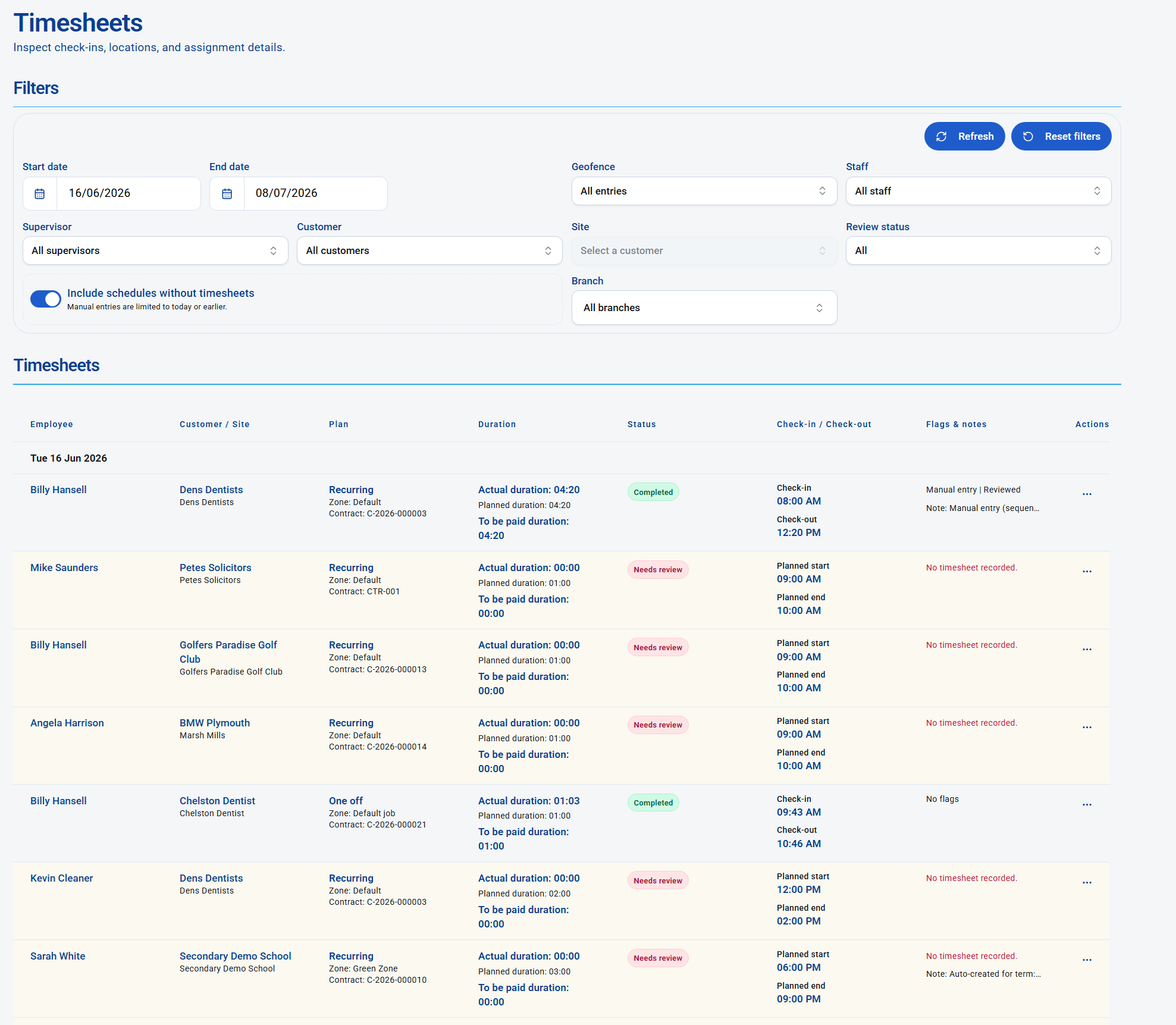 Review what actually happened
Payroll preparation becomes easier when planned shifts, missed shifts, cover attendance and reviewed hours are kept together.
What cleaning companies should record
Cleaning companies do not need to turn supervisors into payroll specialists. They do need a reliable operational record that payroll can trust. The record should be clear enough to answer two separate questions: what work was affected, and what payroll information may be needed?
A practical sickness and cover record should include:
- the employee who reported sick;
- the first full day of sickness absence;
- when and how the employee notified the business;
- affected shifts, customer sites, areas and duties;
- the qualifying days or normal working pattern used for payroll review;
- average weekly earnings information or a link to the payroll system that calculates it;
- whether the absence is new or potentially linked to an earlier period of incapacity for work;
- whether a fit note is required because the absence lasts more than 7 days in a row;
- who approved, reduced, moved or cancelled the affected work;
- the cover cleaner or supervisor assigned to the visit;
- actual attendance, check-in, check-out and any exception notes;
- payroll status, including whether the absence and any cover hours have been reviewed;
- return-to-work date and any follow-up conversation required;
- repeated absence patterns that may need management attention.
GOV.UK's calculator page also makes the practical data requirement clear: employers need the dates the employee was sick and salary details. In cleaning operations, those details sit alongside shift, site and cover information, so the office should avoid splitting them across too many disconnected files.
Average weekly earnings are where variable-hours records matter
The change to 80% of average weekly earnings creates a particular challenge for cleaning businesses with variable hours. GOV.UK's manual calculation guidance says average weekly earnings must include all earnings on which Class 1 National Insurance contributions are due, or would be due if earnings were high enough.
For employees with regular weekly pay, the guidance explains that the relevant period normally ends on the last normal payday before the first complete day of sickness, and starts on the day after the last normal payday at least 8 weeks before that. For monthly paid employees, the calculation is different. For new employees, mistimed payments, changed pay frequency or overpayments and underpayments, the official guidance gives more detailed rules.
The operational lesson is straightforward: if the office cannot see what was planned, what was worked, what was paid and which absence dates apply, payroll review becomes harder. That is especially true for cleaners whose earnings vary because they pick up cover shifts, lose shifts during school holidays, move between contracts or work irregular hours.
Cleaning management software should not replace payroll software. It should give payroll a cleaner operational record before payroll calculation begins.
A worked cleaning-company example
Consider a cleaner who normally works 10 hours a week across five evening cleaning shifts. They report sick before Monday's shift and remain off for three full working days.
Before April 2026, an employee with low weekly earnings may have fallen below the Lower Earnings Limit. Under the rules from 6 April 2026, the earnings threshold has been removed for eligible employees. That means the contractor should not dismiss the absence from payroll review just because the cleaner is low-hours.
The office now needs to manage two tracks at the same time:
- Operational track: identify Monday, Tuesday and Wednesday sites, contact available cover cleaners, confirm who can attend, notify supervisors, record actual attendance and note any missed work.
- Payroll track: confirm eligibility, check sickness dates, establish the normal qualifying days, calculate or provide average weekly earnings information, review any linked absence rules and record the payroll outcome.
If payroll works out that the employee's average weekly earnings are £100, 80% would be £80 a week. Because £80 is lower than the £123.25 weekly flat rate for 2026/27, £80 would be the relevant weekly SSP amount before any daily-rate calculation. This is an illustrative example only. Actual treatment should be checked against current GOV.UK guidance, payroll software and the employee's circumstances.
How software can help without pretending to give legal advice
Cleaning-management software cannot decide whether an employee legally qualifies for Statutory Sick Pay. It cannot replace GOV.UK guidance, payroll software, HR advice or professional payroll judgement.
What it can do is reduce the operational confusion around sickness. In KleanFlo, absence, planned shifts, cover, attendance and payroll preparation can be handled as connected records rather than separate notes.
A practical process looks like this:
- The cleaner reports sick and the absence is recorded against the staff member.
- The system shows affected shifts, customer sites and planned work.
- A supervisor or office user assigns cover, moves work or marks exceptions.
- The cover cleaner sees the updated work in their schedule.
- Mobile check-in and check-out record what happened on site.
- Timesheet review separates planned work, missed work, cover work and approved hours.
- Payroll receives cleaner absence information and reviewed operational records instead of scattered messages.
That does not remove the need for correct payroll calculation. It makes the inputs more reliable.
KleanFlo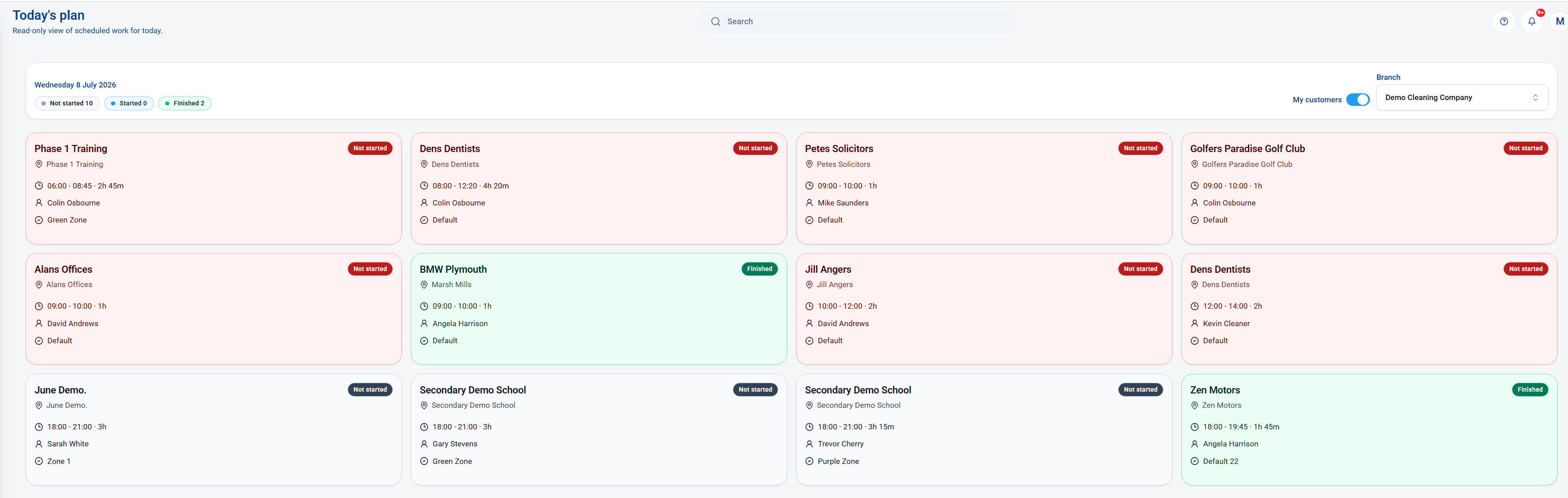 See the day's affected work
When sickness is reported, the office needs a quick view of which visits, sites and staff are affected today.
KleanFlo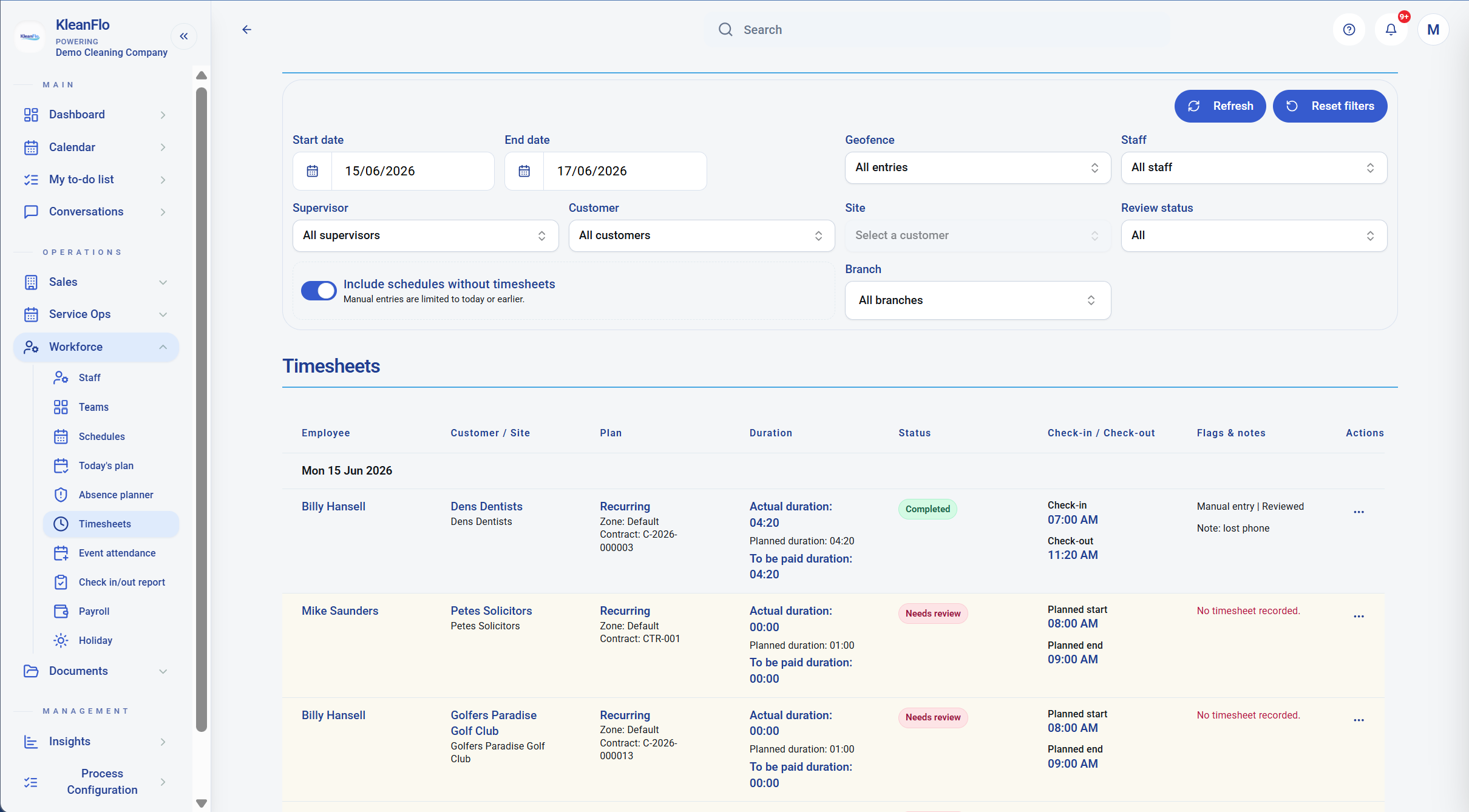 Prepare records before payroll
Reviewed attendance and cover records help reduce payroll corrections after a sickness absence.
Practical checklist for cleaning companies
Use this as an operational readiness checklist for the 2026 SSP changes:
- Review sickness absence policies and remove outdated references to three waiting days or an SSP earnings threshold.
- Check payroll software and payroll-provider settings for the post-6 April 2026 rules.
- Train supervisors and office staff to record the first full day of sickness accurately.
- Make sure staff know when and how to report sickness.
- Record affected customer sites and planned shifts as soon as sickness is reported.
- Create a clear process for assigning cover, reducing work, moving work or notifying customers.
- Keep absence, cover and actual attendance records connected.
- Review variable-hours and low-hours staff carefully rather than assuming they are outside SSP.
- Use GOV.UK's SSP calculator or manual guidance where payroll needs to calculate entitlement.
- Keep return-to-work and repeated absence information visible for managers.
Useful official sources
The rules can change, and this article should not be your payroll authority. The key official pages checked for this guide are:
