Preparing for a school cleaning contract mobilisation
Published: 16 July 2026Last updated: 16 July 2026Reading time: 15 minutes
Winning a school cleaning contract is only the start. The mobilisation period decides
whether the first week feels controlled or chaotic. A good mobilisation plan turns the
tender promise into live schedules, prepared staff, clear site rules, safe working
documents and a confident school customer.
TUPE and staffSafeguardingSchedulesGo-live control
In this guide
Mobilisation timeline
TUPE, recruitment and staff records
DBS, safeguarding and access control
Site handover and specification checks
RAMS, COSHH and equipment setup
First-week and first-month controls
Start before the first shift
Mobilisation is not admin after the contract is won. It is the operational bridge
between the quote, the school relationship and the first live clean.
What school cleaning mobilisation needs to achieve
A school cleaning mobilisation should make the first day boring in the best possible
way. Cleaners know where to go. Supervisors know what to check. The school knows who
to contact. The office knows the schedule, pay hours, site rules and audit routine.
The risk in school cleaning is that too much knowledge sits in different places:
tender files, emails, old spreadsheets, previous contractor records, site caretaker
notes, WhatsApp messages and someone's memory. Mobilisation is the moment to bring
that information into one controlled operating process.
A strong mobilisation plan protects the first impression. Schools remember whether
the new contractor starts calmly, communicates clearly and fixes early issues quickly.
Mobilisation starts at contract award
Many cleaning companies wait until the week before go-live to set up the detail. That
is where problems begin. By that stage there may not be enough time to confirm staff
records, complete site inductions, order equipment, agree access, build schedules,
brief cleaners or resolve missing information.
The practical aim is to create a mobilisation plan as soon as the contract is awarded,
then work through it in a logical order.
A practical mobilisation timeline
The timescale will vary, but the structure below works well for many school cleaning
contracts. Larger multi-site school groups may need more time and a more formal
project plan.
StageWhat needs to happen
Contract awardConfirm scope, start date, site contacts, mobilisation owner, key risks, TUPE position, communication route and document requirements.
Weeks 4-6 before go-liveGather employee information, review specification, complete site handover, confirm safeguarding/access rules, build mobilisation actions and agree customer meeting rhythm.
Weeks 2-4 before go-liveBuild schedules, review term dates, order equipment and consumables, prepare RAMS/COSHH, set up staff records, plan inductions and confirm first-week supervisor cover.
Final weekBrief staff, check keys and alarms, confirm mobile access, issue site documents, test communication routes, walk the site and complete launch readiness checks.
First weekProvide visible supervisor support, check attendance, resolve access issues, review standards daily and keep the school informed.
First monthRun planned audits, review hours and productivity, confirm payroll records, close mobilisation actions and agree any service adjustments.
1. Confirm the contract scope before setting up schedules
The mobilisation team should start by translating the winning proposal into live
operations. That means confirming exactly what is included, what is excluded and what
needs to happen before day one.
Customer name, school site, academy trust or local authority details.
Contract start date, contract length and mobilisation deadlines.
Cleaning specification, frequencies, areas, exclusions and periodic work.
Term-time, non-term, holiday deep-clean and lettings requirements.
Daily hours, supervisor hours, cover expectations and management visits.
Consumables, sanitary services, washroom supplies and equipment responsibilities.
Reporting, audit, customer portal or service review expectations.
If any part of the specification is unclear, resolve it before building the schedule.
A school cleaning schedule built on uncertain assumptions will usually create problems
later in payroll, staffing or service delivery.
2. Handle TUPE, recruitment and staff records carefully
If staff are transferring from a previous contractor, the mobilisation plan needs a
people workstream. TUPE can affect employee information, consultation, contracts,
pay arrangements and continuity of employment. Cleaning companies should take proper
HR or legal advice where needed.
From an operational point of view, the key issue is that staff information needs to
become usable before go-live. Names alone are not enough.
Employee names, roles, contracted hours, shift patterns and current site allocation.
Pay rates, holiday arrangements, allowances and any contractual notes.
Known absence, restrictions, training needs or reasonable adjustments.
Supervisor structure and who the school recognises as the day-to-day contact.
Mobile numbers, emergency contacts and preferred communication route.
Uniform, ID badge, keyholding and induction requirements.
If there is no TUPE transfer
Where a contract is being staffed through recruitment, the mobilisation plan needs to
allow enough time for hiring, right-to-work checks, references, training, DBS or vetting
requirements, uniform, mobile access and site induction. Schools are sensitive sites,
so recruitment delays can quickly affect the launch.
3. Confirm safeguarding, DBS and access expectations
School cleaning contractors need to understand the school's safeguarding and access
rules before staff arrive on site. The exact requirements can depend on the role,
timing, supervision arrangements, the school's policy and whether work is classed as
regulated activity. Contractors should confirm requirements with the school and follow
current statutory guidance.
DBS or vetting requirements for cleaners, supervisors and mobile managers.
Whether cleaning takes place during school hours, out of hours or both.
Sign-in, visitor, ID badge, keyholding and alarm procedures.
Restricted areas, photo rules and confidential-information expectations.
Who staff should contact if they see a safeguarding concern.
Induction requirements before a cleaner can work independently on site.
Do not leave access and safeguarding detail until the first shift. If a cleaner
cannot enter the building, does not know the alarm process or has not completed the
required induction, the contract can start badly before any cleaning standard is judged.
4. Complete a practical site handover
The tender survey is rarely enough for mobilisation. Before go-live, the operational
team needs a handover that confirms what the site is actually like and how the cleaning
service will run day to day.
Entrances, alarm panels, key safes, signing-in points and access times.
Cleaning cupboards, water points, waste areas and equipment storage.
Classrooms, washrooms, halls, offices, specialist rooms and outbuildings.
High-risk or high-visibility areas such as reception, pupil toilets and dining spaces.
Known problem areas, recurring complaints and areas the school is sensitive about.
Building works, lettings, clubs, exams, holiday access and special events.
Photos or notes that will help supervisors brief staff correctly.
5. Build the school calendar and schedule
School cleaning schedules are not just Monday-to-Friday repeats. Term dates, INSET
days, bank holidays, closures, holiday deep cleans and non-term work all affect the
schedule. Mobilisation should create the operating calendar before the first shift.
Import or enter term dates for the school or trust.
Record INSET days, bank holidays, planned closures and known events.
Create term-time daily schedules for each cleaner or team.
Plan non-term cleaning, deep-clean tasks and periodic work.
Check annualised hours, salary spread or holiday arrangements where relevant.
Assign supervisors and mobile managers to visits, audits or support checks.
Confirm how last-minute absence and cover will be handled.
School mobilisation should turn the academic calendar into live schedules, not leave term dates in a separate document.
6. Prepare RAMS, COSHH and site documents
Cleaning companies should have the right method statements, risk assessments, COSHH
information and site instructions available before staff begin work. These documents
need to match the actual school site, not just a generic cleaning template.
Site-specific risk assessments and method statements for routine cleaning.
COSHH information for chemicals used on site.
Product dilution, PPE, storage and spill-response instructions.
Lone working, out-of-hours access and keyholding procedures where relevant.
Manual handling, floor care, machinery and ladder/step-use instructions where required.
Emergency contacts, accident reporting and incident escalation process.
Cleaning specification, site maps, task lists and supervisor checklists.
7. Order equipment, chemicals and consumables early
Equipment delays are one of the easiest ways to damage a mobilisation. If staff arrive
but the correct vacuums, mops, chemicals, trolleys, floor pads, PPE or consumables are
missing, the team starts from a weak position.
Audit existing equipment if assets transfer from the previous contractor.
Decide what will be reused, replaced, repaired or removed.
Order new equipment, cleaning chemicals, PPE and washroom supplies.
Confirm delivery address, storage location and who signs for items.
Label or record equipment assets where needed.
Check electrical testing, machinery training and maintenance arrangements.
Confirm who is responsible for consumable stock checks and reordering.
8. Brief staff before go-live
The staff briefing should connect the contract promise to the daily routine. Cleaners
need to know what is changing, what standard is expected and how to get help.
Introduce the company, supervisor and contact routes.
Explain the site specification, shift times, areas and priorities.
Confirm attendance, check-in, check-out or timesheet process.
Explain mobile app access, documents, messages and incident reporting.
Review safeguarding, access, keys, alarms and restricted areas.
Confirm uniform, PPE, ID and presentation expectations.
Explain how complaints, blocked access or missing equipment should be reported.
9. Agree communication with the school
A new school cleaning contract needs a clear communication rhythm. The school should
know who to contact, how urgent issues are handled and when the contractor will provide
updates during the first few weeks.
Primary school contact and contractor account owner.
Day-to-day supervisor or mobile manager contact.
Escalation route for urgent issues.
First-week check-in times and first-month review meeting.
How audit results, photos, documents or service updates will be shared.
How the school should raise new requests or report service concerns.
10. Control the first week
The first week should have more management visibility than a normal week. Even if the
contract is well planned, there will be practical questions: access, timing, classroom
layout, bins, consumables, caretaker preferences, late clubs and unexpected school use.
First-week checkWhy it matters
AttendanceConfirm staff arrive, shifts are covered and any absence is dealt with before standards suffer.
AccessCheck keys, alarms, sign-in, locked areas and out-of-hours entry work in practice.
StandardsAudit visible areas early, especially reception, toilets, classrooms and corridors.
Staff confidenceGive cleaners a quick route to ask questions before small issues become habits.
Customer confidenceShow the school that the contract is being actively managed, not simply handed to the cleaning team.
11. Run a first-month review
The first month should close the mobilisation loop. By then, the contractor should
know whether the labour hours are realistic, whether staff understand the site, whether
the school is comfortable with communication and whether any early service risks need
action.
Review audit results, complaints, incidents and informal customer feedback.
Compare planned hours with actual attendance and timesheets.
Check whether all staff records, documents and mobile access are complete.
Confirm equipment, consumables and stock processes are stable.
Review whether term dates and non-term work are correctly set up.
Close mobilisation actions or agree a dated improvement plan.
Set the normal contract review and audit rhythm going forward.
School cleaning mobilisation checklist
Use this as a working checklist for the mobilisation owner. The exact detail should be
adjusted for the school, contract, trust, local authority requirements and advice from
HR, health and safety or legal specialists where needed.
WorkstreamChecklist items
Contract setupScope, start date, contacts, service levels, periodic work, customer expectations, reporting requirements and contract documents.
PeopleTUPE or recruitment, staff records, contracted hours, pay notes, roles, supervisors, right-to-work, inductions and communication details.
SafeguardingDBS or vetting requirements, site policy, ID, sign-in, restricted areas, photo rules and safeguarding reporting route.
Site handoverAccess, keys, alarms, cleaning stores, water points, waste areas, problem zones, caretaker notes and school calendar constraints.
SchedulesTerm dates, INSET days, closures, daily cleaning shifts, non-term work, deep cleans, cover process and supervisor visits.
DocumentsRAMS, COSHH, cleaning specification, site instructions, emergency contacts, incident process and training records.
EquipmentAsset transfer, new orders, repairs, storage, PPE, chemicals, consumables, machinery, maintenance and stock responsibility.
Go-liveStaff briefing, mobile access, first-week supervisor cover, early audits, issue log and customer updates.
First-month reviewAudit results, attendance, payroll hours, customer feedback, open issues, improvement actions and steady-state operating rhythm.
How KleanFlo helps mobilise school cleaning contracts
KleanFlo helps cleaning companies turn mobilisation information into live operational
records. Instead of leaving data in tender documents and spreadsheets, teams can create
the customer, site, contract, schedules, staff records, documents, audit routines and
mobile workflows in one connected system.
Create customer, site, contract and schedule records from one setup process.
Bring school term dates, non-term work and planned schedules into the operating calendar.
Give staff mobile access to schedules, job details, documents, messages and actions.
Manage audits, incidents, conversations and customer portal visibility after go-live.
Review attendance, timesheets and payroll hours from the same operational data.
Use process automation to keep mobilisation actions moving before the contract starts.
Mobilisation should create live schedules, not just a handover document.Staff need clear mobile access to the work once the contract is live.
Official guidance to consider
This guide is a practical operational resource, not legal advice. School cleaning
contractors should follow their contract, the school's local policies and current UK
guidance where relevant.
One person should own the mobilisation plan, even if HR, operations, supervisors,
finance and health and safety all contribute. Without a clear owner, actions get
missed between departments.
Should mobilisation include the school caretaker or site manager?
Yes. The caretaker or site manager often holds essential practical knowledge about
keys, alarms, access, storage, problem areas, lettings and daily site expectations.
What is the biggest mistake during school cleaning mobilisation?
The biggest mistake is assuming the contract can start from the tender file alone.
A winning quote needs to be translated into schedules, staff records, documents,
site rules, equipment, audits and communication before the first shift.
Should audits start in the first week?
Yes, but they should be used constructively. Early audits help confirm standards,
identify access or training issues and reassure the school that the new contract is
being actively managed.
Related school cleaning resources
Plan the contract from quote to live service
Use these guides to connect mobilisation with quoting, scheduling, absence cover, audits and school-specific operations.

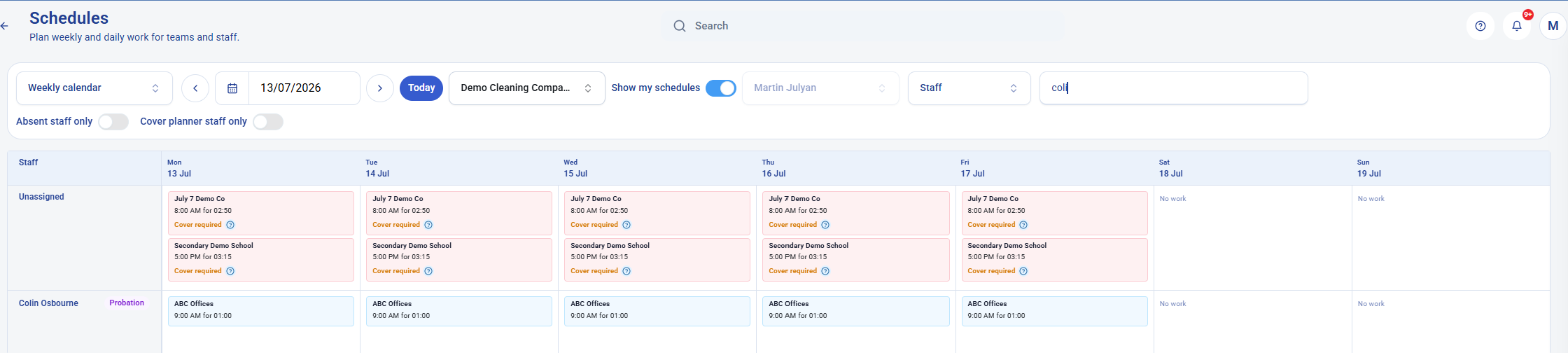
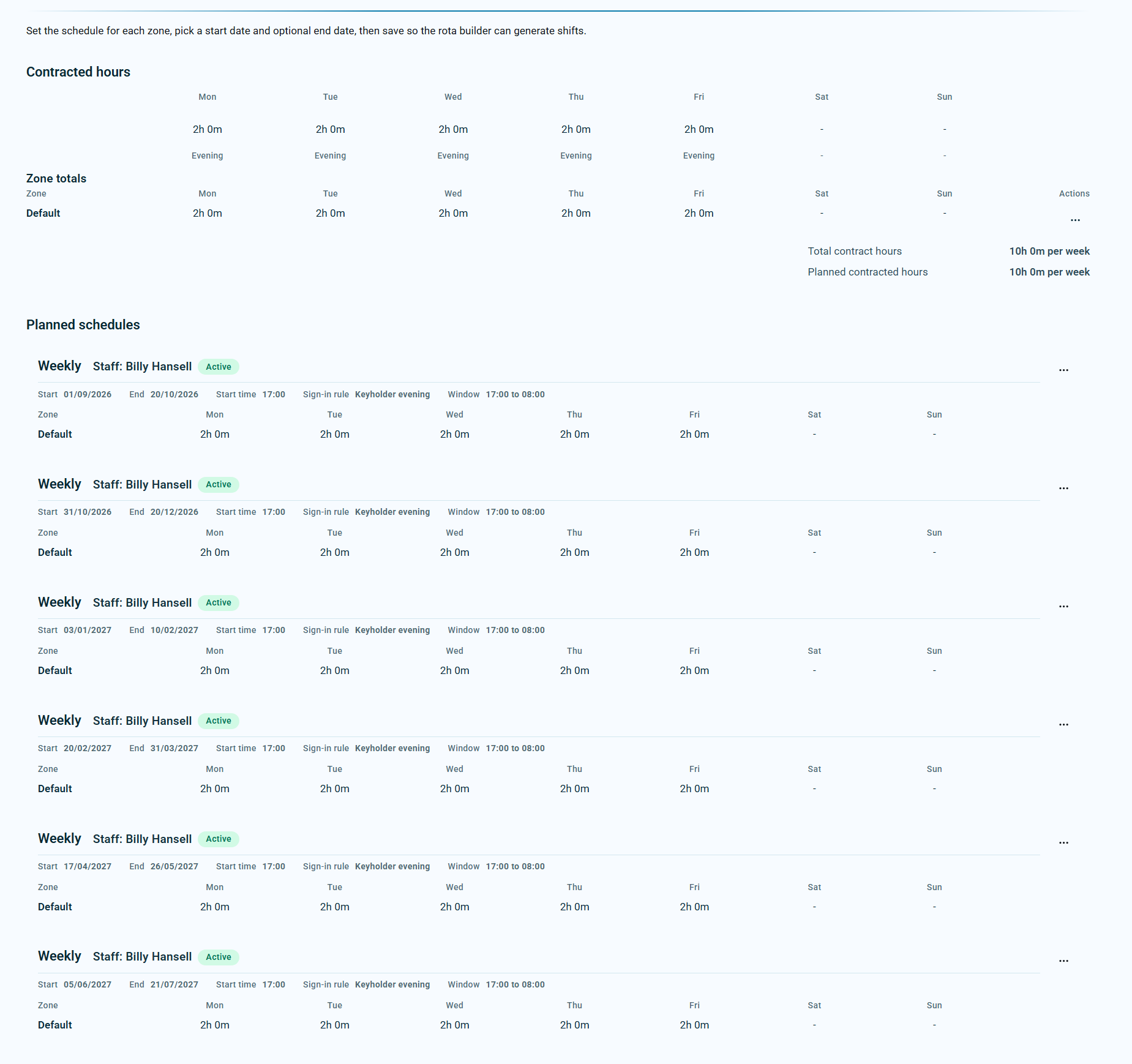 School mobilisation should turn the academic calendar into live schedules, not leave term dates in a separate document.
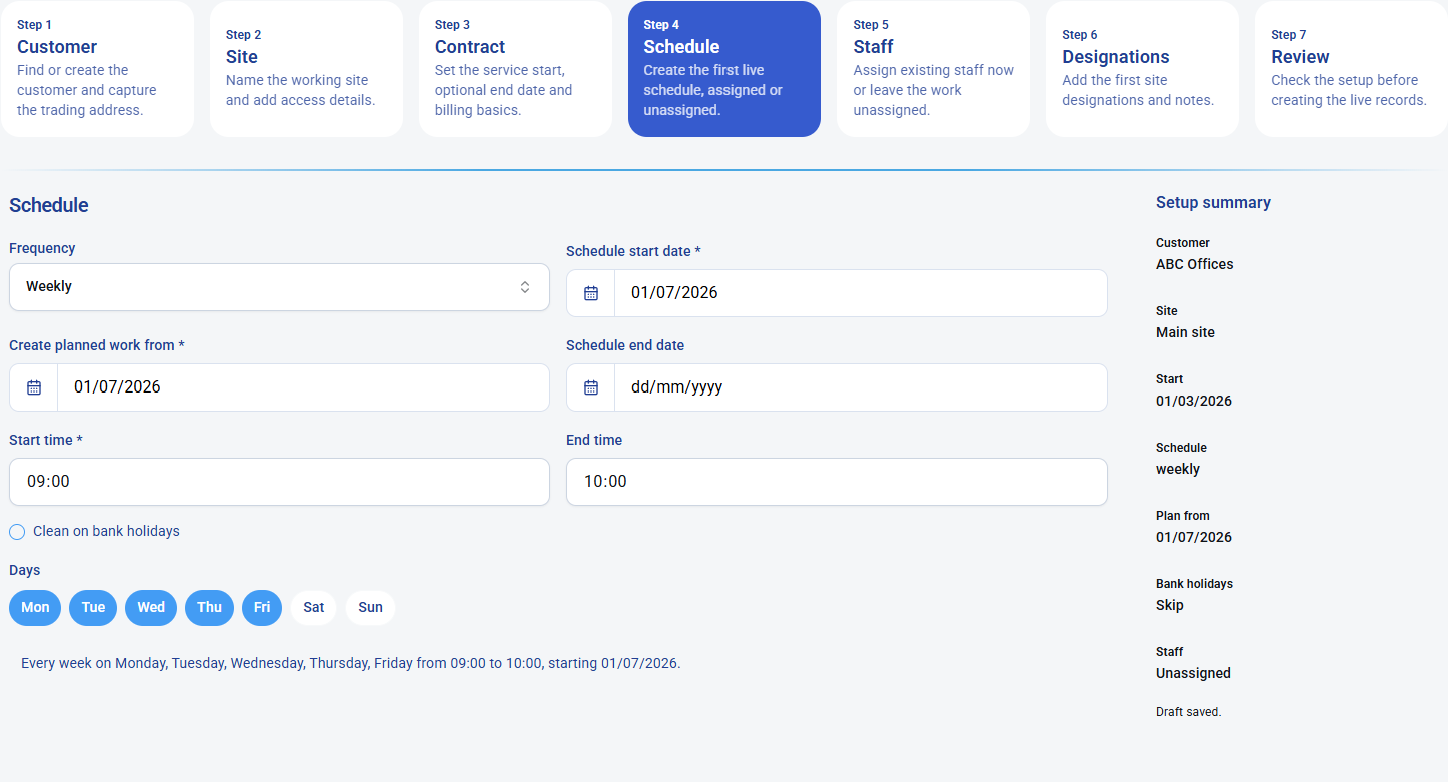 Mobilisation should create live schedules, not just a handover document.
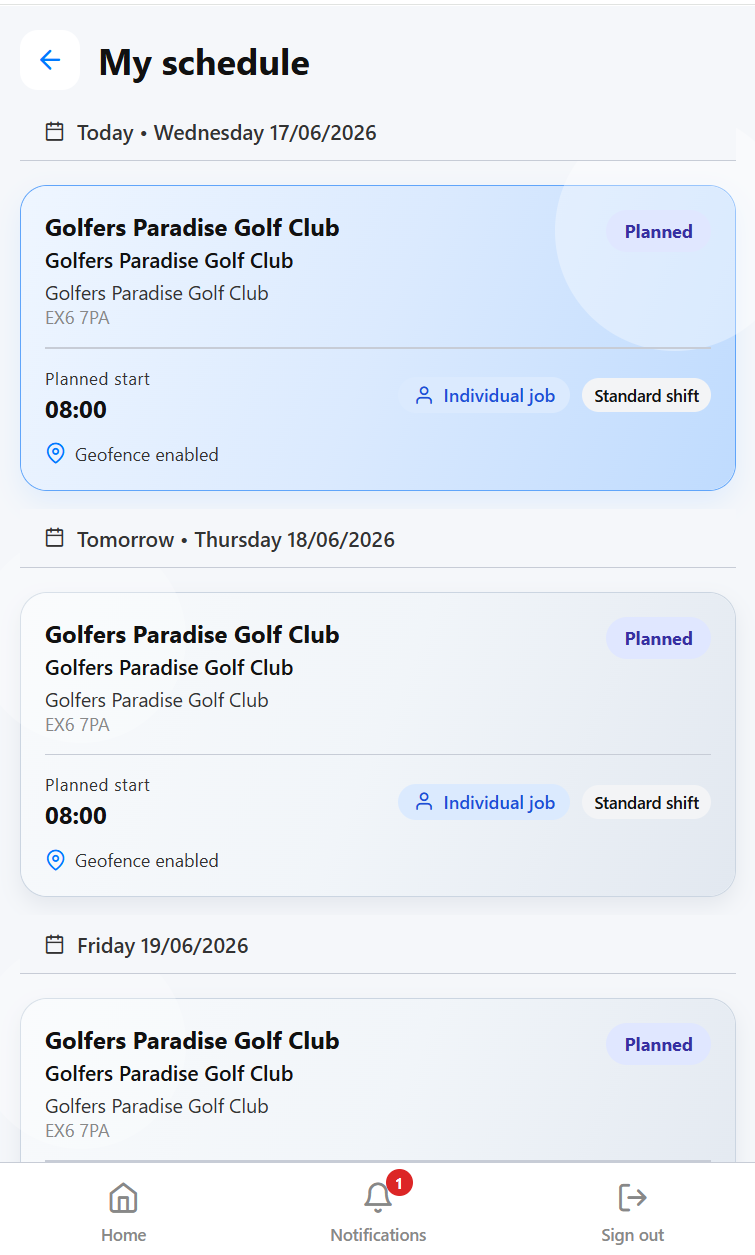 Staff need clear mobile access to the work once the contract is live.