
Staff communication
Cleaning teams need more than instructions
Running a successful cleaning company is not just about winning contracts or creating schedules. It is also about building a team that understands what is expected, knows where to get help and feels valued by the business.
Unlike office-based employees, commercial cleaners may rarely see their managers or colleagues. Some start before the office opens. Others work after managers have gone home. Many work across multiple customer sites with limited access to computers.
Without regular communication, it is easy for staff to feel isolated, miss important updates or become disengaged. The most successful cleaning companies do not only communicate when something has gone wrong. They build a rhythm where information flows both ways.
Good communication is not an overhead. It helps protect retention, standards, customer service and the daily confidence that work is being completed properly.
Why poor communication creates operational risk
Poor communication affects almost every part of a cleaning business. It can lead to missed tasks, customer complaints, confusion over schedules, higher staff turnover, poor morale, health and safety risk and lower audit scores.
Good communication creates a different kind of business. Staff know what is expected, supervisors have clearer visibility, customers get more consistent service and the office team spends less time chasing basic information.
The unique challenge facing cleaning companies
Cleaning companies cannot rely on the same communication patterns as office-based businesses. A cleaner may work alone in a school, office, dental practice or leisure site and never meet another employee that week.
That is why cleaning businesses need a structured communication approach. Phone calls and WhatsApp messages can help in the moment, but they are not a reliable long-term operating method when important service conversations need context, history and visibility.
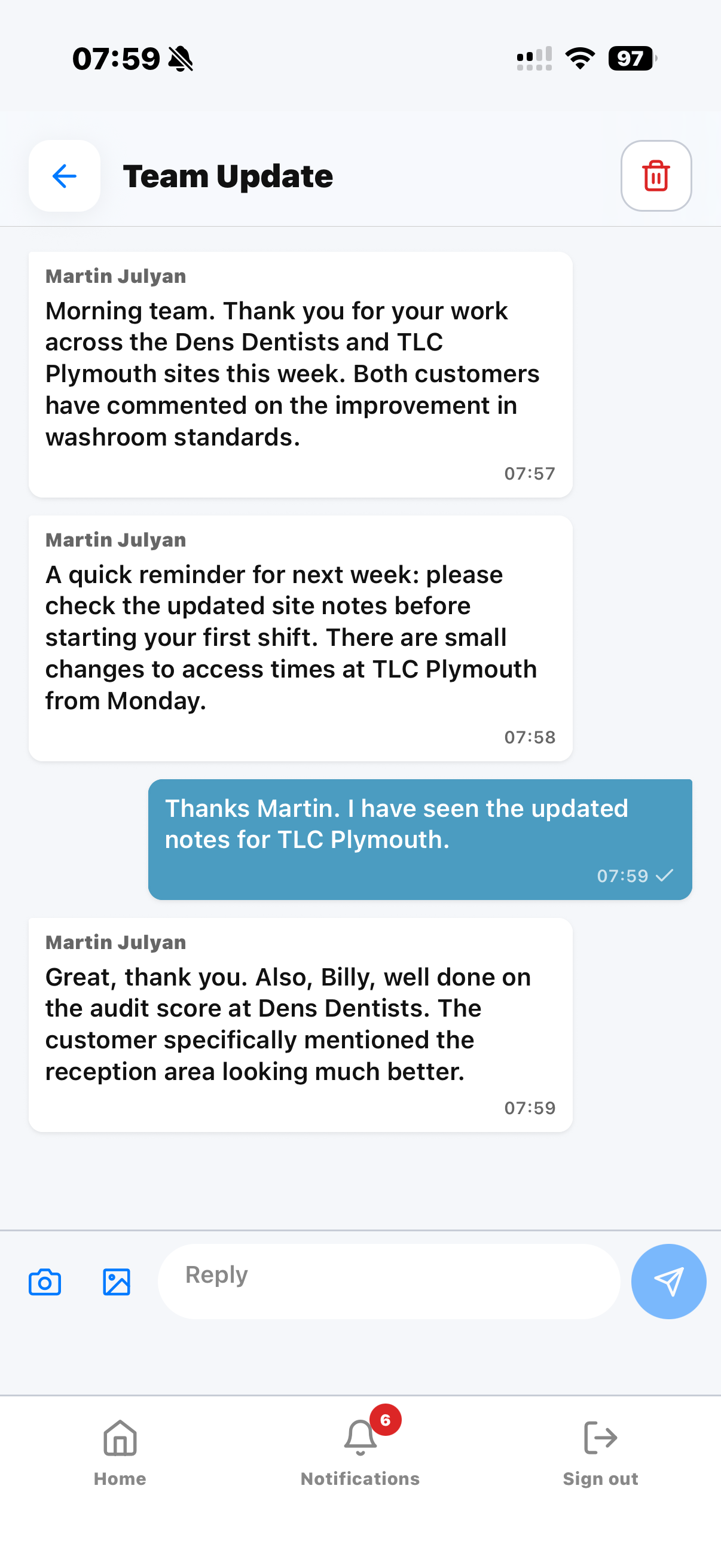 Team updates and recognition help staff feel informed and appreciated.
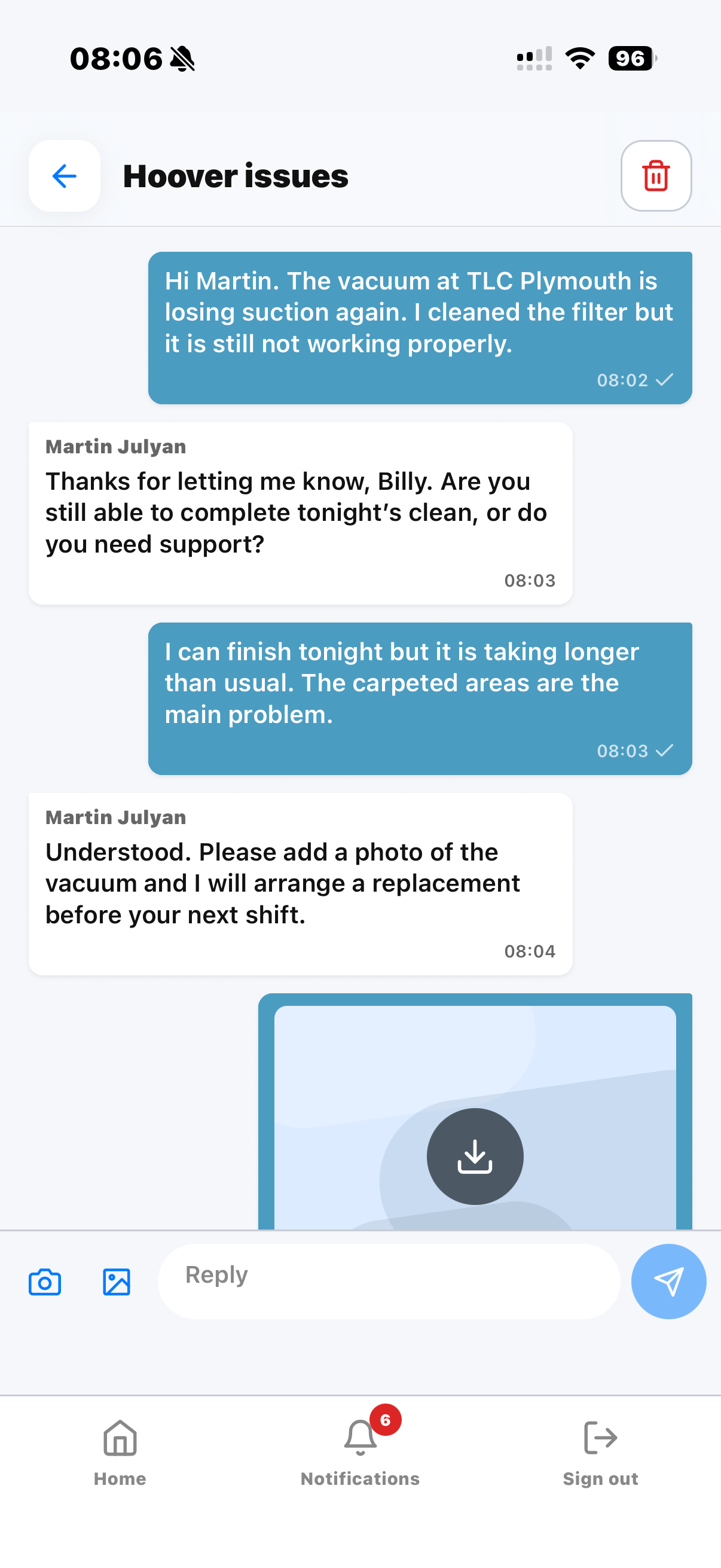 Two-way communication helps staff raise equipment issues before they become bigger problems.
Ten ways to improve communication with cleaning staff
1. Hold regular team meetings
Many cleaning companies only speak to staff when there is a problem. Regular meetings help employees feel connected to the business rather than simply turning up to clean.
Meetings can include company updates, new customers, health and safety reminders, customer feedback, recognition of good work and questions from staff.
2. Recognise good work
People do not stay because they are criticised. They stay because they feel appreciated. Recognise excellent audit scores, customer compliments, long service, reliable attendance, qualifications gained and staff who help cover difficult situations.
A simple thank you is easy to overlook, but it can make a real difference to morale.
3. Give regular feedback
Feedback should not only happen during annual appraisals. Cleaning staff benefit from feedback after site inspections, cleaning audits, customer visits, new contract starts and training sessions.
Good feedback explains what went well, what could improve and how to improve it. Coaching usually develops better staff than criticism.
4. Encourage two-way communication
Communication is not just giving instructions. Staff should feel comfortable raising health and safety concerns, customer issues, equipment faults, training needs and suggestions for improving the way work is completed.
The people doing the cleaning often spot problems before managers do. Listening to them improves both morale and service quality.
5. Keep managers visible
Managers should not only appear when something has gone wrong. Regular visits build trust and give staff a chance to ask questions, raise concerns and receive support.
Visible leadership is especially important in cleaning because many employees work out of sight of the main office.
6. Invest in coaching and development
Training should not stop after induction. Cleaning techniques, customer service, equipment use, COSHH, health and safety, time management and supervisory skills all benefit from regular coaching.
Development helps staff feel that the business is investing in them rather than simply allocating work.
7. Share business updates
Staff like knowing what is happening. New contracts, company successes, new starters, promotions, awards and future plans all help employees feel part of something larger than their individual site.
When people understand where the business is heading, they are more likely to feel engaged with it.
8. Standardise communication
Information should come from one trusted source. If one supervisor says one thing and another supervisor says something different, staff quickly lose confidence in the instruction.
Clear, consistent communication reduces confusion and improves cleaning standards.
9. Make communication part of everyday work
Communication should not only happen in meetings. Daily updates, schedule changes, site-specific instructions, customer feedback, equipment notices and weather warnings are all part of running a live cleaning operation.
Small updates help keep everyone informed without waiting for a formal meeting.
10. Ask for feedback regularly
Do not assume everything is working well. Ask staff what slows them down, whether they have the right equipment, whether instructions are clear and what training would help.
Employees who feel heard are more likely to stay and more likely to raise issues before they become customer complaints.
A simple communication calendar
One of the easiest ways to improve communication is to make it routine. A communication rhythm helps make sure important updates are not forgotten.
Common communication mistakes
Relying on WhatsApp for everything
WhatsApp can be useful for quick informal messages, but important operational information can quickly become buried. Employees leave groups, messages disappear into long threads and there is no clean business record of what happened.
Only communicating when something goes wrong
If every message or phone call means bad news, staff stop looking forward to hearing from management. Positive communication needs to be part of the normal rhythm.
Different managers giving different instructions
Cleaning staff need confidence that the instruction is correct. A single source of truth for service conversations, schedules and site notes helps reduce mixed messages.
Forgetting remote workers
Many cleaners work alone every day. A small check-in, a clear message or a timely thank you can have a bigger impact than managers realise.
Staff can raise issues, reply and add images from the app they already use for their work.
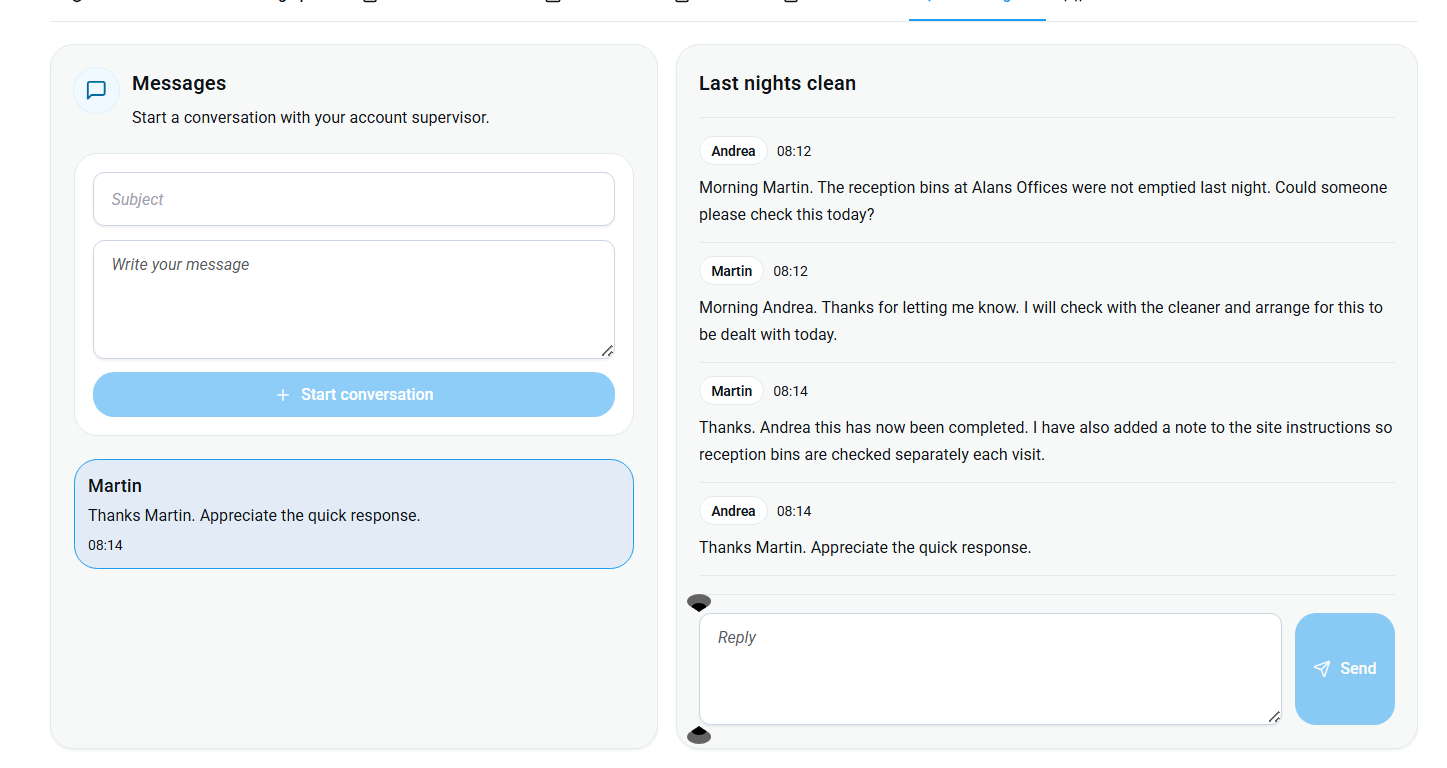 Customers can raise service issues through the portal, with replies and follow-up kept in one record.
How technology can support communication
Communication is not about replacing conversations with technology. It is about making important information easier to access, easier to respond to and easier to review later.
Digital communication can help cleaning companies keep staff updates, schedule changes, site instructions, customer feedback, photo evidence and follow-up conversations in a place the business can control.
How KleanFlo helps cleaning companies communicate
KleanFlo gives cleaning companies a communication area for service conversations between supervisors, staff, office teams and customers. Conversations can be started from the web app, KleanFlo On the Move, the Staff app and the customer portal where customer involvement is needed.
That matters because operational cleaning messages often relate to a real customer, site, shift, audit, photo or follow-up action. Keeping those conversations inside KleanFlo helps the business retain the context instead of losing it in private message threads.
- Staff can raise questions or reply from the Staff app.
- Supervisors can start and manage conversations from the web app or On the Move.
- Customers can communicate through the customer portal where appropriate.
- Images can be included so evidence sits with the conversation.
- Important service communication stays visible to the business.
If you are reviewing your staff communication process, you may also want to look at KleanFlo communication software, the KleanFlo Staff mobile app and commercial cleaning scheduling software.
Better communication builds better cleaning companies
Cleaning companies with engaged staff are more likely to deliver consistent service. By creating regular communication, recognising success, listening to employees and keeping important information in one place, you create a business where people are more likely to stay and standards are easier to protect.
Technology can support that journey, but the real difference comes from leaders who communicate consistently, listen carefully and care about the people delivering the work.