
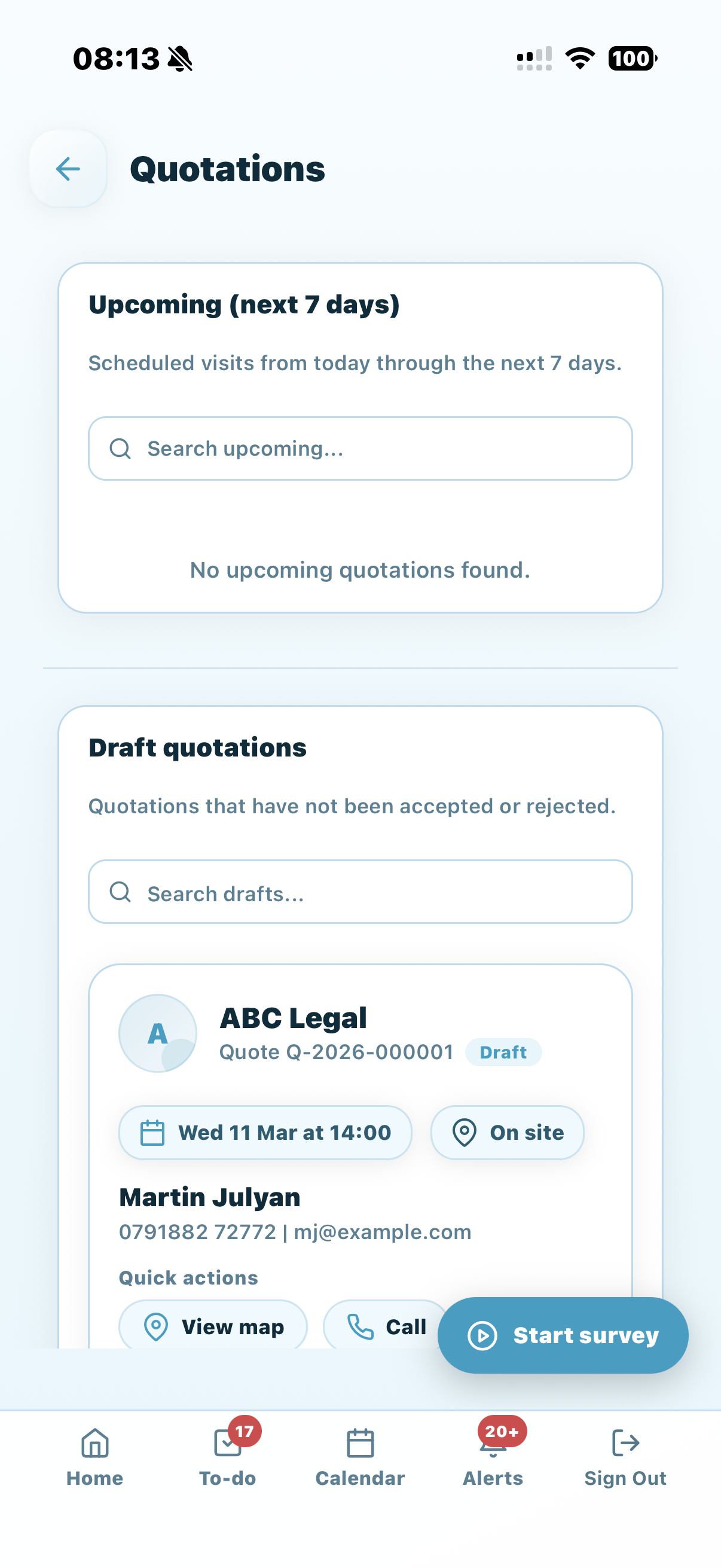
Before you start walking the building
Start by confirming the reason for the quote. Some prospects want a like-for-like replacement for their current cleaner. Others want to fix complaints, increase standards, reduce cost, add audit reporting or move to a more reliable contractor. Those are different jobs, even when the building is the same size.
Ask who will approve the quote, who will manage the contract day to day, who currently raises issues and what would make the first month feel successful. Those answers shape the survey because they tell you where to spend attention.
The site survey is not only about measurements. It is about understanding the service risk before you promise a price.
Record the basics clearly
- Customer name, site name, address and invoice details if known.
- Main contact, operational contact, accounts contact and escalation contact.
- Site type, opening hours, cleaning windows and preferred start date.
- Current contractor, current pain points and any tender or deadline dates.
- Whether the customer expects a fixed monthly price, per-visit price, hourly rate or itemised proposal.
Walk the site by area
Break the building into workable areas rather than trying to remember it as one large space. Offices, washrooms, kitchens, corridors, reception areas, stairs, lifts, meeting rooms, production spaces, retail floors and external entrances all have different cleaning requirements.
For each area, record the task, frequency, floor type, estimated time, access constraints and any unusual standard. A small washroom with heavy footfall can need more attention than a larger office with light use, so do not let square metres be the only input.
Confirm frequency and standards
Frequency is where many cleaning quotes become unclear. The customer may say they want a daily clean, but not every task is daily. Some work is per visit, some weekly, some monthly and some periodic. Write this down during the survey so the proposal is specific.
- Daily tasks such as bins, washrooms, kitchens, touchpoints and visible floors.
- Weekly tasks such as detail dusting, internal glass, skirting, door frames and deeper floor attention.
- Monthly tasks such as high-level checks, vents, edges and less-used areas.
- Periodic tasks such as carpets, hard floors, deep cleans, external glass and specialist items.
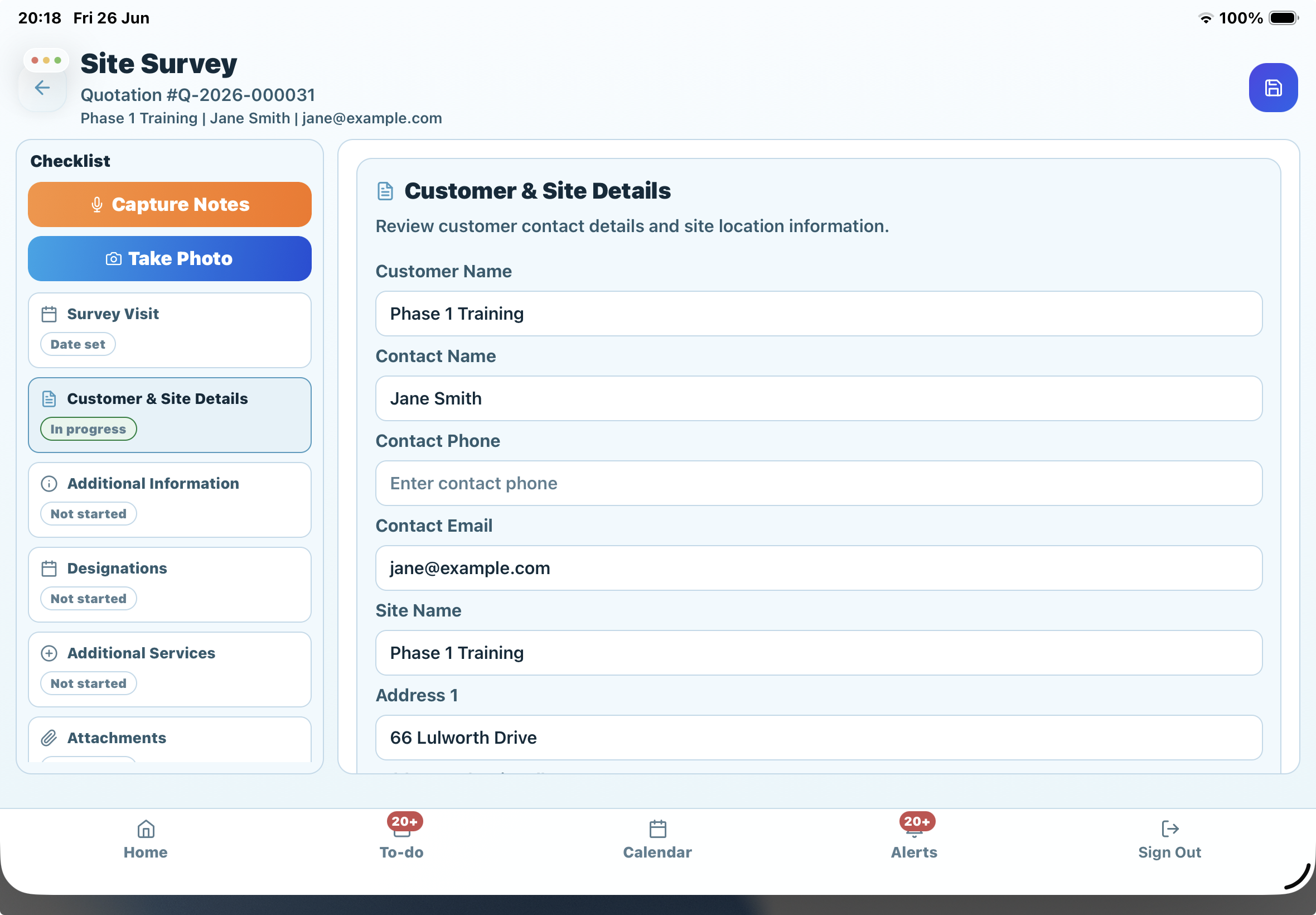 A structured survey keeps customer, site, visit and note details together while the surveyor is still on site.
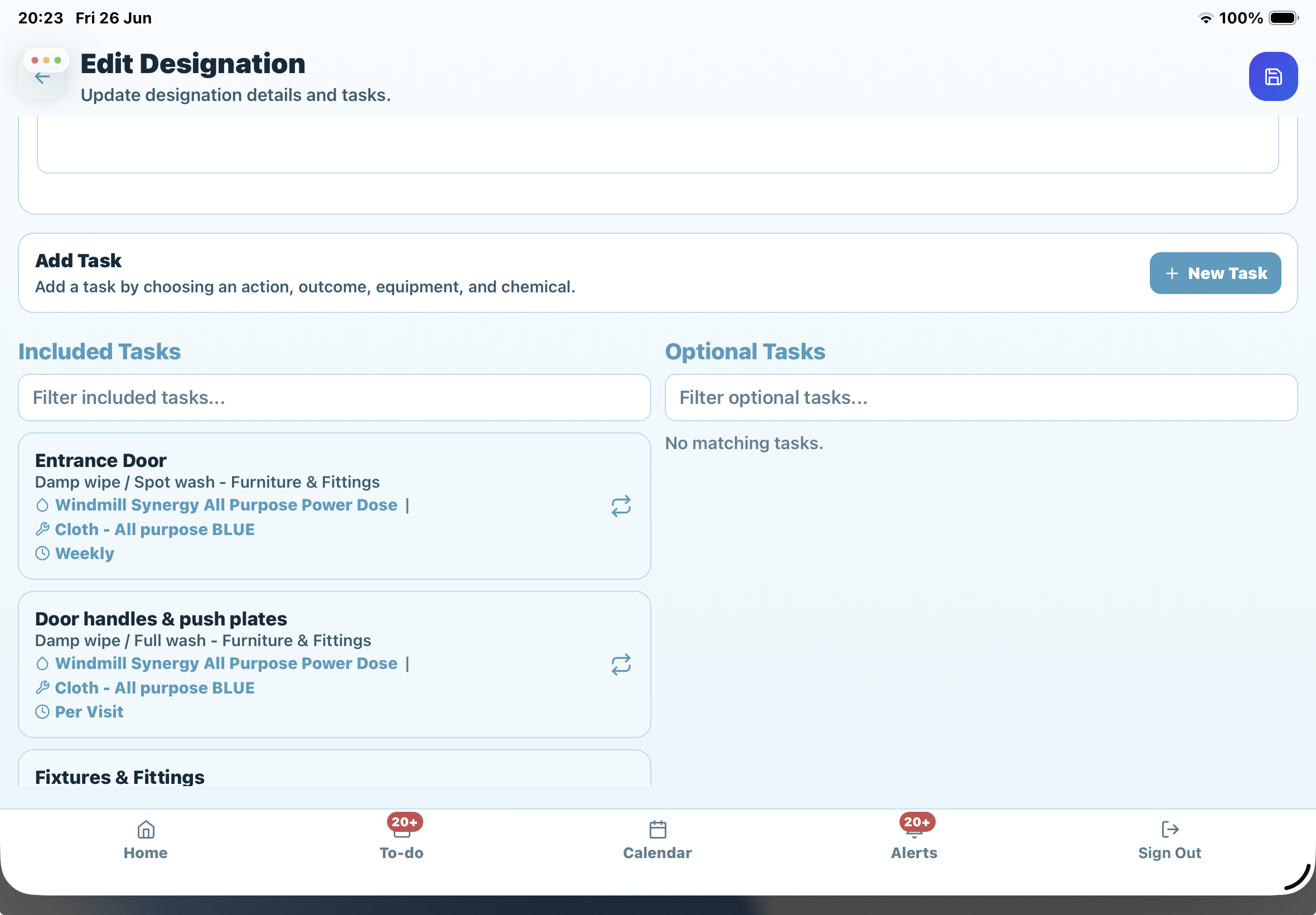 Task-level notes help turn the walkthrough into a real cleaning specification after the quote is accepted.
Check access, security and parking
Access details can make or break the contract. A quote based on two cleaner hours may fail if the team spends twenty minutes finding keys, signing in, moving between buildings or waiting for access.
- Where cleaners enter and whether reception, gates, fobs, keys or alarms are involved.
- Where cleaners park, unload equipment and store materials.
- Whether lone working, safeguarding, DBS, induction or site permits apply.
- Whether cleaning happens before opening, during trading, after close or across split shifts.
- Who receives missed-attendance alerts or emergency calls.
Take evidence with permission
Photos can make the quote more accurate, but ask before taking them. Avoid confidential documents, people, screens, children, patient information or secure areas. The useful photos are practical: floor type, washroom layout, storage, access points, problem areas and periodic cleaning items.
If photos are not allowed, take structured notes. The important thing is that the office can understand what the surveyor saw.
Finish with a clear next step
Before leaving, confirm when the customer expects the quote, whether they need a site specification, whether there is a decision deadline and who should receive the proposal. A good close is calm and specific: you have seen the site, understood the priorities and will send a quote by an agreed date.