
Start with scope, not price
The fastest way to underquote cleaning work is to ask what the prospect currently pays and build the proposal around that number. Their existing price may be wrong, outdated or based on a service level they are unhappy with.
Start with scope: the areas to clean, frequency, expected standard, working window, current problems, consumables, periodic work and reporting expectations. Once the scope is clear, the price becomes a calculation rather than a guess.
Build the labour model
Labour is usually the largest cost in a commercial cleaning contract. Estimate it by area and task, then convert it into the working pattern that will actually be scheduled.
- Required cleaning time by area, task and frequency.
- Paid time versus productive cleaning time.
- Supervisor visits, mobile manager checks and contract management time.
- Holiday, sickness and cover allowance.
- Opening, locking, travel between nearby sites and access delays.
- Training, induction, PPE and site-specific compliance time.
A quote can look profitable on paper and still fail if it ignores non-cleaning time: access, supervision, travel, cover, training and management.
Include consumables and materials explicitly
Consumables can quietly eat margin if they are not agreed clearly. Decide whether the quote includes toilet rolls, hand towels, soap, bin liners, sanitary products, cleaning chemicals, floor pads, machinery, PPE or specialist materials.
If the customer supplies consumables, say so. If you supply them, price them. If usage is uncertain, explain what is included and what will be reviewed. A washroom-heavy site, medical practice or leisure facility can have a very different consumable profile from a small office.
Price periodic work separately or visibly
Periodic cleaning should not be hidden inside a vague monthly figure unless you have allowed for it properly. Carpet extraction, hard-floor maintenance, high-level dusting, deep cleans, window cleaning and machine work all need labour, equipment and materials.
Some contracts benefit from an annual schedule with periodic tasks included. Others work better with optional line items. The important point is that the customer understands what is included and your team knows what has been sold.
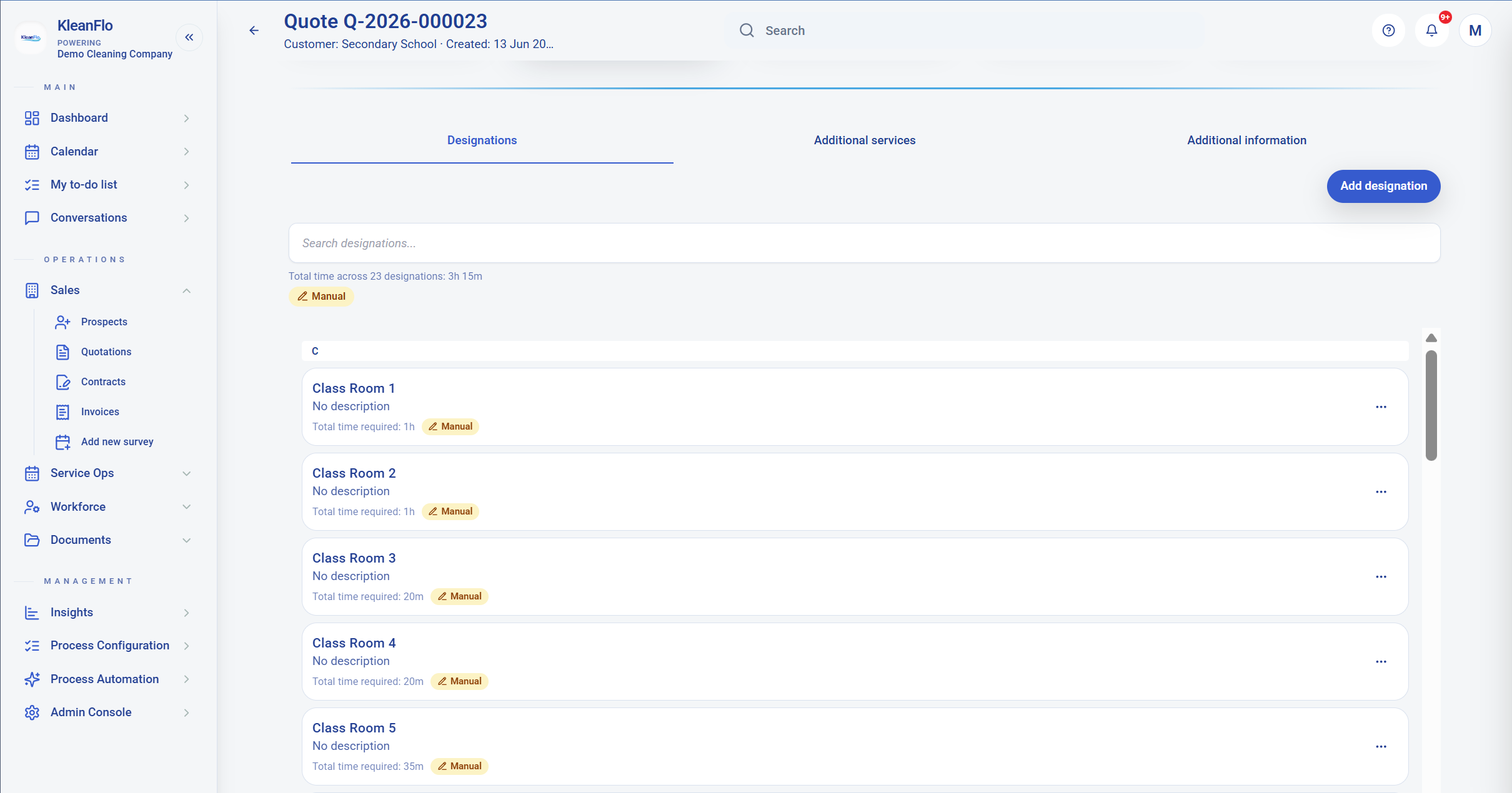 Area timings and designations give pricing a firmer base than a single total building estimate.
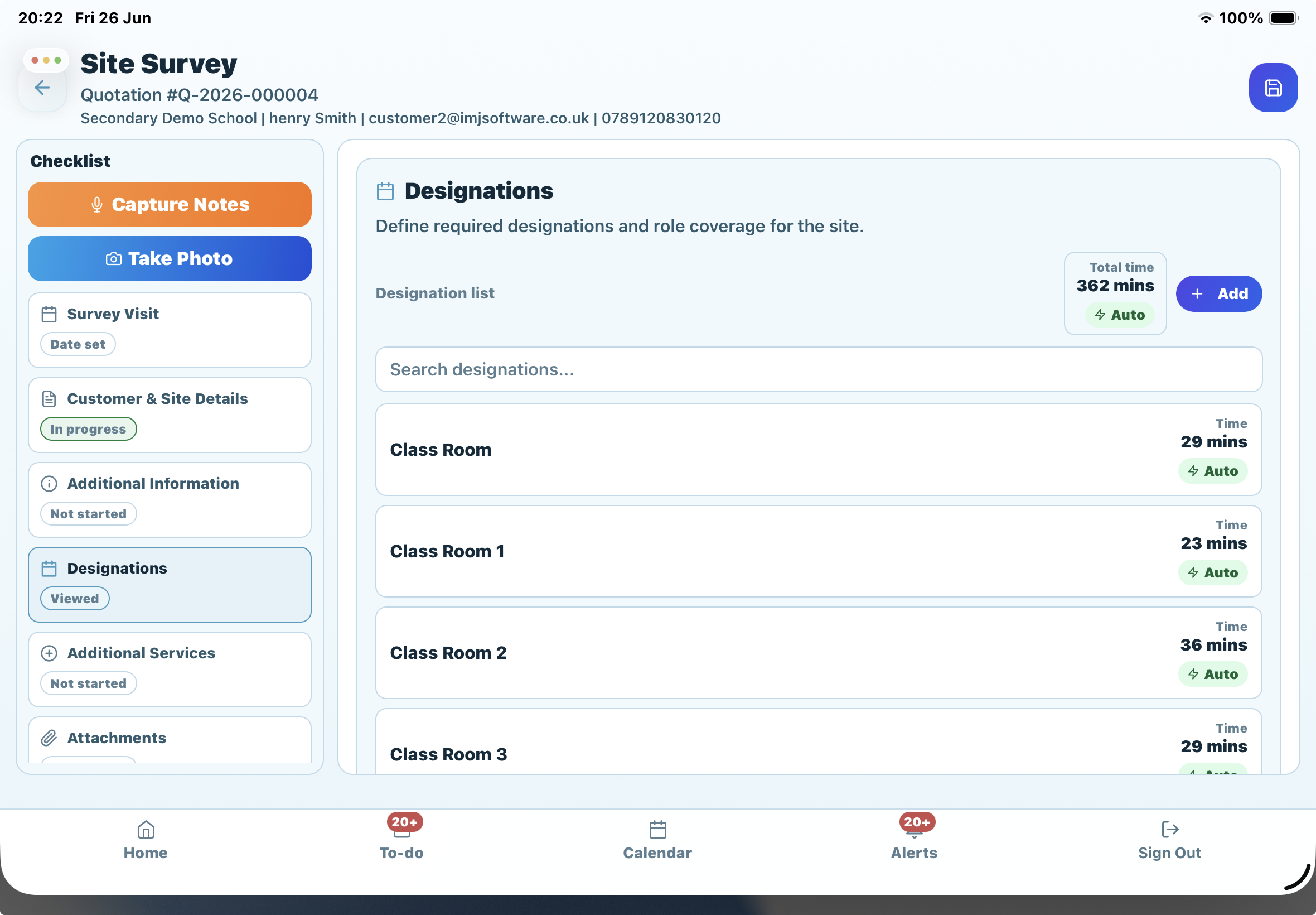 Survey information can feed the quotation before the office reviews price and margin.
Check the equivalent hourly rate
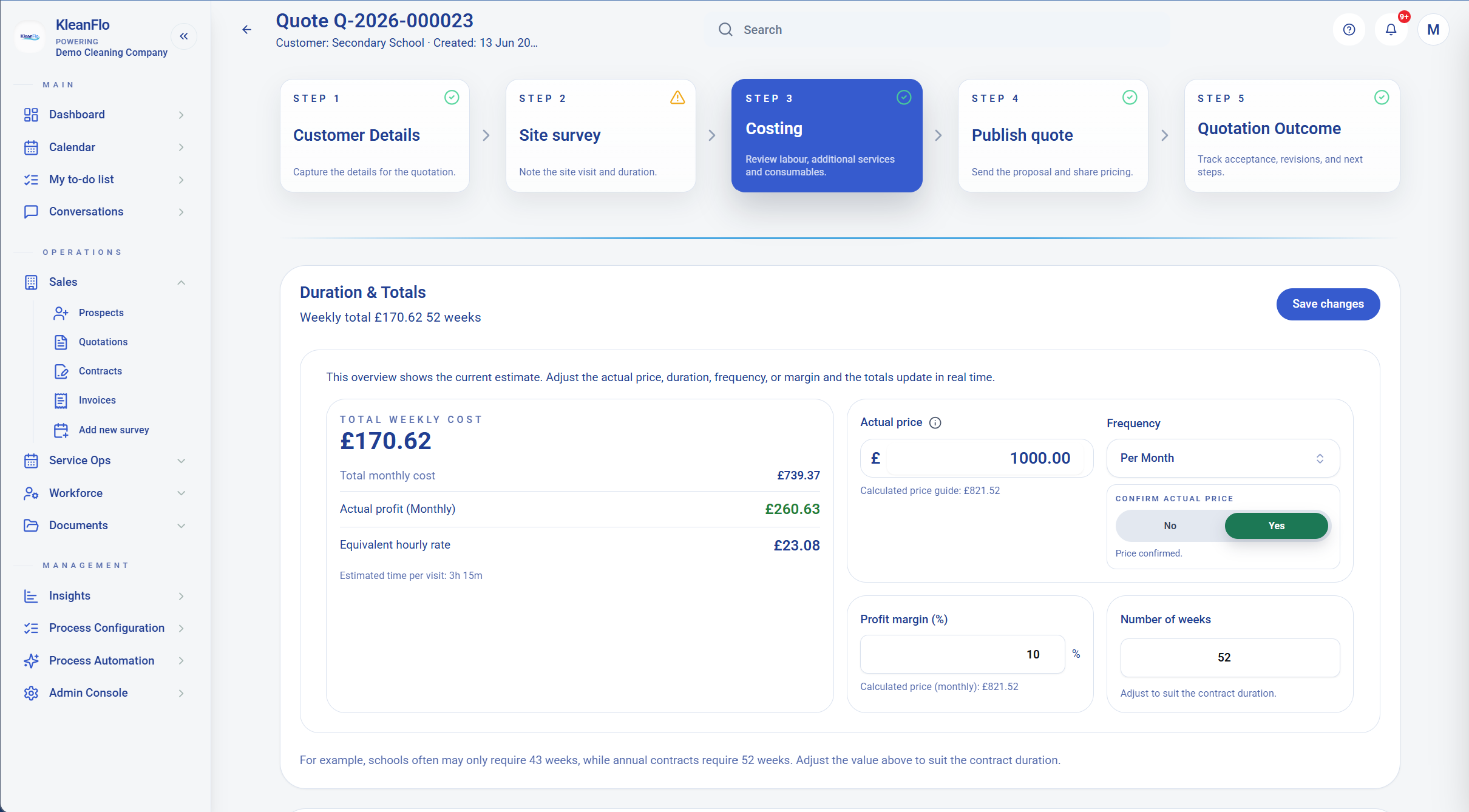
Many cleaning companies quote a monthly price because customers prefer predictable billing. That is fine, but internally you still need to know the equivalent hourly rate and the margin left after wages, on-costs, supervision, materials, overhead and administration.
If the equivalent hourly rate is too low, the contract may only work by rushing the clean, cutting supervision or relying on unpaid admin. Those shortcuts usually become complaints, staff churn or margin loss.
Choose a margin deliberately
Margin should not be whatever is left after matching the competitor. Decide the margin required for this type of work, customer risk, payment terms, management effort and growth value. A contract with complex access, high complaints risk or heavy reporting expectations may need stronger margin than a simple low-risk office clean.
Present assumptions clearly
The customer does not need to see every internal calculation, but they do need to understand the service they are buying. Include clear assumptions: cleaning days, hours, frequencies, consumables position, periodic tasks, mobilisation dates, exclusions and review points.
A transparent quote protects both sides. The customer can compare proposals more fairly, and your team can defend the price because it is connected to the work required.