
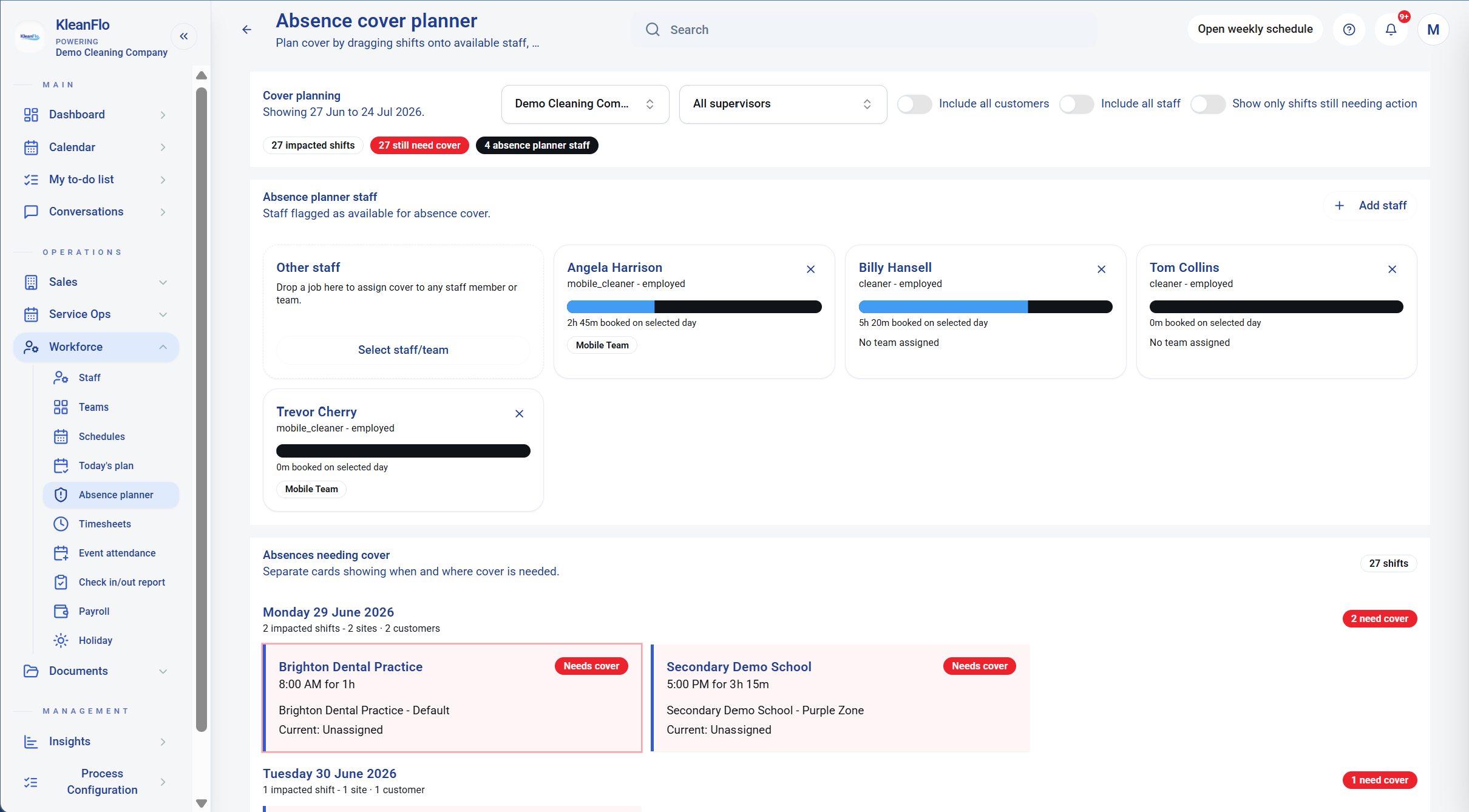
Why absence cover is different in cleaning
In many businesses, an absence creates an internal staffing problem. In contract cleaning, it creates a customer service risk. The cleaner who is absent may be the only person planned for a site, may hold access knowledge, or may be responsible for opening, locking, consumables or a sensitive area.
That means absence cover needs to be handled against the schedule, not just recorded as HR data. The question is not only who is off. The question is which customer sites are now exposed.
What cover planning should show
- The absent employee and absence dates.
- Every planned shift affected by that absence.
- Customer, site, day, time and required duration for each shift.
- Whether the work is assigned, uncovered, declined or completed.
- Staff who may be suitable based on availability, site knowledge and working pattern.
- Supervisor actions, customer risk and first-day priority.
Good cover planning turns absence from a surprise into a visible operational queue.
Separate planned leave from same-day sickness
Holidays should be handled before the rota is published where possible. Same-day sickness needs a faster workflow because the work may already be due to start. Cleaning companies need both processes: planned cover for known leave and rapid reassignment for urgent absence.
Protect the customer relationship
The customer usually does not care that the rota was difficult. They care whether the site was cleaned, whether they were told about a problem and whether the contractor stayed in control. Cover software should help managers spot the service risk early enough to act.
Where cover cannot be arranged, the business should still record the action taken, contact the customer if needed and plan the recovery clean. That is far stronger than discovering the gap days later.
Connect cover to attendance and payroll
Cover changes affect payroll. If one cleaner covers another worker's shift, planned hours, actual hours and payable duration need to follow the person who completed the work. KleanFlo connects cover planning with schedule and timesheet review so payroll is not reconstructed from messages after the event.
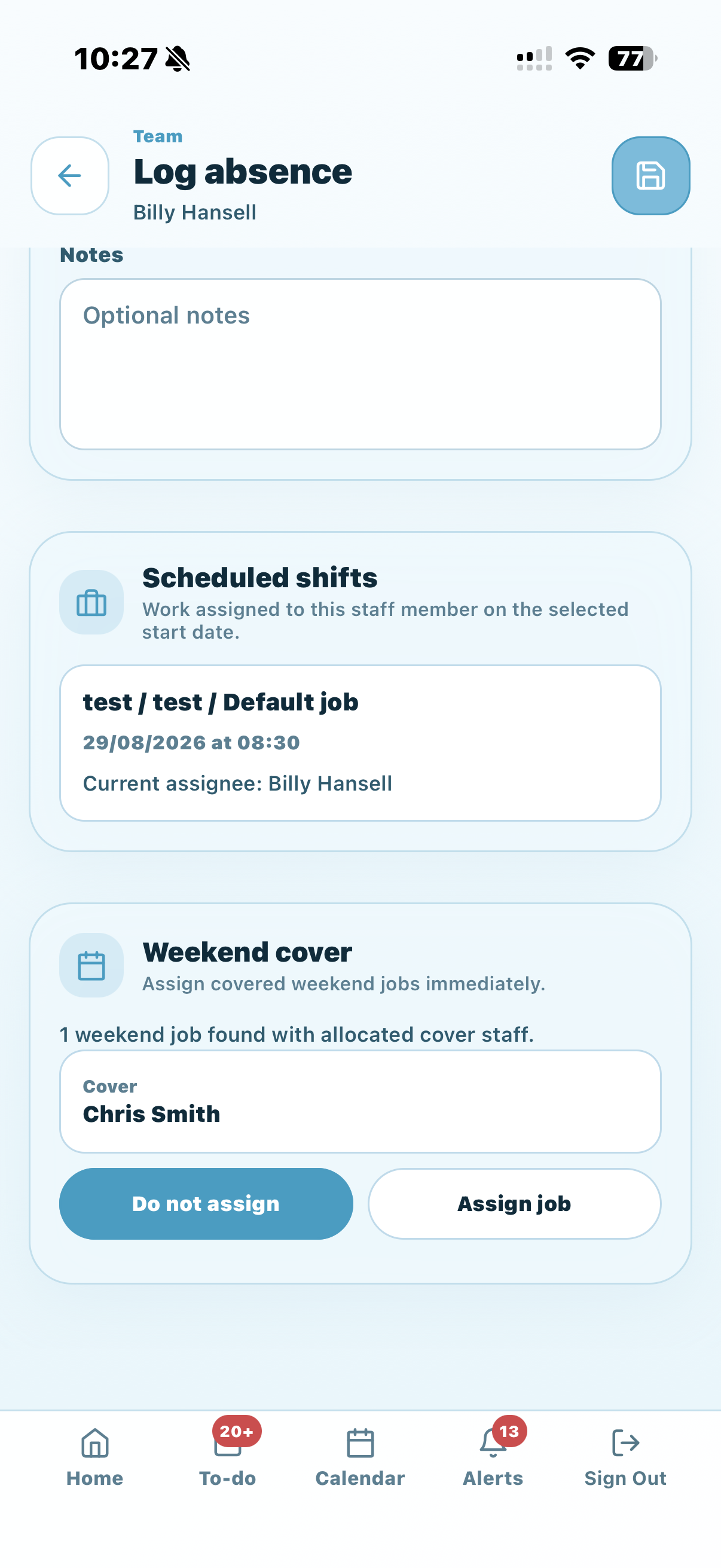 Weekend cover lets supervisors assign affected Saturday or Sunday work to available cover staff from mobile.
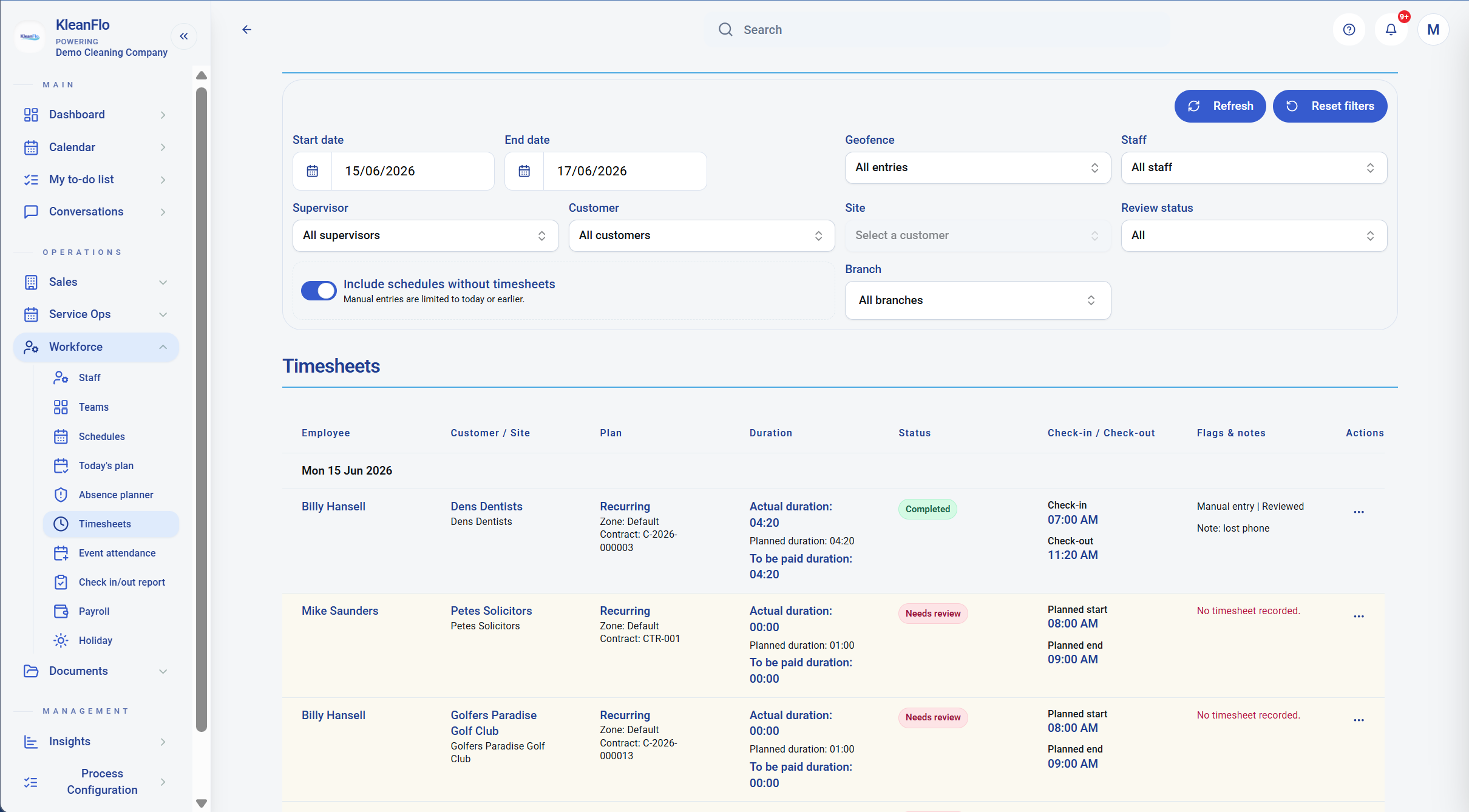 Timesheet review helps confirm who actually completed covered work and what hours should be approved.