
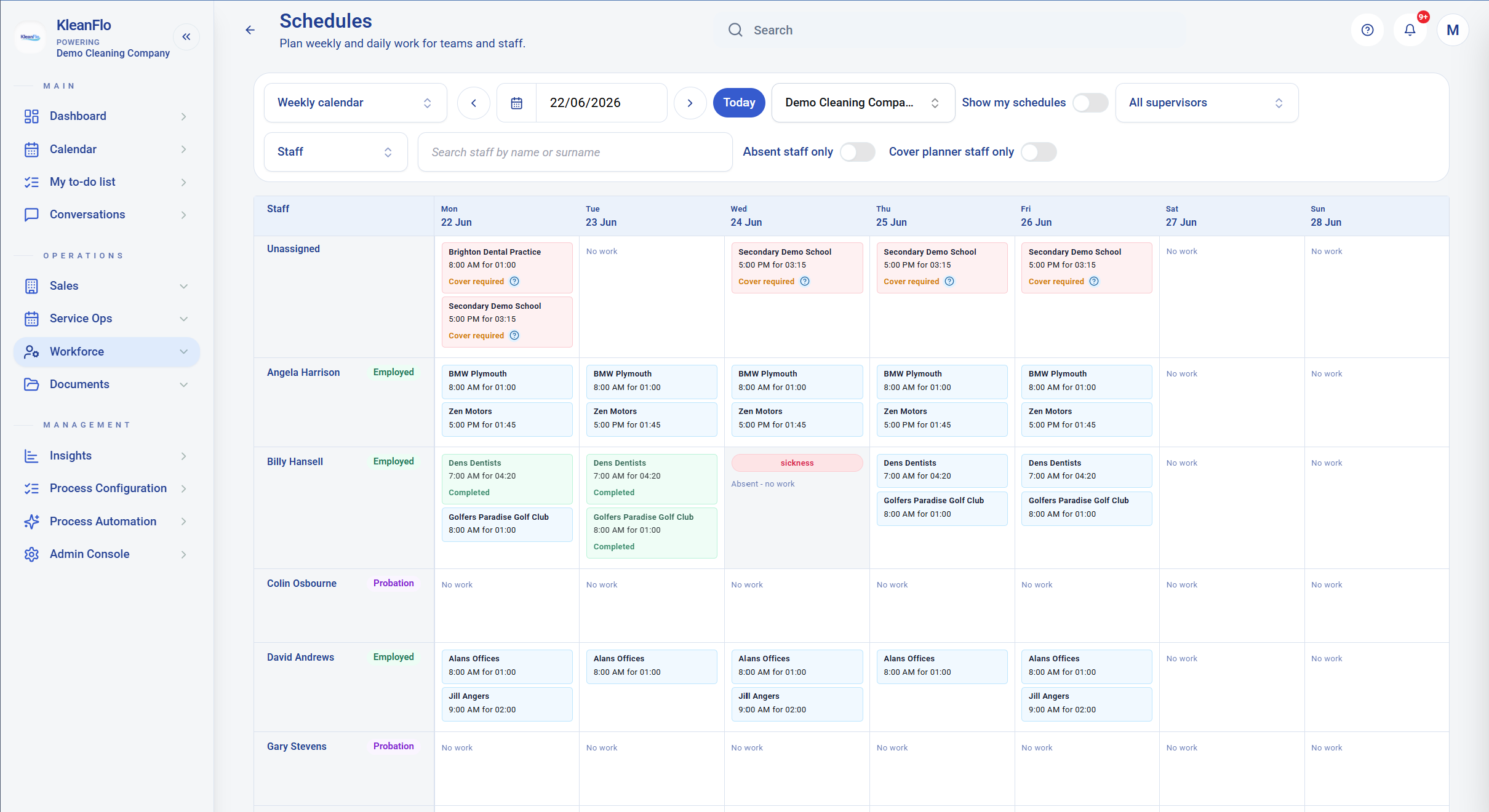
What makes a cleaning rota difficult
Commercial cleaning rotas are built around contracts rather than a single workplace. One cleaner may cover several sites. A supervisor may inspect different customers across the week. A customer may need daily cleaning, weekly detail work and monthly periodic tasks. A one-off job may be added at short notice.
That is why rota planning should connect the person, site, task, time and customer requirement. If the rota only shows employee names, the business still has to hold the real context somewhere else.
Start with the contract pattern
Before assigning staff, define the repeat pattern: days, times, duration, areas, tasks and frequency. A rota is easier to control when it is built from the contract promise rather than from a loose list of shifts.
- Which sites need daily attendance?
- Which work is weekly, monthly or periodic?
- Which shifts need a named cleaner and which can be covered by a pool?
- Which work requires a supervisor, keyholder or trained employee?
- Which sites have access windows that cannot move?
Match staff to work realistically
A rota can look full but still be unworkable if it ignores travel, availability, skills, site knowledge, pay rules and staff preferences. Cleaning companies need rota planning that keeps assignments practical.
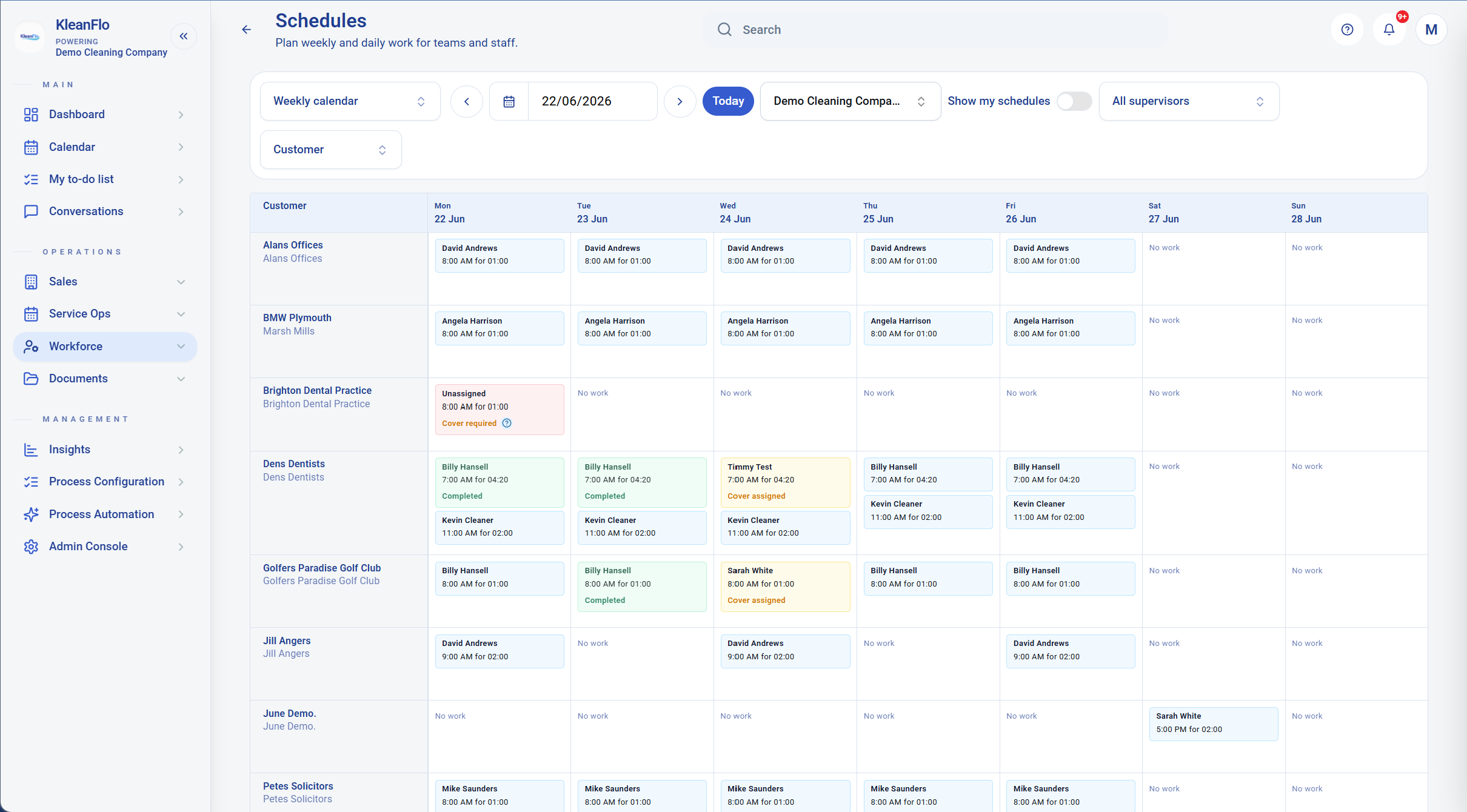 Customer views make it easier to check whether each contract is covered properly.
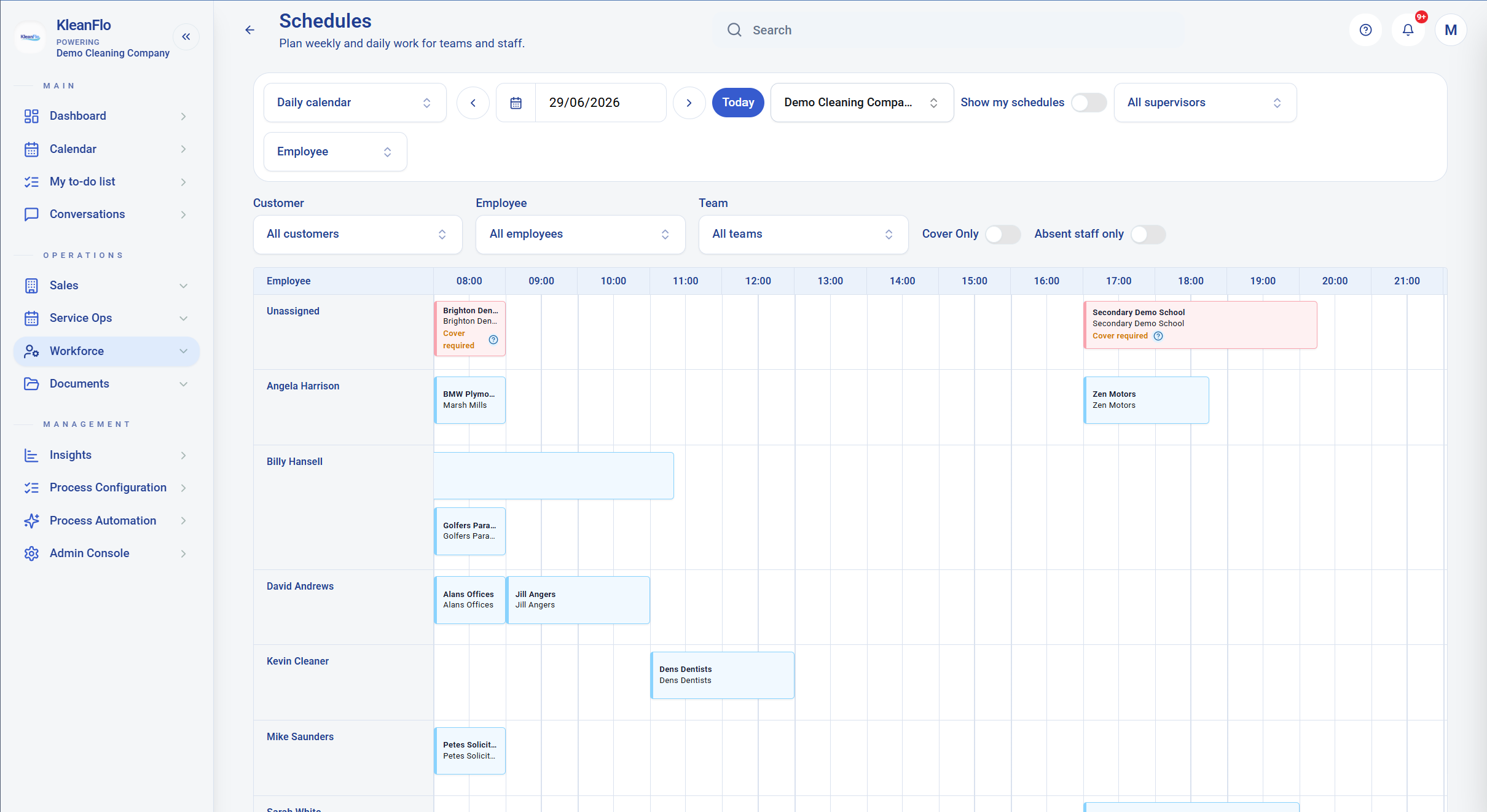 Daily views help managers deal with the work that needs attention today.
Keep one-off jobs visible
Cleaning rotas often fail because one-off jobs are handled separately from recurring work. Deep cleans, ad hoc customer requests, cover shifts, supervisor visits and extras still consume staff time. They should sit alongside recurring shifts so managers can see the true workload.
Where KleanFlo fits
KleanFlo gives cleaning companies planner views for staff, customers and daily work, with schedules connected to mobile staff activity and attendance review. The rota becomes part of the operating system, not a standalone spreadsheet.