
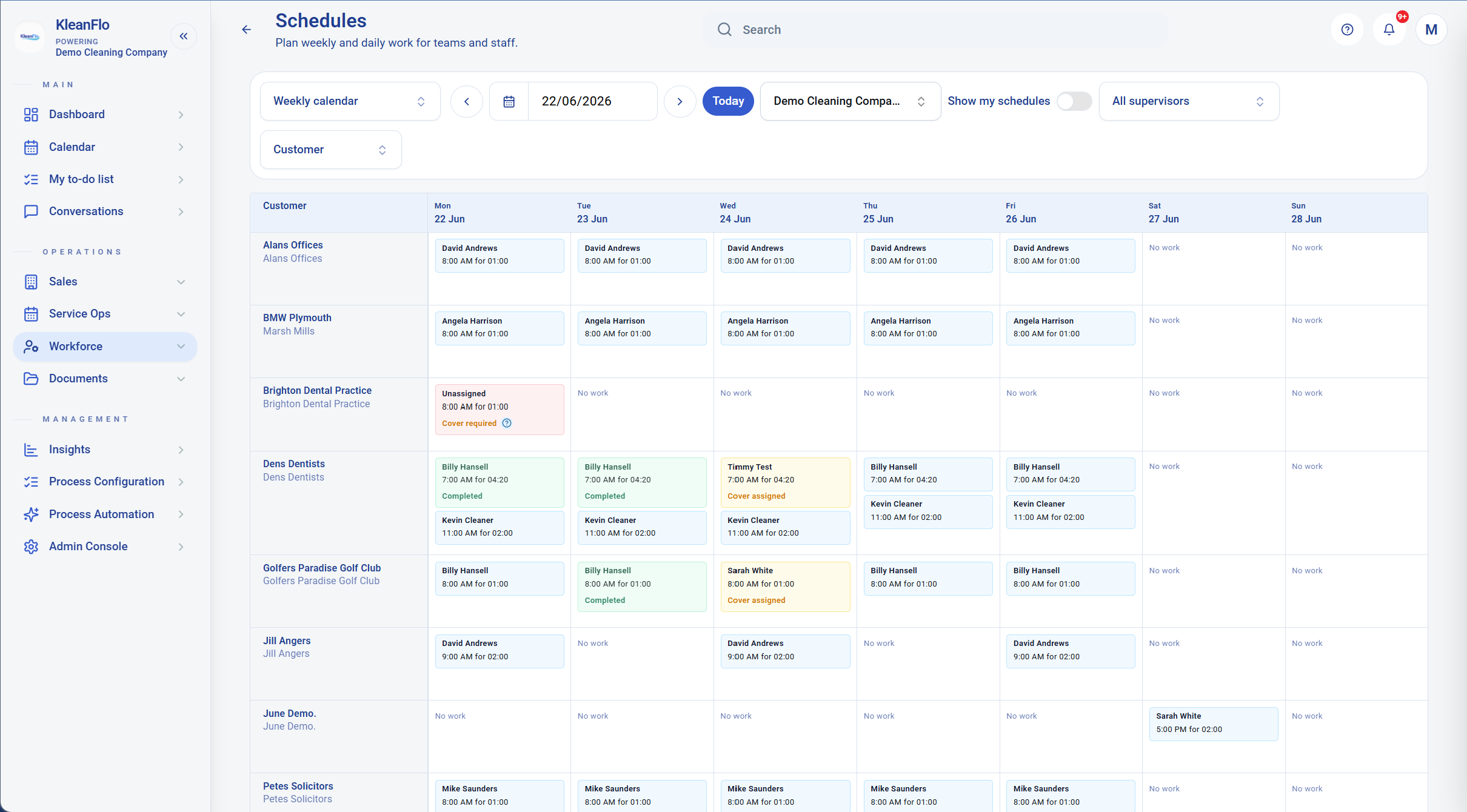
Recurring does not mean simple
A recurring cleaning contract may look stable from the outside: the customer is cleaned every weekday, or every Monday, Wednesday and Friday. In practice, the schedule includes areas, tasks, durations, access windows, staff assignments, absence cover, periodic work and occasional customer changes.
Recurring schedule software should let the business set up the repeat pattern once, then manage exceptions without losing the original contract structure.
Build schedules from the customer and site
Cleaning schedules are easier to understand when they are anchored to the customer and site. A weekly staff rota is useful, but it should still be possible to open a customer and see whether their work is covered.
- Customer and site name.
- Contract start date, pattern and expected duration.
- Cleaning days, times and assigned cleaner or team.
- Task frequency and periodic work.
- Access notes, documents and customer instructions.
- Supervisor visit and audit expectations.
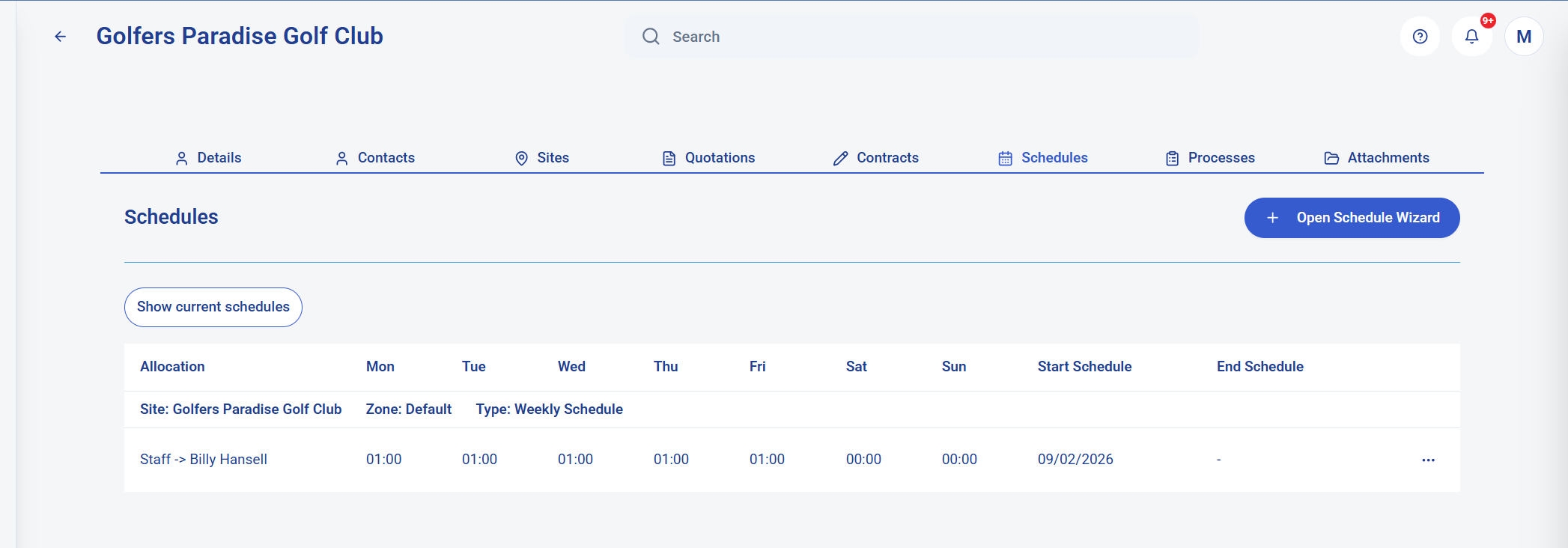 Customer-level schedule views help office teams see the recurring work attached to each contract.
Handle changes without rebuilding the rota
Recurring contracts still change. Customers close for a bank holiday, request a different time, add a one-off clean, pause a shift or ask for periodic work. Good software should let the team make controlled changes without duplicating spreadsheets or losing the normal pattern.
Connect recurring schedules to attendance
A repeat schedule should create repeat attendance expectations. If work is planned every Tuesday at 6pm, the business should be able to review whether that shift started, finished, differed in duration or needs attention.
KleanFlo connects recurring schedules with mobile activity and timesheet review so the office can manage planned versus actual work over time.