
Why payroll starts with the schedule
Cleaning payroll problems often start earlier than payroll day. If the planned schedule is unclear, cover changes are handled in messages, or attendance is not reviewed, the payroll run becomes a reconstruction exercise.
Payroll-ready attendance starts with a clear plan: who should attend, where, when and for how long. The actual attendance record can then be compared against that plan before payable hours are approved.
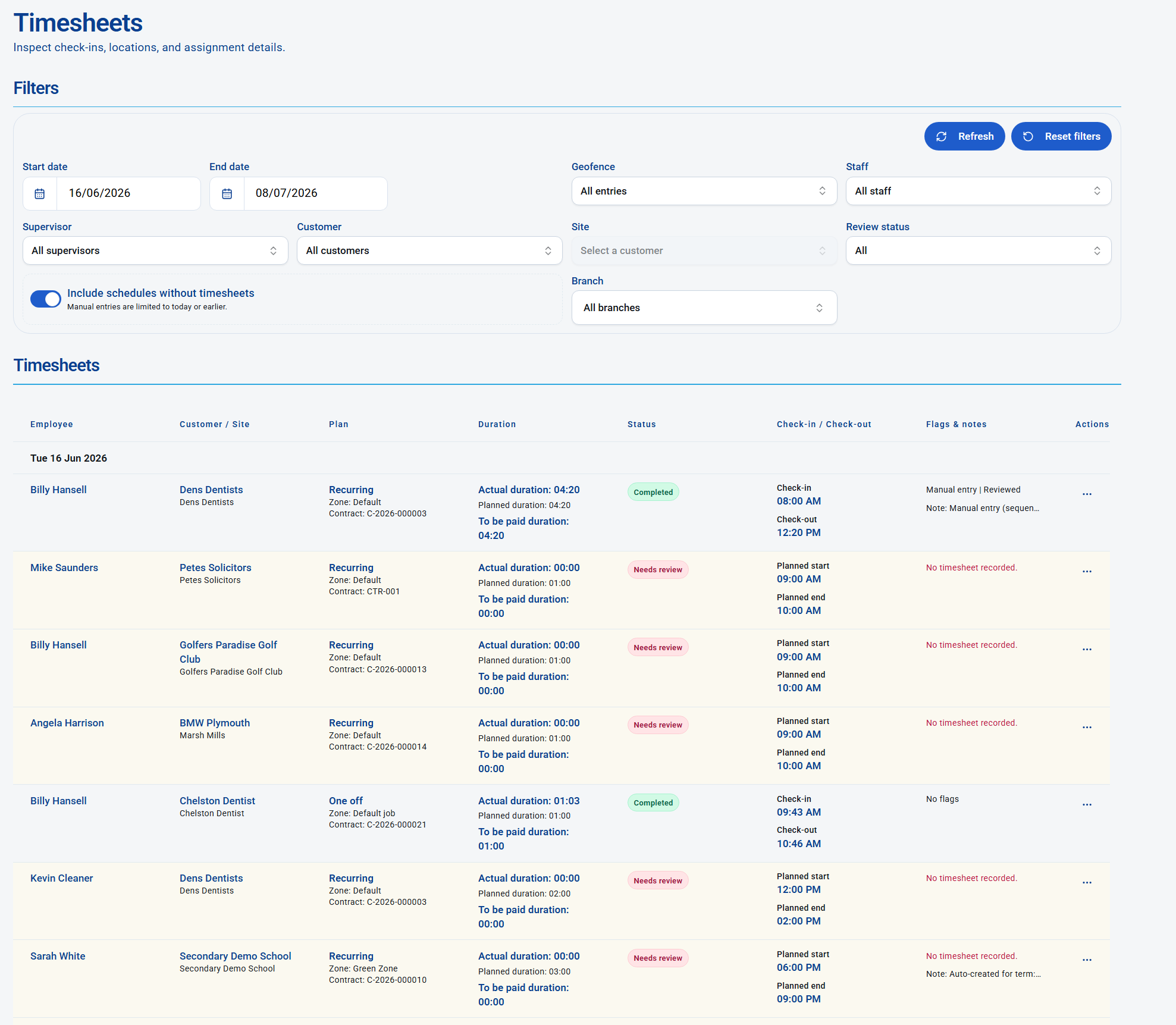
Review planned, actual and payable duration
Planned hours are what the rota expected. Actual hours are what the check-in and check-out record suggests. Payable hours are what the business approves after review. Those numbers may differ, and that difference is where management judgement belongs.
Handle exceptions before payroll
Missing check-outs, late starts, short shifts, outside-geofence records and cover changes need review before payroll is finalised. The goal is not to punish staff for every difference. The goal is to make the difference visible so the office can approve the correct record.
- Missing check-in or check-out records.
- Outside-geofence or unusual location evidence.
- Shorter or longer duration than planned.
- Cleaner worked a cover shift instead of the original employee.
- Supervisor approved a change after customer instruction.
- Site access caused a delay that needs recording.
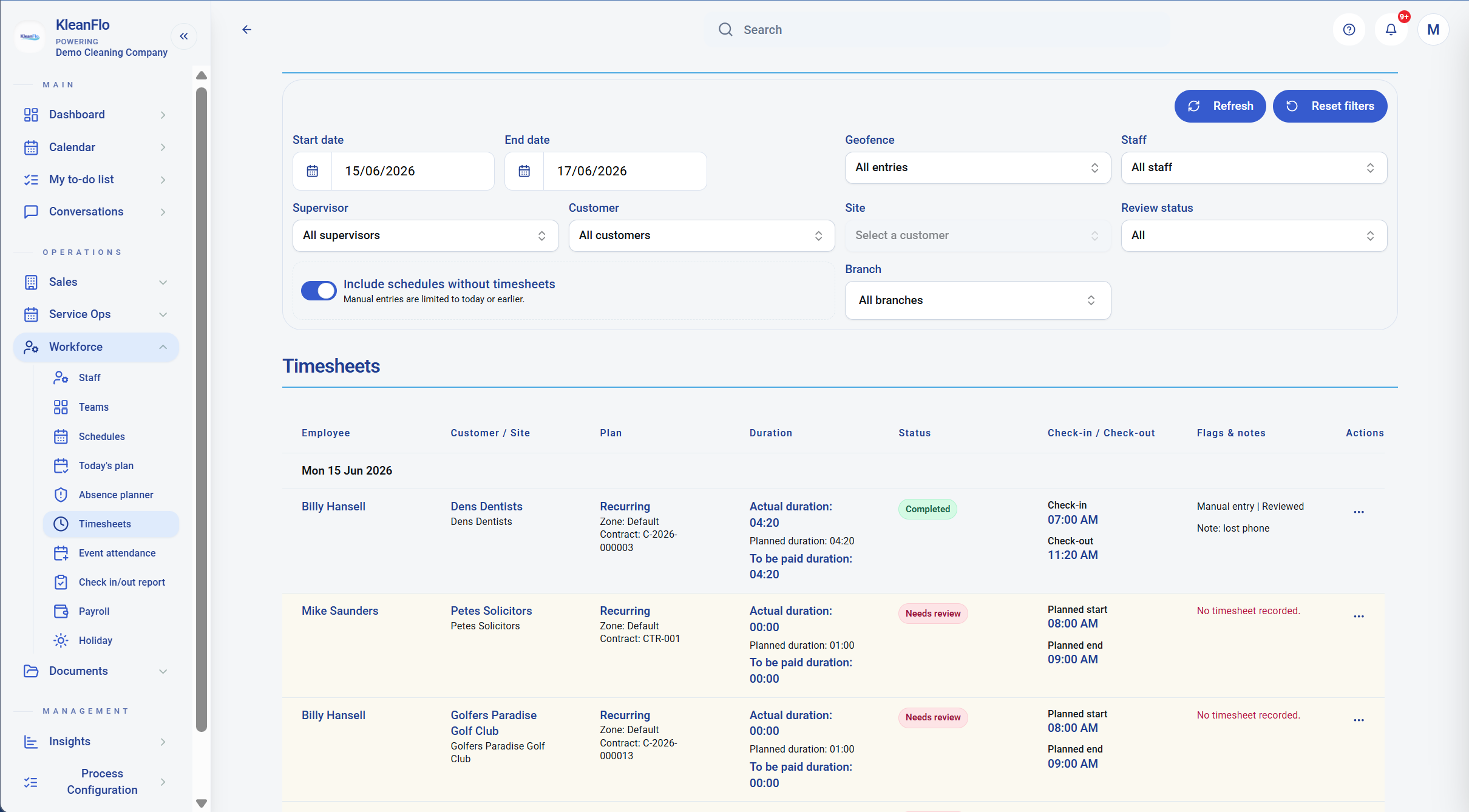 Timesheet review connects scheduled shifts to the attendance records that need checking.
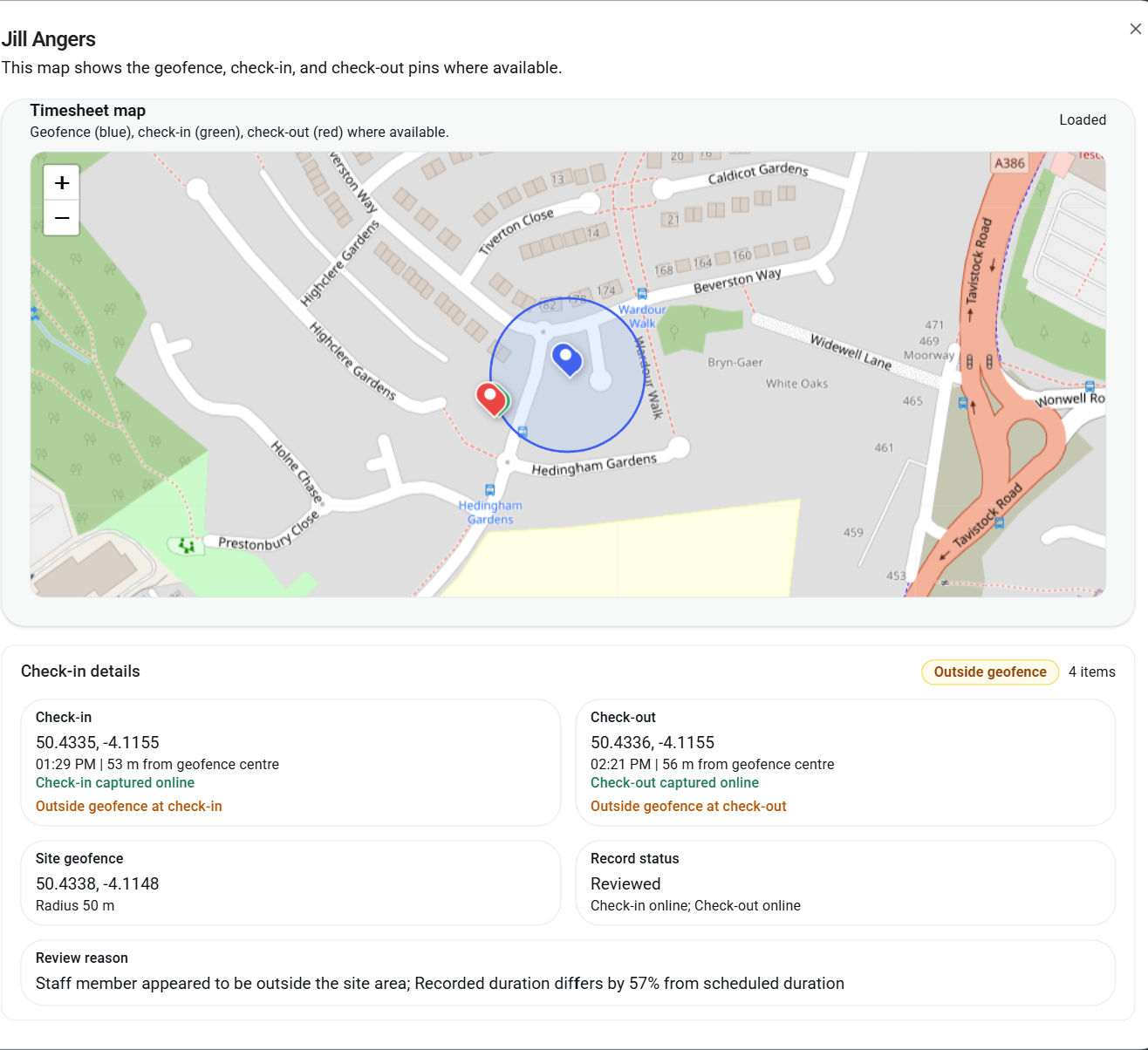 Location evidence helps managers review exceptions before approving payable hours.
Keep payroll evidence tied to the contract
Payroll review is stronger when it is linked back to customer, site and contract records. If a customer questions attendance or a manager reviews labour cost, the business can look at the planned shift, the completed record and the approved hours in context.
KleanFlo helps cleaning companies bring scheduling, proof of attendance and reviewed hours together so payroll preparation is not built from separate spreadsheets and messages.