Published: 15 July 2026Last updated: 15 July 2026Reading time: 7 minutes
Audit scores should help cleaning companies understand standards, not confuse supervisors or customers. The best scoring systems are simple enough to use consistently and clear enough to support action.
Cleaning audit scores often fail because different people use the same score in different ways. One supervisor may treat a missed bin as minor. Another may mark the whole area as failed. Customers then see inconsistent results and staff do not know what standard is expected.
The first step is agreeing what each score means. A simple approach is to use meets specification, minor and major. Meets specification means the standard is acceptable. Minor means the issue needs attention but the overall area has not failed badly. Major means the issue is serious, visible, recurring or likely to affect customer confidence.
Using red, amber and green
Red, amber and green scoring is easy for managers and customers to understand. Green means on target. Amber means needs attention. Red means action is needed. The important part is not the colour itself. It is the operational response attached to the colour.
A red score should trigger a clear follow-up. An amber score should not disappear into a report without review.
Why trends matter more than one score
One poor score can happen for many reasons: sickness, access problems, poor specification, new staff, time pressure or genuine performance issues. Trends are more useful. If the same washroom, school block or supervisor route keeps scoring low, the business can investigate the real cause.
How to make scoring fair
Use the same definitions across all supervisors.
Keep the scoring options simple.
Add notes when a result needs explanation.
Capture photos where evidence is helpful.
Review patterns across customers and sites.
Use scores to coach, not just criticise.
How KleanFlo helps
KleanFlo shows audit scores clearly across web, mobile and customer portal views. Results can show overall score, assessed items, meets specification, minor and major findings, designation scores, task scores and feedback notes.
Published audit scores help staff understand performance and follow-up.

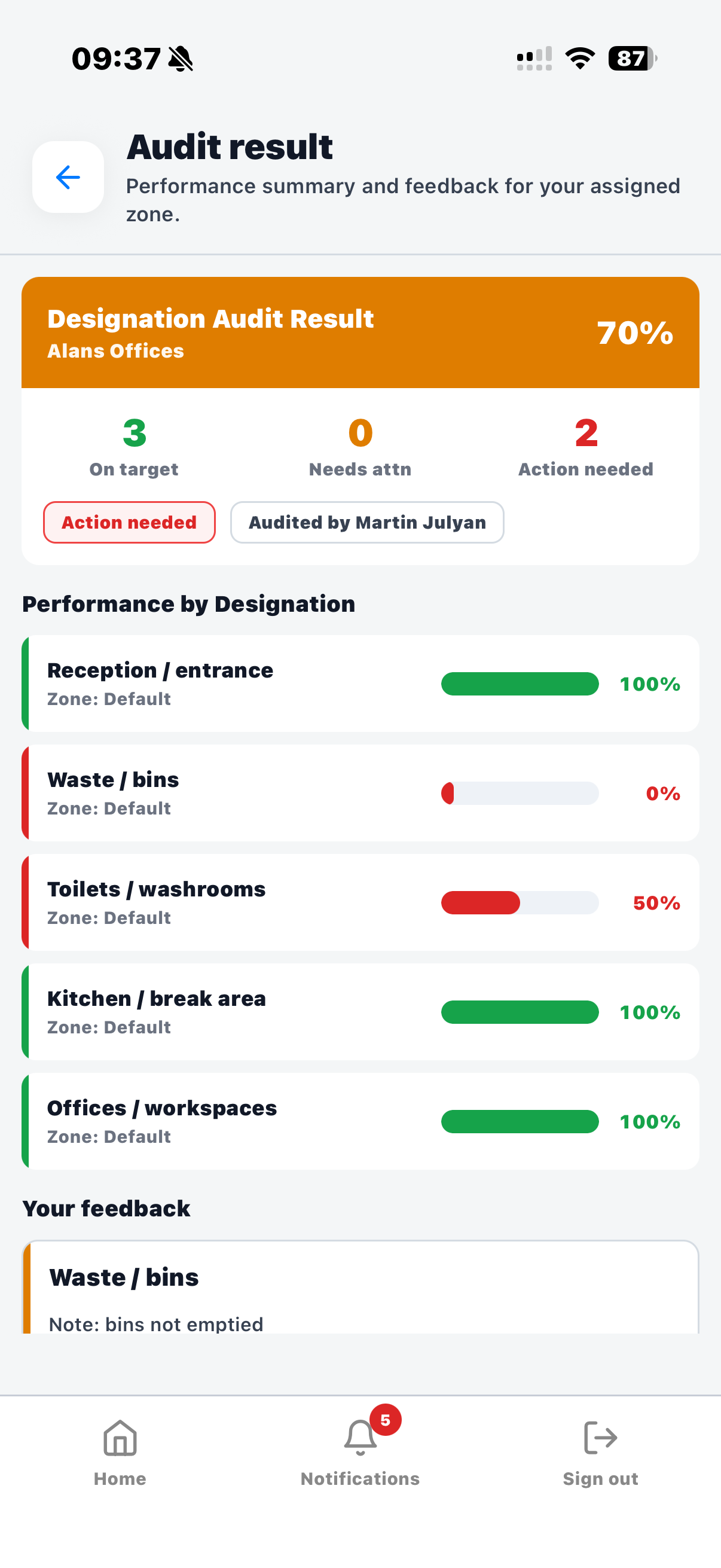
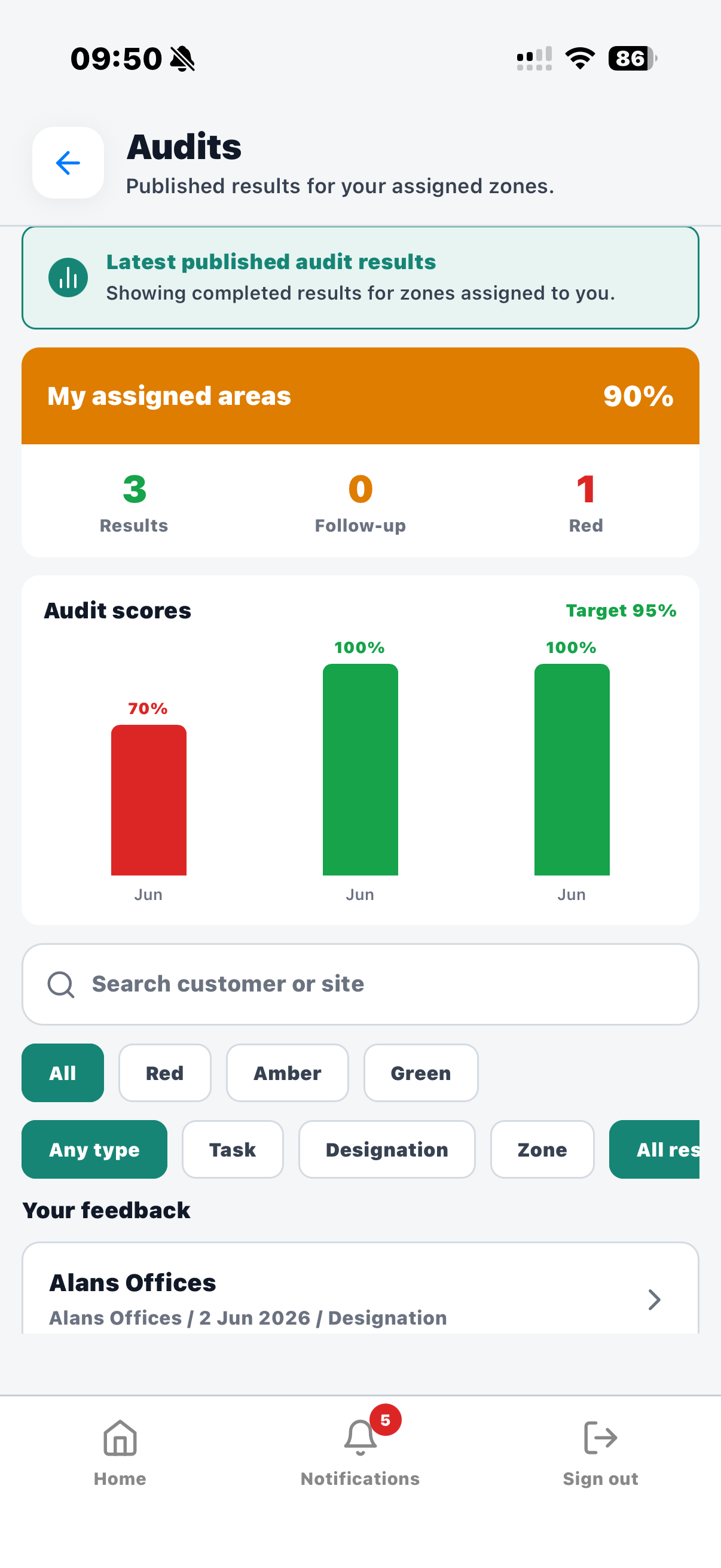 Published audit scores help staff understand performance and follow-up.