The audit is only useful if the business acts on it
A completed audit does not automatically improve a cleaning contract. It creates information. The value comes from how clearly that information is recorded, shared and followed up.
1. Auditing only after complaints
If audits only happen after a customer complains, the business is already late. Scheduled audits create a healthier rhythm and help issues get found earlier.
2. Using different scoring rules
When supervisors score differently, managers cannot trust the trend. Define what meets specification, minor and major mean in plain language.
3. Taking photos without context
A photo can prove what was found, but it needs a note. Without context, a photo becomes another file that someone has to interpret later.
4. Not assigning follow-up
The most damaging mistake is leaving a failed item inside the audit report. If it needs action, someone should know what to fix, where it is and when it needs review.
5. Hiding results from staff
Staff cannot improve what they cannot see. Relevant feedback should reach the people doing the work in a way that is clear and fair.
6. Not using audit trends
One low score may be a one-off. Repeated low scores in the same area are a management signal. Trends help identify training needs, time pressure, poor specification or recurring service issues.
The best audit programmes are not designed to catch people out. They are designed to make standards visible and fix issues before confidence is damaged.

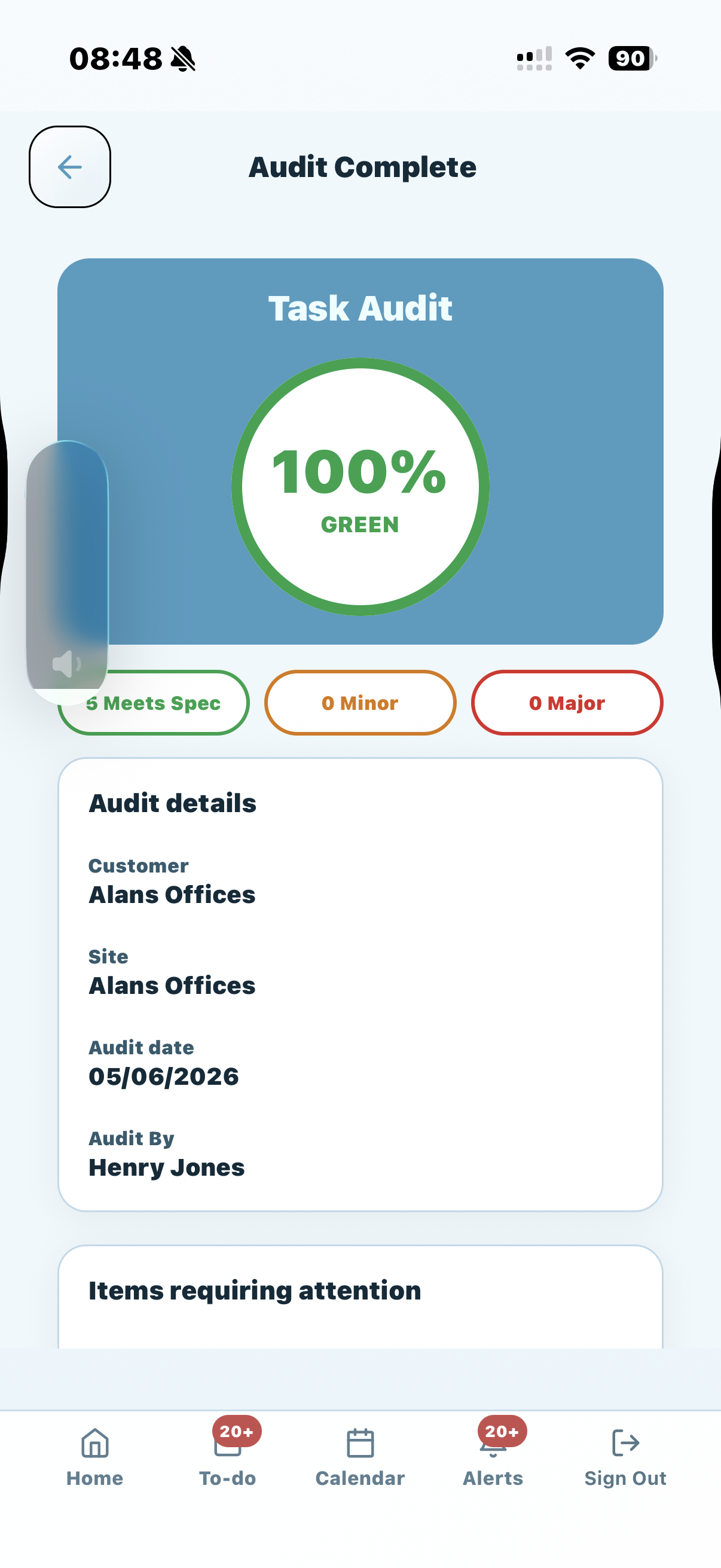
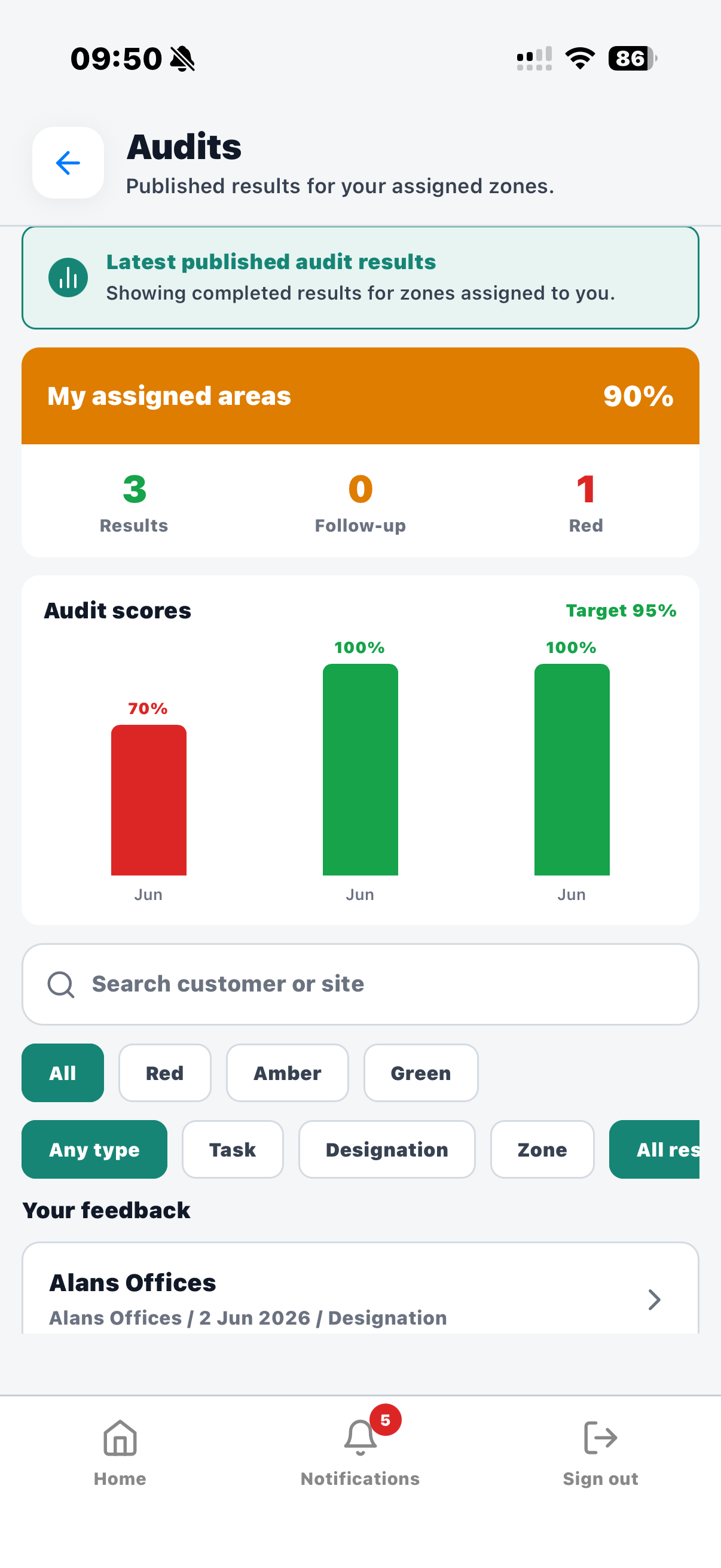 Relevant published results help staff see feedback and understand what needs attention.