Published: 15 July 2026Last updated: 15 July 2026Reading time: 8 minutes
A professional cleaning audit should do more than mark a site as clean or not clean. It should give the cleaning company a reliable record of what was checked, what standard was found, what evidence was captured and what needs to happen next.
Prepare the siteScore consistentlyCapture evidenceClose the loop
In this guide
What a professional cleaning audit should prove
How to prepare before arriving on site
How to score standards consistently
When to use notes and photo evidence
How to agree corrective actions
How KleanFlo supports audit follow-up
Looking for audit software?
This guide explains the process first. The product page shows how KleanFlo supports the workflow.
Before a supervisor walks the site, the business should be clear about the purpose of the audit. Is it a routine quality check, a customer complaint follow-up, a contract review, a school holiday deep clean sign-off or a spot check after new staff have started?
The answer changes the level of detail needed. A routine office audit may only need area scores and short notes. A washroom complaint may need task-level checks, photos and a clear action plan. A school audit may need to separate classrooms, toilets, corridors, halls and kitchens so the result is useful to both the cleaning company and the customer.
Prepare before you arrive
A good audit starts before the visit. Review the contract specification, recent complaints, previous audit scores, customer notes, site access details and any known risks. If the supervisor arrives with no context, the audit becomes a general walkaround rather than a controlled quality check.
Walk the site in a consistent order
Consistency is what makes audit results useful over time. If one supervisor checks washrooms first and another only checks the reception area, the scores become hard to compare. Work through the site by zone, designation or task so the same areas are reviewed each time.
Use clear scoring
Keep scoring simple. Many cleaning companies use terms such as meets specification, minor issue and major issue, or a red, amber and green approach. The scoring method matters less than the consistency. Everyone completing audits should understand what each result means.
If a score cannot be explained to a cleaner, supervisor or customer in plain English, the scoring system is probably too complicated.
Capture notes and photos where they add value
Photos should not be used for everything. They are most useful where a finding needs evidence, where a customer may ask for context, or where staff need to understand exactly what needs correcting. Short notes are just as important because they explain what the image does not show.
Agree what happens next
The weakest part of many audit processes is the follow-up. A failed item should not sit in a report that nobody revisits. Decide whether the finding needs immediate correction, staff coaching, a supervisor revisit, a customer update or a process change.
How KleanFlo helps
KleanFlo supports task, designation and zone audits, mobile scoring, notes, photo evidence, scheduled audits, customer portal visibility and corrective action workflows. That means the audit result can become a working operational record rather than a static document.
Supervisors can see assigned, overdue and upcoming audits.Managers can review scores, comments and evidence in one place.
A cleaning audit should include the customer, site, areas checked, scoring, comments, evidence where needed and any follow-up actions.
Who should complete cleaning audits?
Usually supervisors, area managers or quality managers complete audits, but customers may also complete audits where the process allows it.
How often should cleaning audits be completed?
Frequency depends on contract value, risk, customer expectations and past performance. Many companies use monthly, quarterly or targeted audit schedules.
Want audits that lead to action?
Book a demonstration and see how KleanFlo connects audit schedules, mobile checks, customer reports and corrective actions.

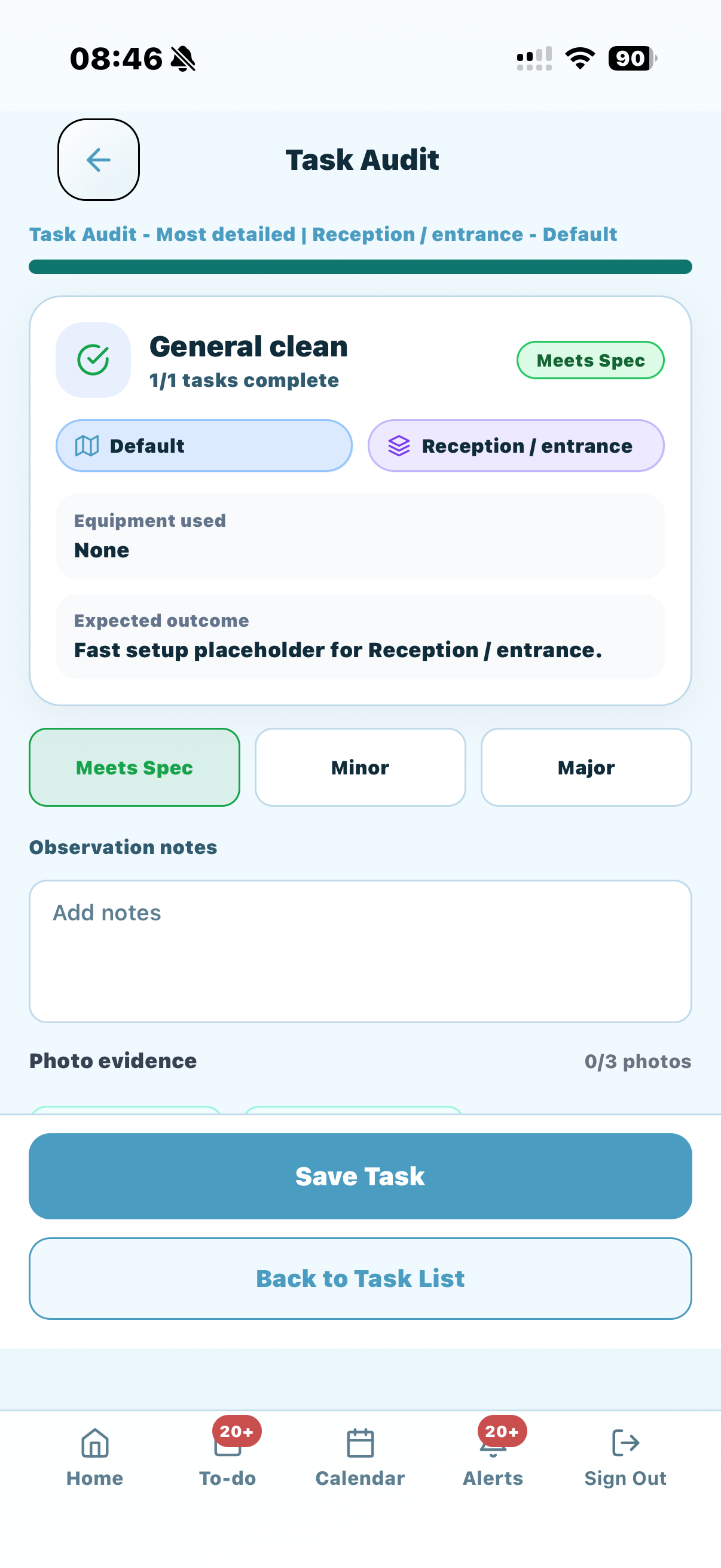
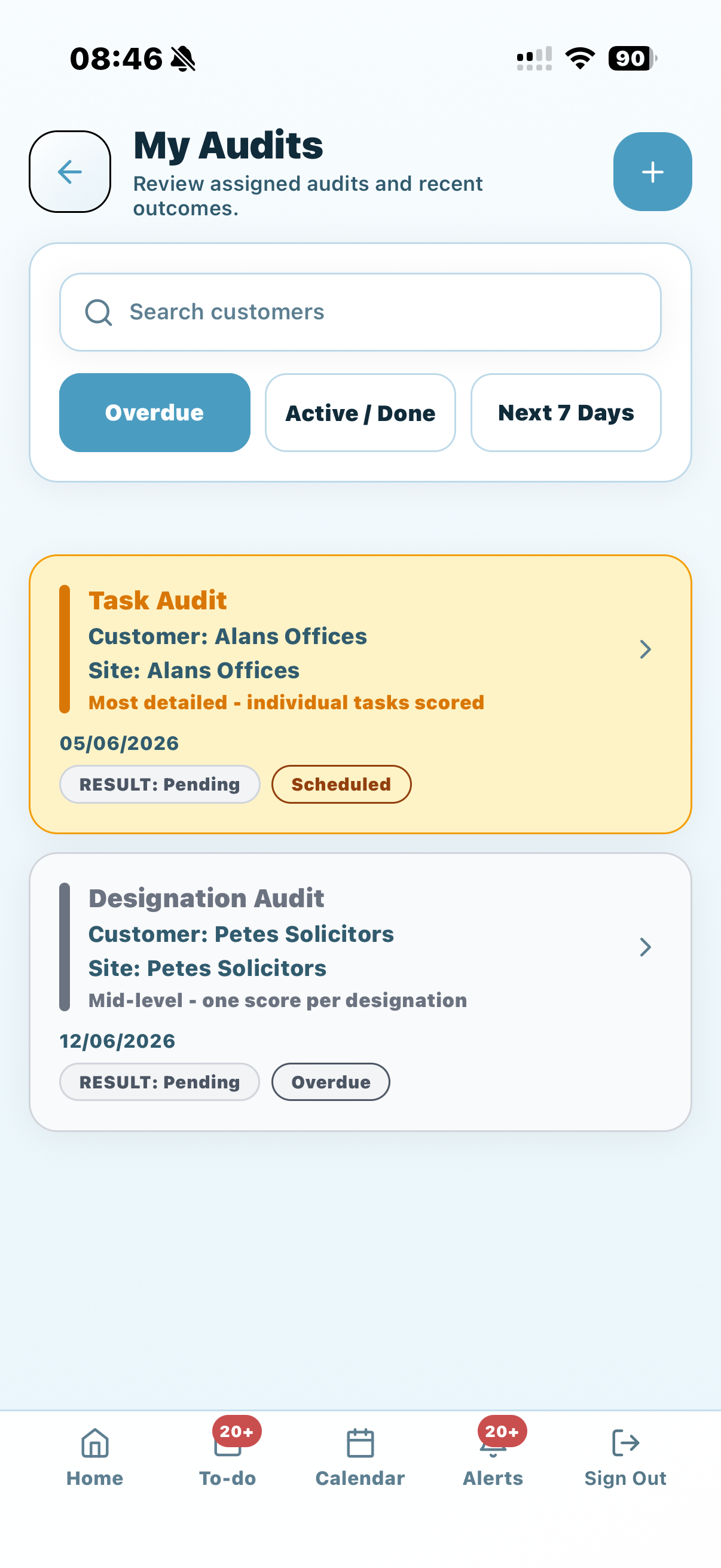 Supervisors can see assigned, overdue and upcoming audits.
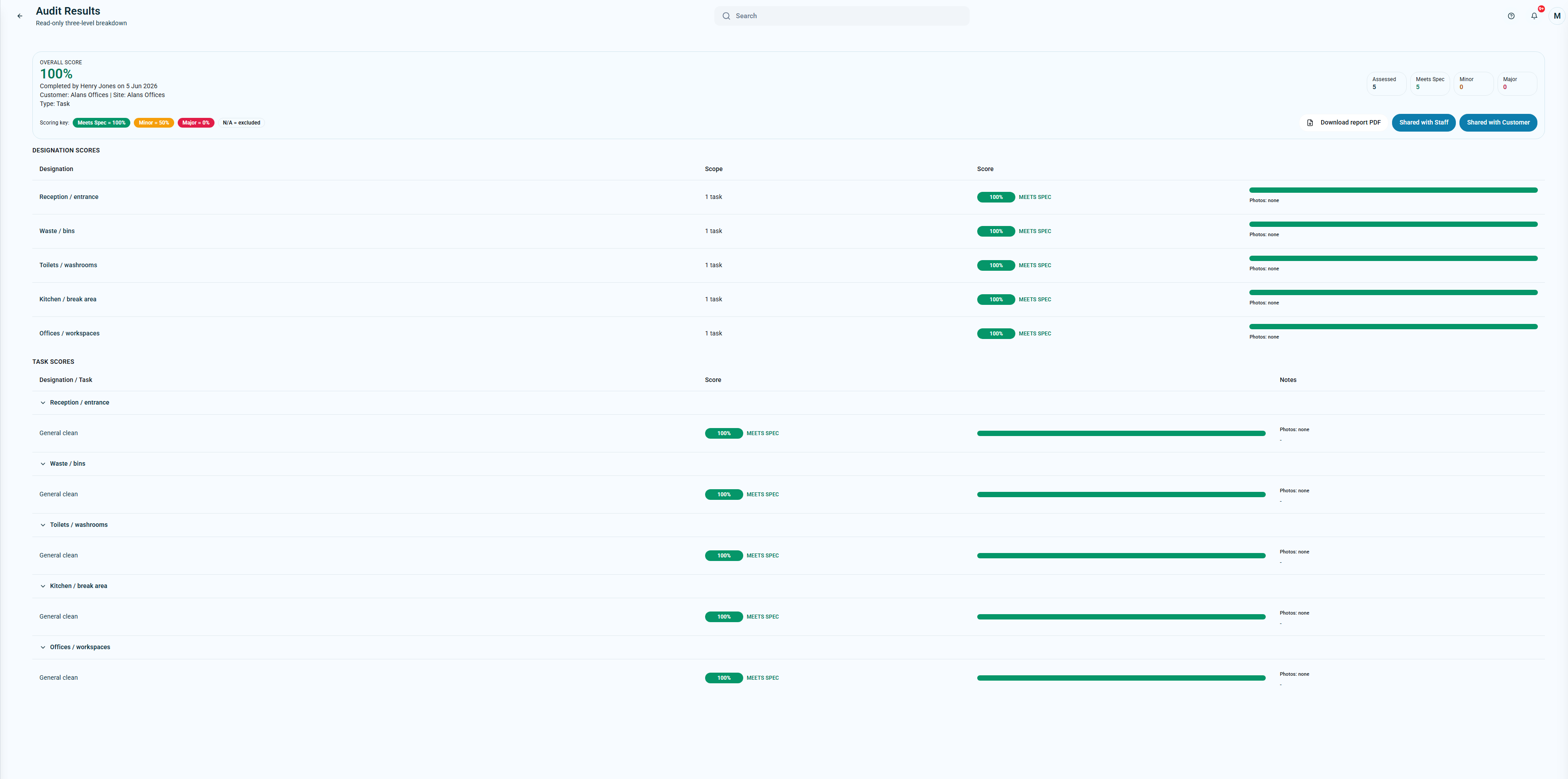 Managers can review scores, comments and evidence in one place.