Published: 15 July 2026Last updated: 15 July 2026Reading time: 7 minutes
Cleaning customers rarely leave because of one small issue. They leave when confidence has been slowly damaged. Regular audits help protect that confidence by proving standards are being checked, recorded and followed up.
Audits help customers feel the contract is being managed
A customer does not usually know everything that happens behind the scenes. They may not see cover arrangements, supervisor visits, schedule changes or staff coaching. What they do see is the end result on site. If standards slip and there is no visible management response, confidence falls.
Cleaning audits give the business a way to show that quality is being actively managed. They create a record of what was checked, what score was achieved and what action was taken when something needed attention.
Catch small issues early
Small quality issues are easier to fix than formal complaints. A scheduled audit can identify recurring washroom problems, reception standards, bins, dust, floor issues or missed touchpoints before the customer has to raise them.
Give account managers better conversations
Contract reviews are stronger when they are based on evidence. Audit scores, comments and trends help account managers talk about what has improved, what needs attention and what support is planned.
Show customers the right level of detail
Some customers want a summary. Others want a full breakdown. The key is to share audit information in a way that builds confidence rather than overwhelming people with raw checklists.
A good audit record says: we checked the standard, we saw the result, and we know what happens next.
Protect renewals
When renewal time arrives, a cleaning company with a clear audit history has a stronger story. It can show service management, quality trends and follow-up rather than relying on memory or occasional emails.
How KleanFlo helps
KleanFlo can schedule audits, complete checks on mobile, publish relevant results to staff, share customer-facing audit reports and connect poor results to corrective action workflows. That helps cleaning companies turn quality control into a retention asset.
Audit results give managers and customers a clearer record of service quality.

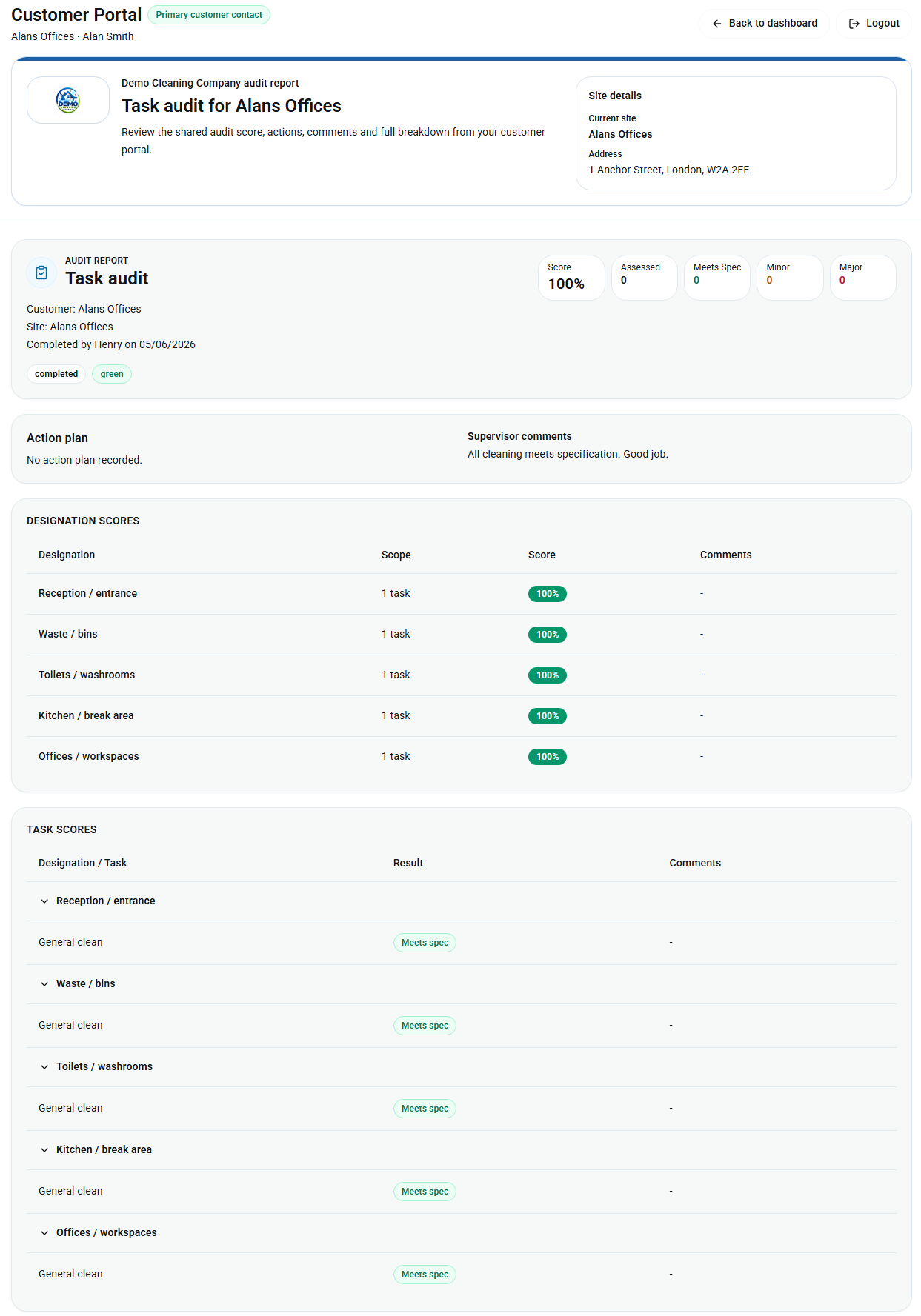
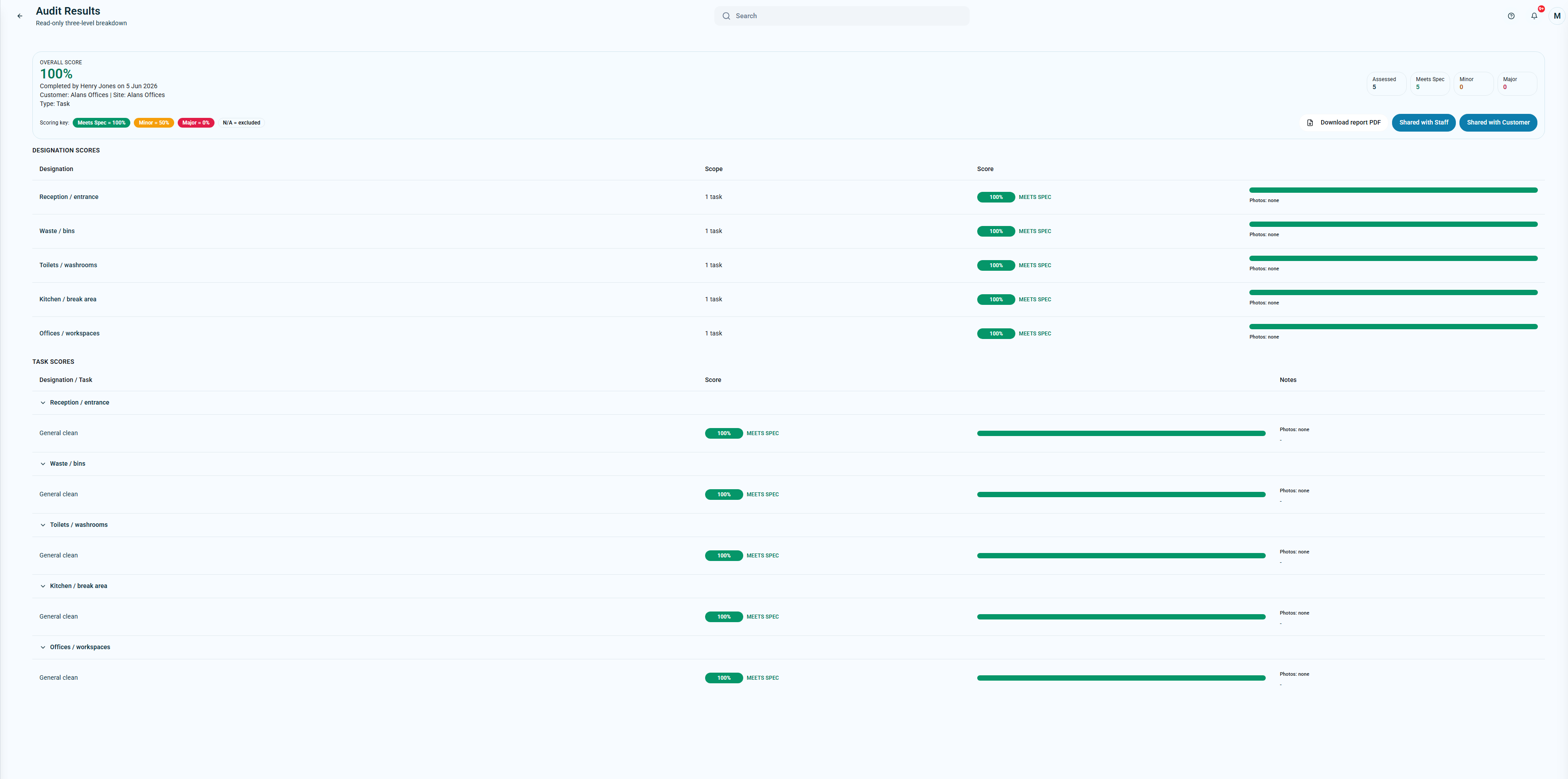 Audit results give managers and customers a clearer record of service quality.