Published: 16 July 2026Last updated: 16 July 2026Reading time: 14 minutes
A school cleaning audit should prove more than whether an area looks tidy. It should
show whether the cleaning specification is being delivered, whether hygiene-sensitive
areas are being controlled, whether issues are being followed up, and whether the
contractor can evidence the standard across the site.
ClassroomsWashroomsTouchpointsCorrective actions
In this guide
How to structure a school audit
What to check by area
Daily, weekly and periodic checks
Evidence, scoring and photos
COSHH, safety and safeguarding notes
Corrective action follow-up
Use this with planned audits
A checklist works best when audits are scheduled, assigned and followed up rather
than completed only after a complaint.
What a school cleaning audit is really trying to prove
Schools are not simple commercial sites. Cleaning happens around pupils, staff,
safeguarding controls, term dates, events, clubs, examinations, lettings and holiday
deep cleans. A school cleaning audit needs to reflect that reality.
A useful audit does three things. First, it checks whether the cleaning specification
is being met. Second, it records evidence where standards are good or where attention
is needed. Third, it creates follow-up so the same issues do not keep appearing.
The checklist should not be a box-ticking exercise. It should help a supervisor
answer a practical question: is this school clean, safe, presentable and being
managed to the standard the customer expects?
Before the audit: confirm the contract context
Before a supervisor starts scoring classrooms or washrooms, they need to understand
what the contract actually includes. Otherwise the audit can mark items that are not
in scope, miss items that are important, or compare daily standards with periodic work.
Confirm the cleaning specification, site zones, task frequencies and periodic work.
Check whether kitchens, dining areas, sports facilities, nurseries or lettings areas are in scope.
Confirm access restrictions, school safeguarding rules and any areas that must be checked out of hours.
Review previous audit failures, complaints, incidents and recurring customer comments.
Check whether the audit is a routine term-time audit, a holiday deep-clean sign-off or a reinspection.
Recommended school audit frequency
There is no single audit frequency that fits every school. The right frequency depends
on the size of the site, the contract value, the risk profile, the school relationship
and how stable the cleaning team is. A small primary school may need a different rhythm
from a large secondary school with multiple buildings, sports areas and evening use.
Audit typePractical use
Daily supervisor checkQuick visible check of entrances, washrooms, bins, high-touch points and obvious standards before the school day starts.
Weekly or fortnightly quality auditMore structured review of classrooms, circulation areas, washrooms, offices, floors, consumables and cleaning evidence.
Monthly contract auditManagement-level review of standards, scores, recurring issues, customer feedback and improvement actions.
Holiday deep-clean auditChecks planned periodic work such as floor work, high dusting, detailed washrooms, classroom resets and scheduled deep cleans.
ReinspectionConfirms that failed items, complaints or corrective actions have been completed and evidenced.
School cleaning audit checklist by area
The most useful checklist is organised around how the school is used. A classroom is
judged differently from a washroom, a dining hall, a reception area or an office. Each
area should have practical checks that match the cleaning specification.
1. Entrances, reception and corridors
These areas create the first impression for parents, staff, pupils, governors and
visitors. They also carry a high level of footfall, especially during bad weather.
Entrance glass, doors, push plates and handles are clean and presentable.
Reception desk, visitor sign-in area and touchpoints are clean where included.
Corridor floors are clean, dry, safe and free from visible debris.
Skirting, ledges, radiators and reachable surfaces are free from obvious dust build-up.
Bins are emptied, liners replaced where required and surrounding areas are clean.
Display areas and noticeboards are respected and not disturbed during cleaning.
Any spill, trip hazard or damaged area is reported using the agreed site process.
2. Classrooms and teaching spaces
Classroom audits need to balance cleanliness with practicality. The cleaner may not be
responsible for moving teaching materials or personal items, so the audit should focus
on the tasks that are actually in scope.
Tables, desks and accessible work surfaces are cleaned to the agreed standard.
Chairs are positioned or stacked as required by the site specification.
Floors are vacuumed, swept or mopped as specified, including visible edges where accessible.
Bins are emptied and surrounding marks or spills are addressed.
Door handles, light switches and common touchpoints are cleaned where included.
Whiteboards, sink areas, shared equipment or craft areas are checked where they form part of the contract.
Any access problems, excessive clutter or blocked cleaning areas are recorded rather than ignored.
3. Washrooms, toilets and changing areas
Washrooms are usually one of the highest-risk areas for complaints. They are highly
visible, hygiene-sensitive and used heavily during the school day. The audit should
check both hygiene and presentation.
Toilets, urinals, seats, flush handles and surrounding areas are clean.
Basins, taps, splashbacks and mirrors are clean and free from avoidable marks.
Floors are clean, dry and free from visible waste, pooling or residue.
Sanitary bins, nappy bins or specialist disposal units are managed by the correct provider where applicable.
Soap, hand towels, toilet rolls and other consumables are stocked according to the contract.
Doors, cubicle partitions, handles and touchpoints are cleaned where specified.
Odour, drainage issues, leaks, graffiti, damage or repeated misuse are recorded for escalation.
4. Halls, dining areas and sports spaces
These spaces often have mixed use. A hall may be used for assemblies, PE, lunches,
clubs, exams, parents' evenings and evening lettings. The audit should recognise how
the space was used before judging the cleaning result.
Floors are clean and safe for the next use of the space.
Food debris, spill marks and waste are removed from dining areas where included.
Tables, benches, chairs and storage areas are checked according to the specification.
Stage areas, PE store entrances and shared equipment zones are checked where included.
Lettings or after-school use is noted if it affects the cleaning standard.
Any floor damage, slip risk or recurring soiling is reported.
5. Offices, staff rooms and admin areas
Office and staff areas can contain confidential information, staff belongings and
restricted documents. The audit should check cleanliness without encouraging cleaners
to move items they should not handle.
Accessible desks, tables and shared surfaces are cleaned where clear and in scope.
Floors are cleaned to the required standard.
Bins are emptied unless marked or restricted by the school.
Kitchenette or staff-room surfaces are cleaned where included.
Confidential papers, locked cabinets and personal items are not disturbed.
Any access or clutter issue is recorded for discussion with the school contact.
6. Specialist rooms and higher-risk areas
Science rooms, design technology rooms, art rooms, nurseries, SEND areas and medical
rooms may require site-specific instructions. A generic checklist is not enough for
these areas.
Confirm whether the room is in scope and what the cleaner is allowed to touch.
Check that specialist waste, sharps, chemicals or teaching materials are not handled outside the agreed process.
Record access restrictions, locked areas or items that prevent cleaning.
Use site-specific checks for nursery, medical or SEND spaces where required.
Escalate any hygiene concern that appears outside the normal cleaning specification.
7. High-touch points
High-touch points are important because they are used repeatedly by pupils, staff and
visitors. During periods of increased illness, these checks may need more attention or
increased frequency in line with the school's instructions.
Door handles, push plates and handrails.
Light switches and access buttons.
Reception counters and shared sign-in points.
Toilet flush handles, taps, dispensers and cubicle locks.
Shared tables, dining surfaces and common-use furniture where included.
Lift buttons, intercoms, keypad areas and shared touchscreens where applicable.
8. Floors, slips and visible safety issues
Cleaning audits should not replace a site safety inspection, but supervisors should
still record obvious issues that affect cleaning or service quality. Wet floors,
trailing cables, blocked access, damaged flooring and recurring spill points can all
create operational risk.
Floors are cleaned using the correct method for the surface.
Wet floors are managed with the correct warning signs and process.
Cleaning does not leave residue that makes floors slippery.
Mats, entrances and weather-affected areas are checked during poor weather.
Damage, loose flooring, blocked routes or recurring spill areas are recorded.
Scoring the audit
A checklist becomes more useful when results are recorded consistently. The scoring
method does not need to be complicated, but everyone should understand what each result
means and what follow-up is required.
ResultSuggested meaning
Pass / GreenThe area meets the agreed standard. No immediate action is needed, although a note or photo can still be useful evidence.
Minor issue / AmberThe area is mostly acceptable, but one item needs attention, coaching or follow-up before it becomes a recurring problem.
Fail / RedThe area does not meet the expected standard and needs corrective action, evidence of completion and possibly customer communication.
Not applicableThe item is not in scope, could not be accessed or should not be judged on that visit. The reason should be recorded.
When to take photos
Photos should support the audit, not replace the supervisor's judgement. They are most
useful when they show a failed item, a completed corrective action, a repeated issue,
a blocked access problem or the finish of a holiday deep clean.
In schools, photo use must be controlled. Avoid capturing pupils, personal data,
confidential documents, medical information or anything the school has asked you not
to photograph. If in doubt, agree the photo process with the school before audits begin.
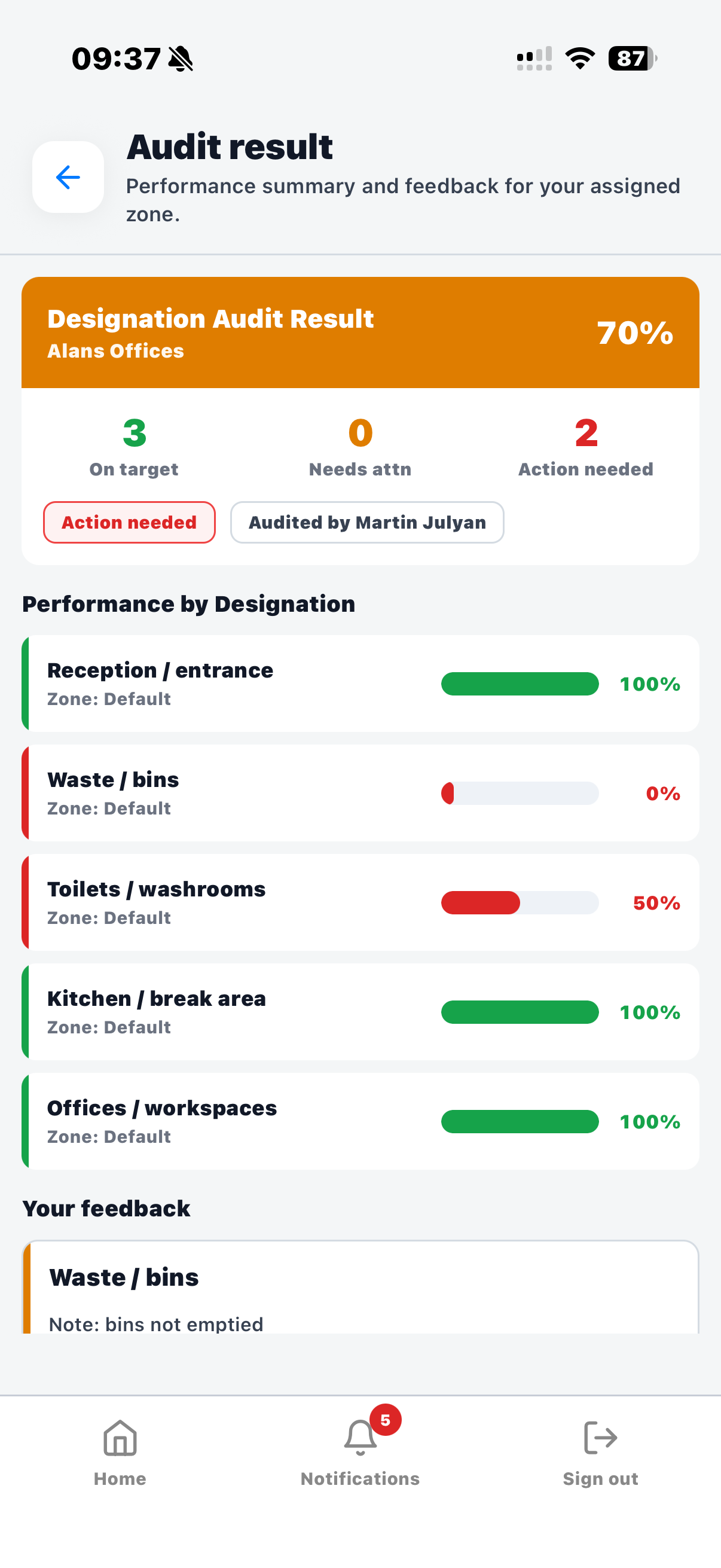
Audit results should make failed items clear enough for staff and supervisors to act on.
COSHH, cleaning chemicals and site safety
A school cleaning audit is not a full health and safety audit, but it should still
check whether cleaning is being carried out in a controlled way. This matters where
cleaning chemicals, dilution, storage, PPE and access to cupboards or stores are part
of the service.
Cleaning chemicals are stored securely and not accessible to pupils.
Products are labelled and used for the intended task.
Staff understand dilution, PPE and safe-use instructions where relevant.
Safety data sheets and COSHH information are available through the agreed process.
Cleaning cupboards are tidy, controlled and not used for unrelated storage.
Any chemical spill, damaged container or missing label is escalated immediately.
Safeguarding and access checks
The cleaning audit should also respect how the school controls access. Different
schools apply different local rules for signing in, ID, escorted access, keys, alarms,
photographs, out-of-hours working and restricted rooms.
Supervisors and cleaning staff follow the school's sign-in and access process.
ID, keyholding and alarm procedures are followed.
Restricted areas are not entered without permission.
Cleaning staff know how to report a safeguarding concern or site incident.
Photos are only taken in line with the school's rules.
DBS or vetting requirements are handled according to the contract and school policy.
Holiday deep-clean audit checklist
Holiday deep cleans need a different audit approach. The supervisor is often checking
planned project-style work, not just the routine daily standard. The audit should match
the holiday plan and should be clear about what was included.
Classroom furniture has been moved and reset only where agreed.
High dusting, vents, ledges, tops of cupboards and reachable high areas are checked where included.
Floors have been scrubbed, polished, buffed, vacuumed or treated according to the plan.
Carpet cleaning areas are signed off and drying/access notes are recorded.
Washrooms receive detailed cleaning beyond the daily routine where included.
Dining halls, sports halls and assembly spaces are checked against planned periodic work.
Any area not completed because of access, building work or school use is recorded clearly.
Corrective actions after a failed audit
Failed checks are only useful if they lead to action. A repeated washroom issue, missed
classroom bin or poor corridor edge clean should not simply be recorded again and again.
The audit should trigger a clear follow-up route.
FindingRecommended follow-up
One-off missed taskAssign the action to the relevant cleaner or supervisor, complete the task and record evidence where useful.
Repeated failureReview schedule time, specification clarity, staff training, access restrictions and whether the task frequency is realistic.
Customer complaintRecord the issue, respond clearly, complete the corrective action and use the next audit to prove the standard has improved.
Access problemRecord why the area could not be cleaned, raise it with the school contact and avoid scoring the cleaner unfairly.
Health or safety concernEscalate immediately using the agreed process and do not treat it as a normal low-priority cleaning note.
School cleaning audit checklist template
The checklist below can be adapted for primary schools, secondary schools, academies,
independent schools and multi-academy trust sites. The exact wording should match your
contract specification and site risk assessment.
Checklist sectionItems to include
Site and audit detailsSchool name, building, zone, date, time, auditor, audit type, contract reference and weather or access notes.
Corrective actionsOwner, due date, priority, completion status, reinspection result and customer communication where needed.
How KleanFlo helps run school cleaning audits
KleanFlo helps cleaning companies move school audits away from paper forms, scattered
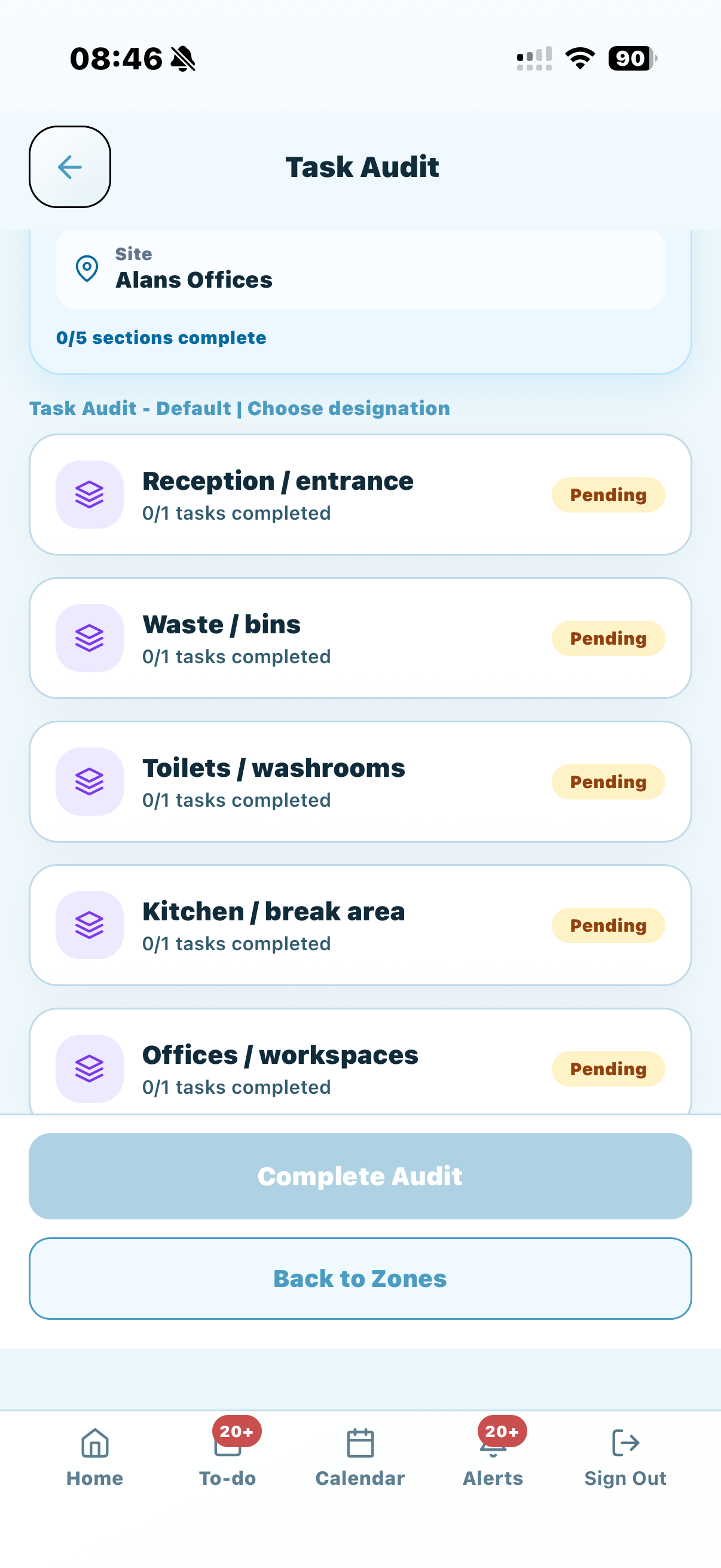
photos and manual follow-up. Audits can be scheduled, completed on mobile, structured
by zones or designations, supported with evidence and connected to follow-up actions.
Schedule routine school audits instead of relying on memory.
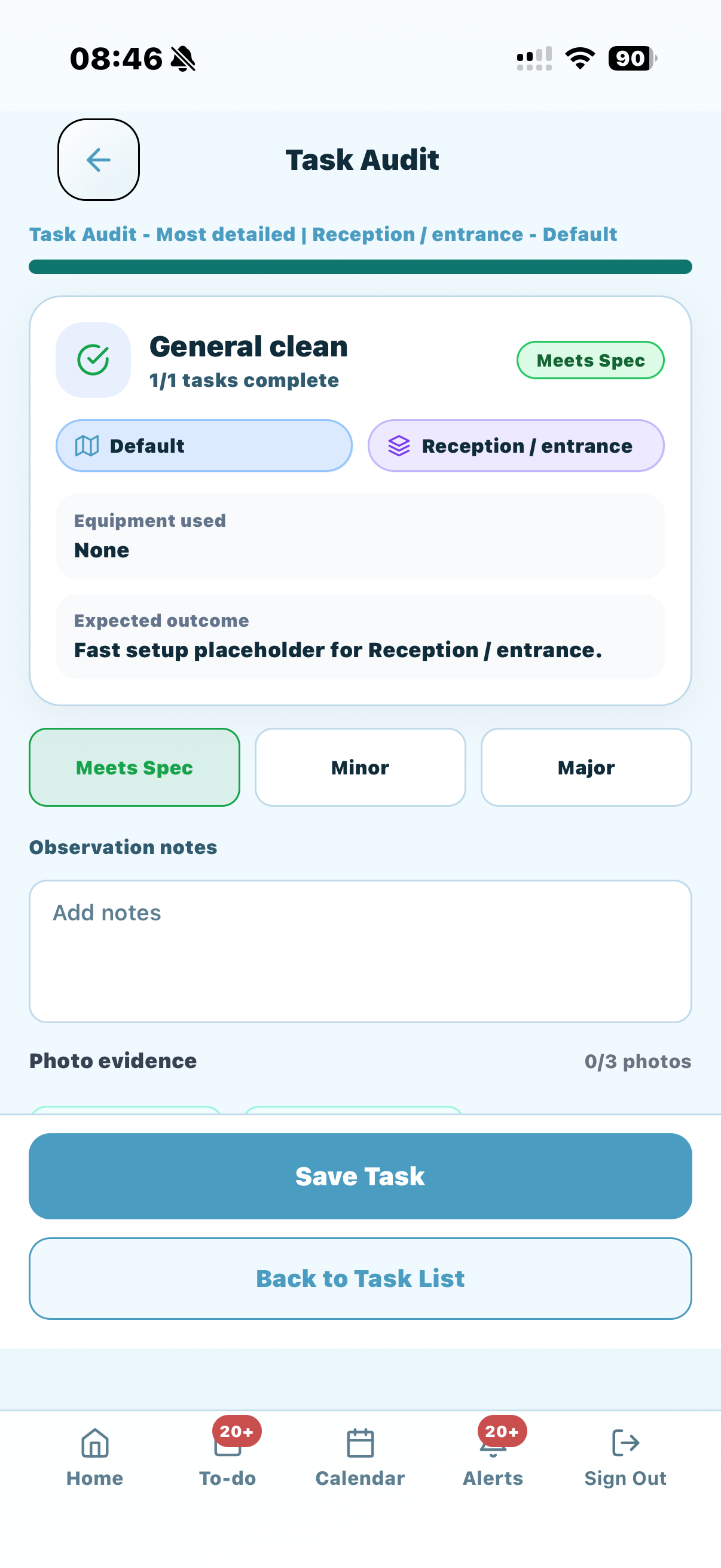
Use mobile audit workflows for supervisors on site.
Record pass, fail, notes and photos in one place.
Keep failed items visible until they are followed up.
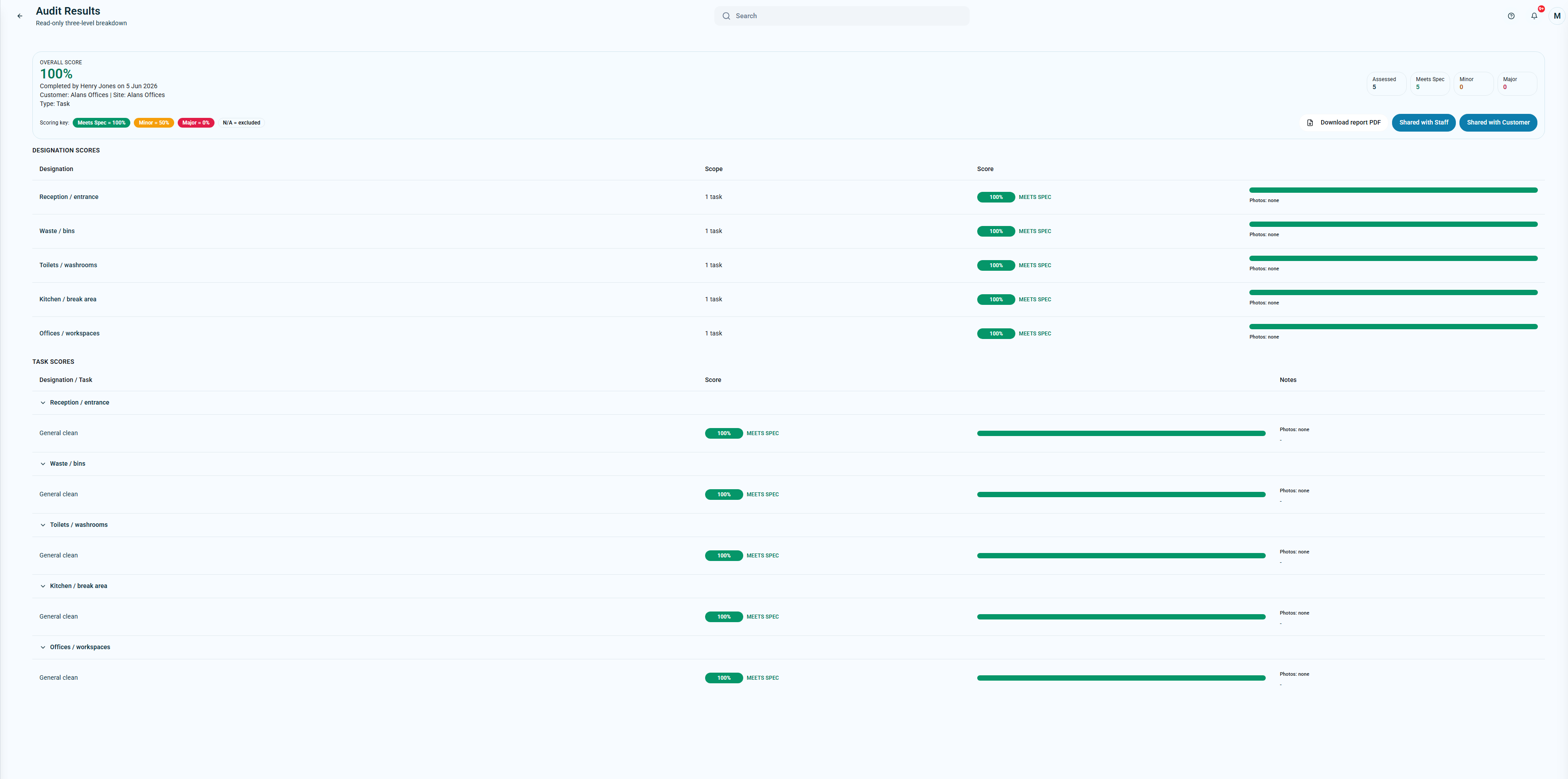
Use customer portal visibility where the result should be shared.
Compare school sites and spot recurring quality issues.
Supervisors can capture results and evidence while they are on site.Managers can review audit results and spot where follow-up is needed.
Official guidance to consider
This guide is a practical operational checklist, not legal advice. Cleaning contractors
should also follow the school contract, the school's local policies and current UK
guidance where relevant.
How detailed should a school cleaning audit checklist be?
It should be detailed enough to show what was checked and what needs action, but not
so long that supervisors stop using it properly. The best checklist is structured by
site area, contract task and risk level.
Should primary and secondary schools use the same checklist?
They can share a core structure, but the detail should change. Larger secondary
schools may need more zones, sports spaces, specialist rooms, lettings areas and
building-specific checks.
Should a failed audit automatically be shared with the school?
That depends on the contract and customer relationship. Some findings are internal
coaching points, while more serious or repeated issues may need a clear customer
update and evidence of corrective action.
Is a school cleaning audit the same as a risk assessment?
No. A cleaning audit checks cleaning standards and service delivery. A risk
assessment looks at hazards, controls and safe working. The audit may identify issues
that need escalation, but it does not replace formal risk assessments.
Related resources
Build a stronger school cleaning operation
Use these guides and product pages to connect school audits with schedules, staff, customer communication and quality reporting.

 Audit results should make failed items clear enough for staff and supervisors to act on.
 Supervisors can capture results and evidence while they are on site.
 Managers can review audit results and spot where follow-up is needed.